James Rosenquist (1933–2017) was an American artist and a central figure of the Pop Art movement. Born in Grand Forks, North Dakota, he studied at the University of Minnesota and the Art Students League of New York. To support himself, he worked as a commercial billboard painter in Times Square — an experience that profoundly shaped his artistic vision and his command of monumental scale.
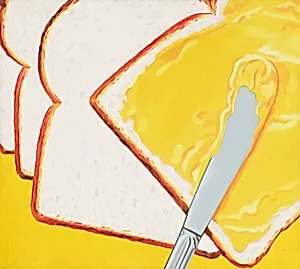
Rosenquist's breakthrough came in the early 1960s when he began creating large-scale paintings that fragmented and recombined images from advertising, consumer culture, and mass media into jarring, dreamlike compositions. Unlike Andy Warhol's direct appropriation or Roy Lichtenstein's comic-strip quotations, Rosenquist's approach was more cinematic, using dramatic shifts in scale and disorienting juxtapositions to create an immersive visual experience.
His masterwork, "F-111" (1964–65), is an 86-foot-long painting that wraps around an entire room, interweaving the image of a fighter-bomber with a girl under a hair dryer, a tire, spaghetti, and a nuclear explosion. The work was a searing commentary on the relationship between consumer prosperity and the military-industrial complex, and it established Rosenquist as one of the most ambitious artists of his generation. It is now in the permanent collection of the Museum of Modern Art in New York.
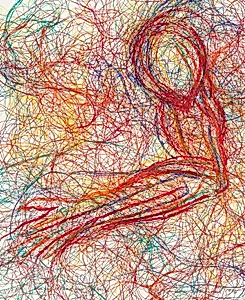
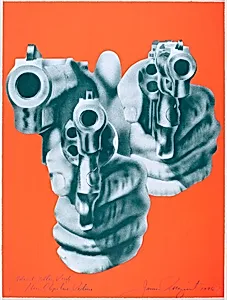
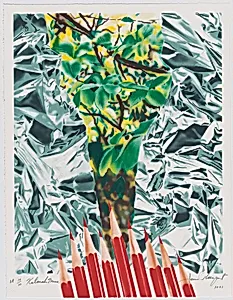
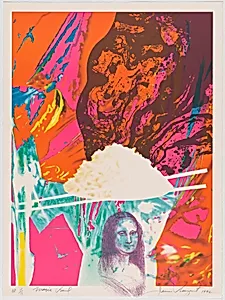
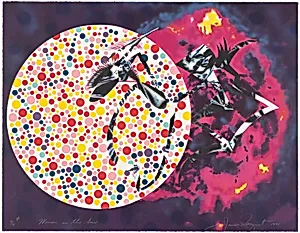
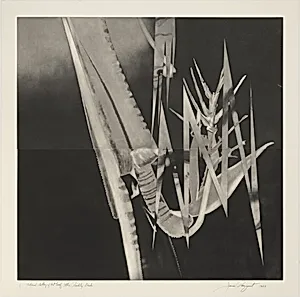
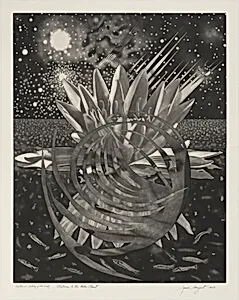
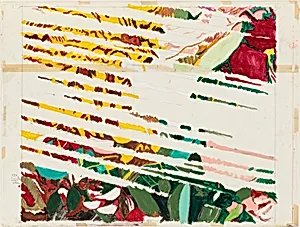
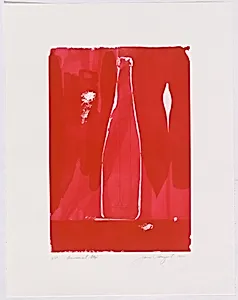
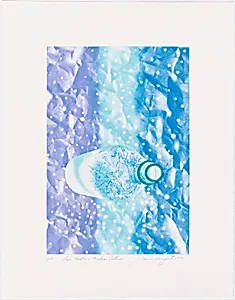
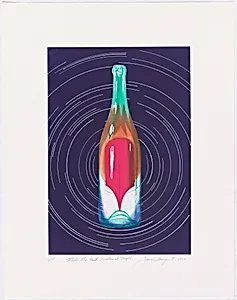
Throughout his career, Rosenquist continued to work at heroic scale, producing paintings, prints, and installations that explored themes of technology, politics, and perception. He also created an important body of prints and collages. His work is represented in virtually every major museum of modern and contemporary art worldwide.