Ctrl K
1390–1441
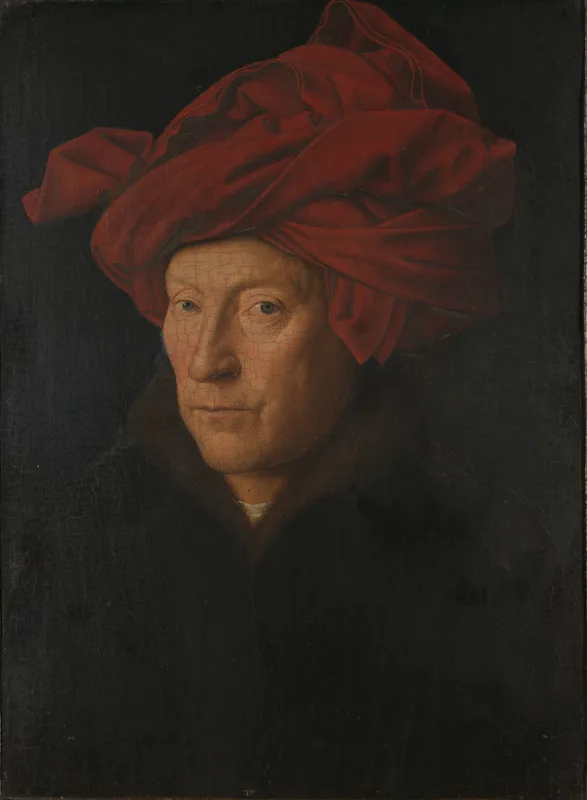
Jan van Eyck, a pioneering Netherlandish painter born around 1390 in Maaseik (in present-day Belgium), emerged as a central figure in the Early Netherlandish school during the Northern Renaissance. His early life remains sparsely documented, with no records of formal training, teachers, or art schools; the first mention of his activity dates to 1422, when he served as court painter and valet de chambre to John III, Count of Holland. Part of a family of painters, he collaborated with his older brother Hubert van Eyck on early projects and had another brother, Lambert, who later managed his estate; around 1431, Jan married Margaret, who bore him at least two children, and he painted her portrait in 1439.
In 1425, van Eyck entered the service of Philip the Good, Duke of Burgundy, becoming his favored court painter in Lille and later Bruges, where he enjoyed financial independence and undertook diplomatic missions, including portrait diplomacy for royal marriages. He worked in the Early Netherlandish tradition, revolutionizing oil painting through virtuoso glazing and wet-on-wet techniques that captured luminous light effects, intricate textures—from fur and jewels to reflective metals—and unprecedented naturalism infused with disguised religious symbolism. His compositions blended International Gothic elegance with bold realism, often signing works with his motto *Als ich kan* ("As best I can") in varied scripts.
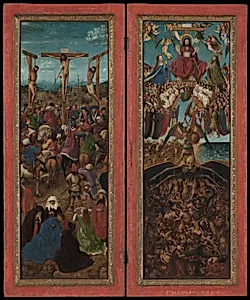
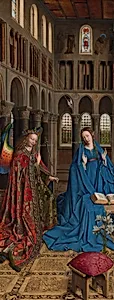
Van Eyck's masterpieces include the monumental *Ghent Altarpiece* (completed 1432 in St. Bavo's Cathedral, Ghent), begun by Hubert and famed for its polyptych realism; the enigmatic *Arnolfini Portrait* (1434, National Gallery, London), rich in symbolic details like the convex mirror reflecting witnesses; the *Virgin and Child with Canon van der Paele* (1434–1436, Groeningemuseum, Bruges); and the *Madonna of Chancellor Rolin* (c. 1435, Louvre). Only about 20 paintings are confidently attributed to him, all post-1432.
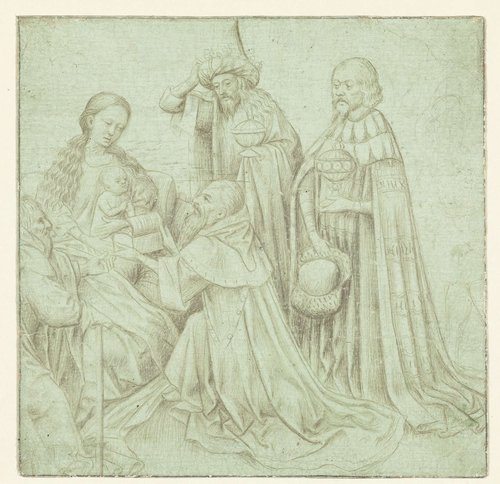
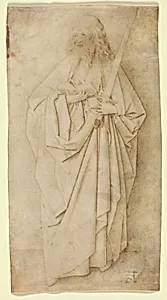
Van Eyck's legacy profoundly shaped the Early Netherlandish school, influencing artists like Rogier van der Weyden, Petrus Christus, and Hans Memling through his optical precision and illusionism; his workshop produced copies that spread his style across Europe, cementing his reputation as a master of reality's "final conquest in the North." He died on July 9, 1441, in Bruges, leaving an indelible mark on the transition from medieval to Renaissance art.