
Ctrl K
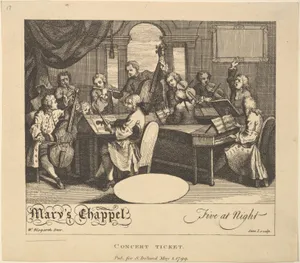
**Jane Ireland** (active 1790s) was a British printmaker and artist known for her faithful reproductive engravings and etchings after the works of William Hogarth.
She trained under her father, Samuel Ireland (1744–1800), a print dealer, engraver, and writer who exhibited at the Royal Academy and amassed a significant collection of Hogarth material. Like many women artists of the period, Jane and her sister Anna Maria learned their craft at home through this familial apprenticeship rather than formal academy study.
Working in the tradition of reproductive printmaking, Jane specialized in capturing the varied styles of Hogarth’s drawings and prints. Her contributions appear in the two-volume *Graphic Illustrations of Hogarth* (1794–99), published by her father, which reproduced dozens of works from his collection. Notable examples include an etching preserving the loose, scratchy quality of Hogarth’s 1758 caricature sketch and denser compositions recreating his unpublished illustrations for Milton’s *Paradise Lost*. She is also credited with portrait-related prints and is associated with four works in the National Portrait Gallery.
Jane’s legacy is closely tied to her family’s artistic output and the infamous Shakespeare forgeries perpetrated by her brother, William Henry Ireland. While the forgeries brought scandal—satirized in contemporary prints showing Jane at work etching—the Ireland siblings’ collaborative prints helped preserve and popularize Hogarth’s imagery for later generations. Though she remains less celebrated than her famous subject or notorious brother, her precise reproductive work stands as a testament to skilled 18th-century women printmakers operating within family workshops.