Ctrl K
Jean de Gourmont I (ca. 1483–ca. 1551) was a pioneering French engraver, draughtsman, painter, and likely goldsmith, recognized as the most distinguished member of the prolific Gourmont family of artists. Born in Carquebut in Normandy's Manche region, he emerged from a lineage of painters, engravers, printers, and book producers, collaborating closely with his brothers Robert and Gilles de Gourmont, prominent printers in Paris. Initially trained as a goldsmith and woodcutter—trades common in his artistic milieu—he soon shifted to painting and engraving, honing a technique of exceptionally fine, closely hatched lines that defined his mature output.
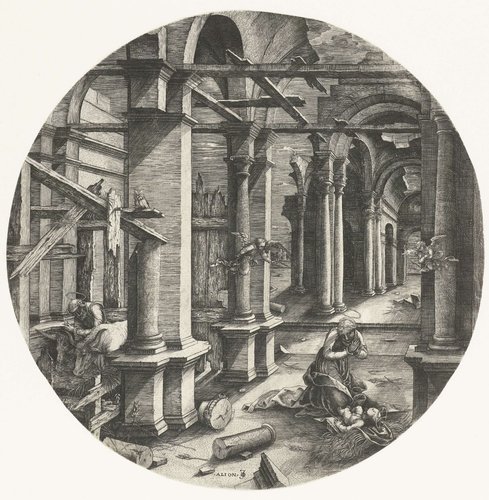
Active from around 1506 to 1551, de Gourmont established himself in Paris circa 1508–1520, producing engravings signed with his distinctive monogram JG, often alongside his brothers' publishing ventures. He later relocated to Lyon from 1522 to 1526, where three plates bear the address "Alion," marking some of the earliest copper engravings in that burgeoning print center. His style reflected the transition from Gothic to Renaissance forms in French printmaking, with evident Italian influences; he copied works like *St. Barbara* and *St. Sebastian* after the master engraver Marcantonio Raimondi, adapting their clarity and depth to his precise burin work.
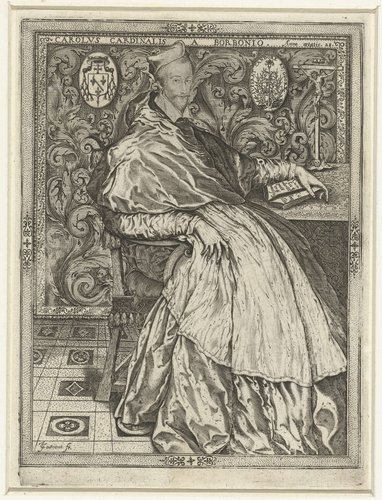
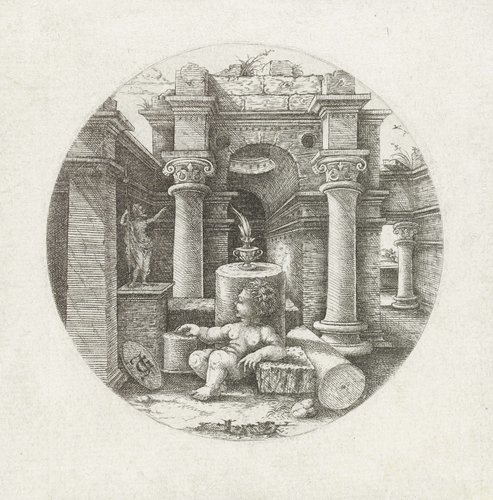
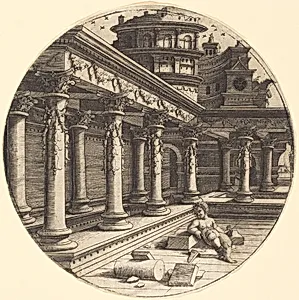
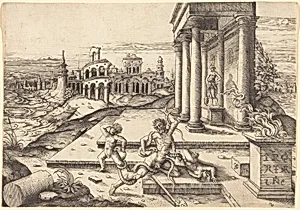
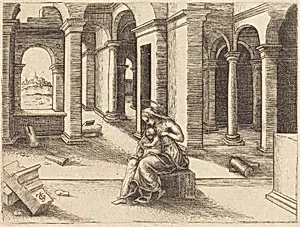
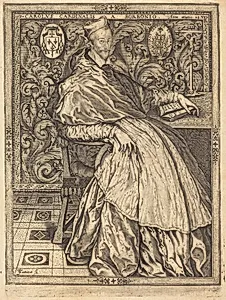
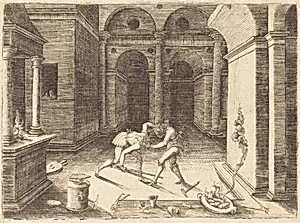
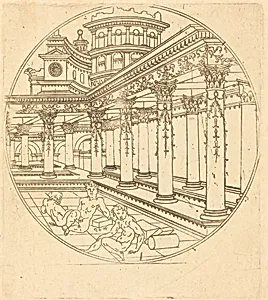
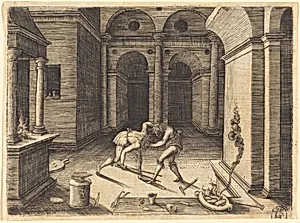
De Gourmont's oeuvre comprises about 30 engravings, blending religious, portrait, and ornamental subjects. Standouts include the poignant *The Child in the Courtyard* (ca. 1520–1530), capturing a toddler amid architectural ruins; dynamic genre scenes like *Two Apprentices Fighting*; classical adaptations such as *Laocoon*; and portraits like *Cardinal Charles de Bourbon* (c. 1551), inscribed "ourmont fe." Arabesque friezes contributed to the family's 1546 publication *Le Livre des moresques*, a pattern book for goldsmiths, engravers, and designers, showcasing his versatility.
Though his life remains sparsely documented beyond professional activities, de Gourmont's technical innovations helped elevate French engraving during the early Renaissance, bridging manuscript illumination traditions with the era's humanist motifs. His prints, held in collections like the National Gallery of Art and Art Institute of Chicago, endure as exemplars of the medium's expressive potential, influencing subsequent generations of printmakers in Paris and Lyon.