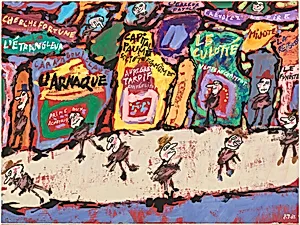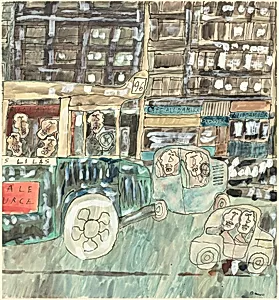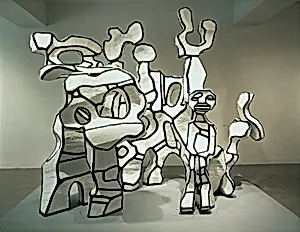
Jean Dubuffet (1901–1985) was a French painter and sculptor born into a prosperous family of wholesale wine merchants in Le Havre. His early life revolved around this bourgeois world, with childhood friendships among writers like Raymond Queneau and Georges Limbour shaping his intellectual circle. In 1918, at age 17, he moved to Paris to study painting at the Académie Julian but departed after just six months, repelled by its academic rigidity, and pursued a largely self-taught path thereafter. He briefly traveled to Italy and Brazil before marrying in 1925 and managing a wine business in Paris and Bercy, even profiting from supplies to the German occupiers during World War II. Painting remained sporadic until 1942, when he recommitted fully, capturing everyday scenes like Métro riders and rural figures in bold, Fauvist-inspired colors crammed into tense compositions.
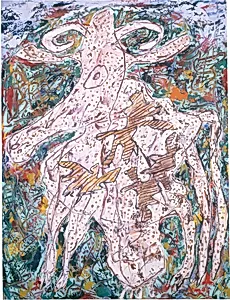
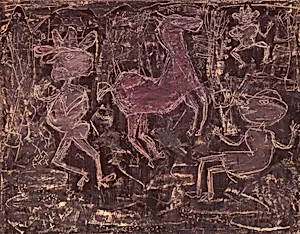
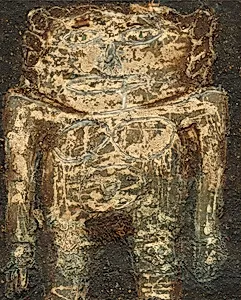
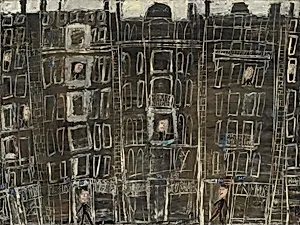
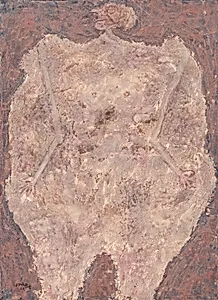
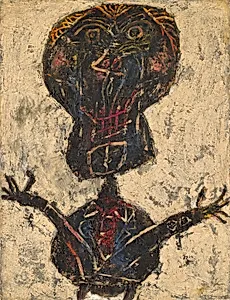
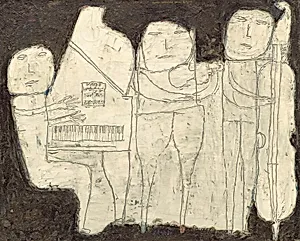
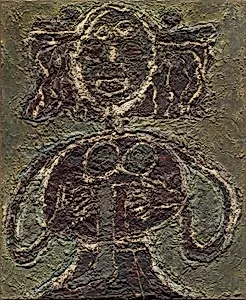
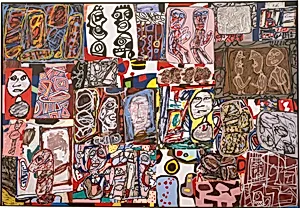
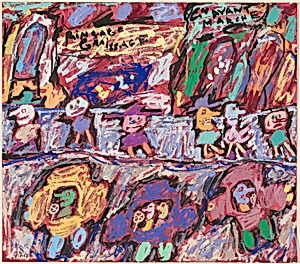
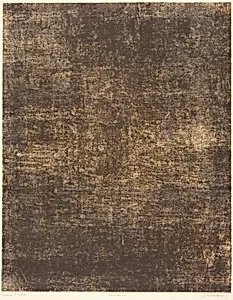
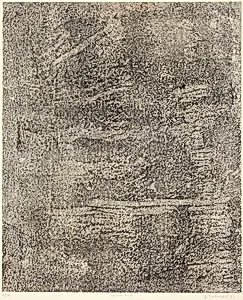
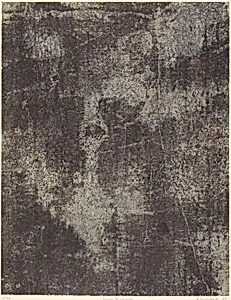
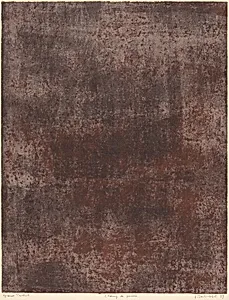
Dubuffet's breakthrough came through raw experimentation, amassing unconventional materials—butter, sand, gravel, tar, and plaster—into thick impasto layers that rejected polished aesthetics for primal vitality. Associated with the École de Paris, he championed "low art" drawn from graffiti, children's drawings, and asylum works, co-founding the Art Brut movement in 1948 alongside Jean Paulhan, André Breton, and others to celebrate outsider creations unbound by convention. Influenced by Jean Fautrier's textured paintings and nomadic Algerian motifs from his 1947–1949 travels, his style evolved: early portraits distorted faces into anti-psychological masks; mid-period works limited palettes to black, white, red, and blue; later sculptures in painted polystyrene formed whimsical environments like habitation towers. Friendships with Juan Gris, André Masson, Fernand Léger, and writers like Henri Michaux fueled his assault on elitist taste.
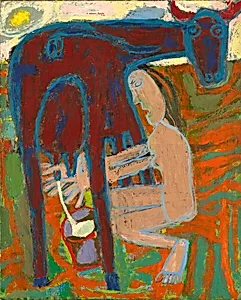
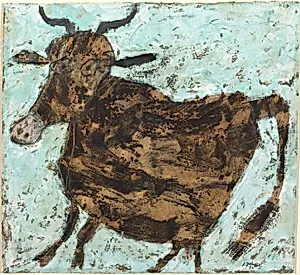
Key works include *Cows and Groomers* (1943), an early rural vignette; the *Hautes Pâtes* series (1946), showcasing crude material buildup; *Corps de dame jaspé* (1950), a marbled female form; and *Group of Four Trees* (1972), a monumental outdoor sculpture twisting abstract limbs skyward. His oeuvre spans over 400 solo exhibitions worldwide, with American dealers like Pierre Matisse amplifying his reach.
Dubuffet's legacy endures through the Collection de l'Art Brut in Lausanne—his vast outsider archive—and the Fondation Jean Dubuffet, preserving his defiant humanism. By elevating the visceral over refinement, he liberated art from cultural asphyxiation, inspiring generations to embrace the unpolished essence of creation.

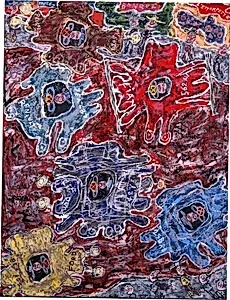
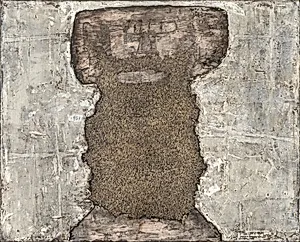
![Confiture matière - lumière (Texturologie LIII) [Preserves of Matter and Light (Texturology LIII)]](https://images.artheonmuseum.org/nga/thumb/confiture-matire-lumire-texturologie-liii-nga-92269.webp)