Ctrl K
1618–1682
Jean Le Pautre (baptized June 28, 1618; died February 2, 1682), a pioneering French designer and engraver, emerged from a distinguished family of artists in Paris. The elder brother of architect Antoine Le Pautre, he was father to engravers Pierre Le Pautre and Jacques Le Pautre, uncle to sculptor Pierre Lepautre, and through his daughter Marie's marriage, stepfather-in-law to sculptor Pierre Le Gros the Elder. His early training as an apprentice to a carpenter and builder equipped him with essential mechanical and constructive skills, alongside proficiency in drawing with the pencil, laying the foundation for his extraordinary career in ornamental design.
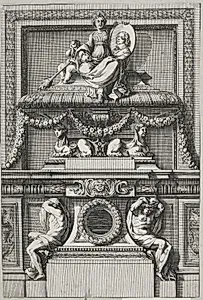
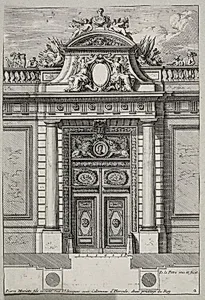
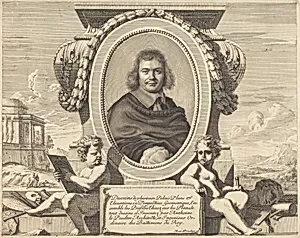
Le Pautre's style epitomized the exuberant Baroque ornamental tradition, characterized by flamboyant and elaborate motifs including amorini, swags, arabesques, and cartouches. He produced designs for ceilings, friezes, chimney-pieces, doorways, and mural decorations, as well as functional furniture like fire-dogs, sideboards, cabinets, console tables, and mirrors—many crafted for renowned ébéniste André Charles Boulle. Long employed at the Gobelins tapestry manufactory, he engraved nearly 1,500 original plates, including a self-portrait in his *Livre de portraiture* and *Chimneys in the Italian Manner* (c. 1665). Appointed Ordinary Engraver to Louis XIV and admitted to the French Academy as both *dessignateur* and *graveur* in 1677, his inventive visions bridged architecture and decoration, influencing generations.
Among his masterpieces is the etching *Sight of the Basin of Latone in the Gardens of Versailles* (1678), capturing the grandeur of royal landscapes. Le Pautre's prodigious output and imaginative flair established him as the progenitor of the Lepautre dynasty, revolutionizing European printmaking with his fusion of functionality and fantasy. His legacy endures in museum collections worldwide, where his prints inspire awe at the opulent possibilities of design.