Ctrl K
1665–1755
**Jean-Louis Lemoyne (1665–1755)** was a French sculptor active in Paris during the late Baroque and early Rococo periods. Born into a family of artists—his father was a painter and his grandfather a sculptor who contributed to the Louvre façade—he trained under the prominent sculptor Antoine Coysevox.
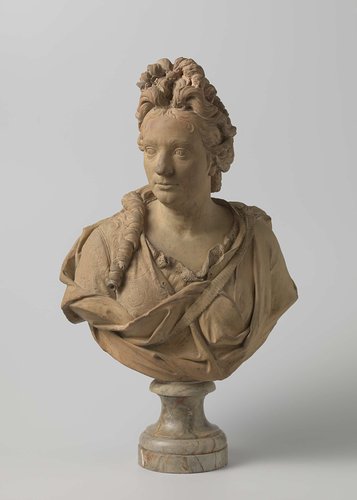
Lemoyne won the Prix de Rome in 1687 with a relief of the Flood but did not travel to Italy. Instead, he worked in Bordeaux, where he created a portrait of Louis XIV and a bust of Michel Du Plessis. By 1697 he had returned to Paris and was received into the Académie Royale de Peinture et de Sculpture in 1703, presenting an over-life-size bust of Jules Hardouin-Mansart. He received numerous royal commissions from Louis XIV and Louis XV, excelling particularly in portrait busts executed in the expressive, dynamic manner of his teacher Coysevox.
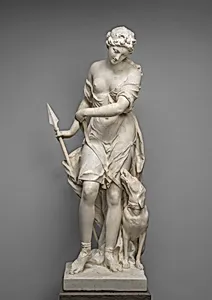
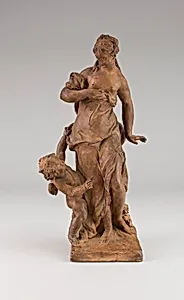
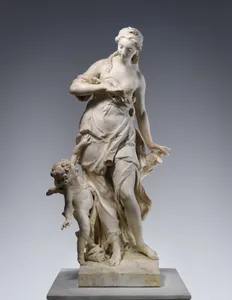
Among his notable works are the marble *A Companion of Diana* (1726, National Gallery of Art), the terracotta *La Crainte des Traits de l’Amour* (Metropolitan Museum of Art), the 1712 bust of Jacques-Rolland Moreau (Museum of Fine Arts, Boston), and the 1713 bust of Philippe II, Duke of Orléans (Palace of Versailles). These pieces showcase his skill in capturing both allegorical grace and lifelike portraiture.
Lemoyne’s legacy lies in his contributions to French sculpture and his role in a distinguished artistic dynasty. His son, Jean-Baptiste Lemoyne (1704–1778), became an even more celebrated sculptor, initially trained by his father before studying with Robert Le Lorrain; Jean-Baptiste produced major works at Versailles and is renowned for his vivid portrait busts. Jean-Louis continued working into advanced age until blindness curtailed his career around 1728, after which his son likely assisted him. His sculptures remain in major collections worldwide, including the Louvre and the Frick Collection.