Ctrl K
1890–1944
Jennie Lewis (1892–1944) was an American painter and printmaker whose lithographs captured the intimate character of San Francisco’s neighborhoods and waterfronts. Born in San Diego, she moved with her family to San Francisco around 1900. She studied under William Merritt Chase at his Carmel summer school in 1914, then continued her training at the California School of Fine Arts with Eric Spencer Mackey and Maynard Dixon, and at the California College of Arts and Crafts with Xavier Martinez. Before turning fully to printmaking, she taught art at a convent school and hand-colored greeting cards for local printers.
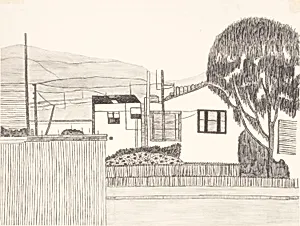
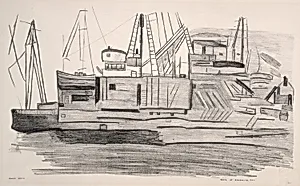
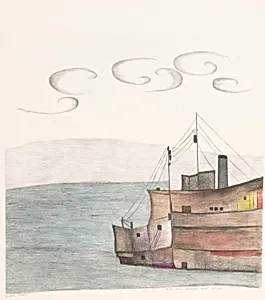
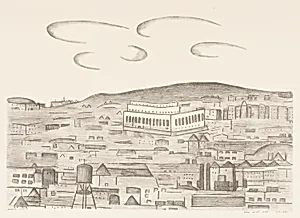
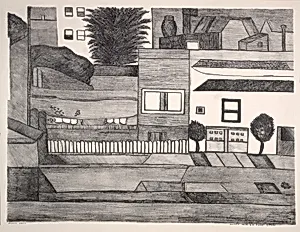
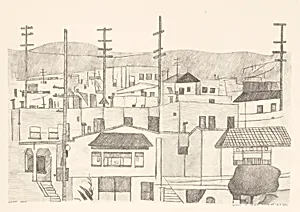
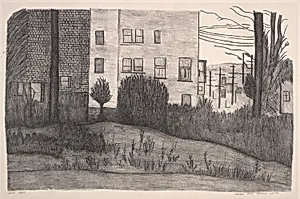
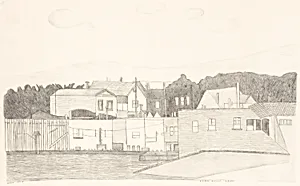
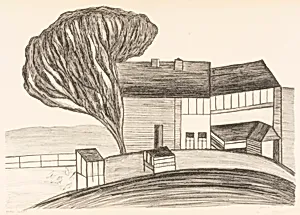
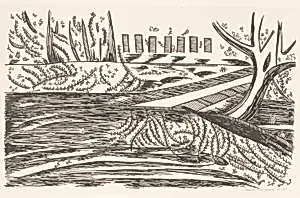
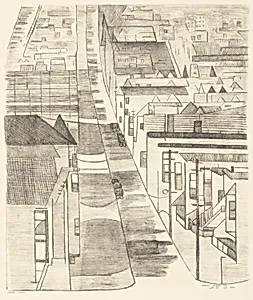
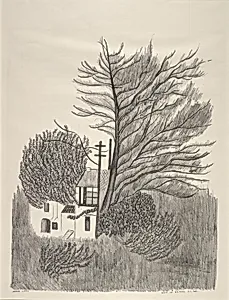
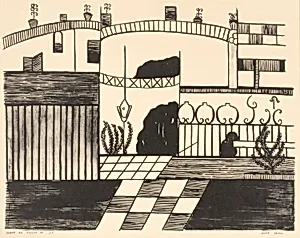
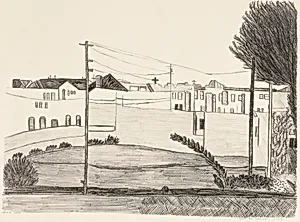
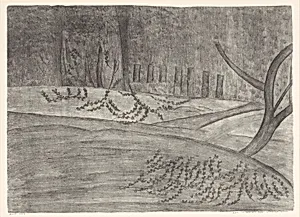
In 1938 Lewis joined the WPA’s California Federal Art Project, producing thirty-two lithographs over four years with master printer Ray Bertrand. Her work is distinguished by precise draftsmanship and a quiet, atmospheric quality that rendered ordinary city scenes—Victorian houses near Golden Gate Park, boats at Hunter’s Point, streets around the Presidio—with both documentary clarity and poetic stillness. These images were shown at the Golden Gate International Exposition in 1939; through the advocacy of FAP director Holger Cahill she received a solo exhibition at the Museum of Modern Art in New York in 1940. She was represented by San Francisco’s Paul Elder Gallery and became known for her sensitive record of the city’s architecture during the Depression years.
Lewis died on 13 March 1944 after becoming lost in a Sierra Nevada snowstorm while hiking. A memorial exhibition was mounted that June at the San Francisco Museum of Art (now SFMOMA). Her prints now reside in major collections including the Museum of Modern Art, the Metropolitan Museum of Art, the Smithsonian American Art Museum, and the San Francisco Museum of Modern Art, securing her place among the most accomplished California printmakers of the WPA era.)