
Ctrl K
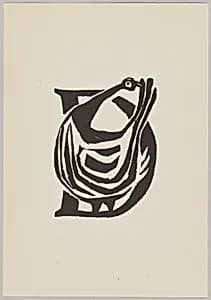
Jenny Johanna Dalenoord was born on June 17, 1918, in Cirebon on Java in the Dutch East Indies, where her father served as a prison director. Due to her mother's illness, the family relocated to The Hague in 1929 when Jenny was eleven years old. After completing secondary school, she studied at the Royal Academy of Art (Koninklijke Academie van Beeldende Kunsten) in The Hague, receiving instruction from Paul Citroen, Willem Schrofer, and Rein Draijer. She later taught at the same academy, marking a full-circle commitment to artistic education in her adopted city.
Dalenoord's versatile style encompassed watercolor painting, graphic design, linocuts, lithography, and illustration, aligning her with the innovative spirit of the New Hague School, an experimental movement that flourished in The Hague during the 1950s. A prolific illustrator, she created images for approximately 250 children's books, including Annie M.G. Schmidt's *Wiplala* (1957), Miep Diekmann's *Padu is gek* (1957) and *En de groeten van Elio* (1964), Anna Rutgers van der Loeff's *Gideons reizen* (1960), and Jetty Krever's *Muis, mol en rat* (1982). Her contributions extended to children's magazines like *Jippo*, *Okki*, and *Kris Kras*, as well as designs for postage stamps (1952 series), book covers, calendars, cartoons, and school plates. Standout fine art pieces include her linocut *De Fabriek*, awarded the Jacob Maris Prize by Pulchri Studio in 1955.
Dalenoord's accolades reflect her enduring impact: she shared the Best Children's Book prize for *Wiplala* (1957), won the ANWB Prize (1961), the German Youth Literature Prize (1964), and the Zilveren Penseel (Silver Brush) in 1982. Her works appear in prestigious collections, including the National Gallery of Art and Kunstmuseum Den Haag. In 2005, she donated her literary archive to the Nederlands Letterkundig Museum, preserving her legacy as a beloved figure in Dutch children's literature and graphic arts until her death in Soest on October 25, 2013.