Jiří Balcar (1929–1968) was a Czech graphic artist, painter, illustrator, typographer, and poster designer whose brief career bridged socialist realism's constraints and emerging international modernism in postwar Czechoslovakia. Born in Kolín to physician Emilian Balcar, whose 1945 suicide profoundly impacted the young artist, Balcar graduated from Kolín Gymnasium in 1948. He briefly studied art history at Charles University's Philosophical Faculty before dedicating himself to art, enrolling that year at Prague's Academy of Arts, Architecture and Design (VŠUP). There, he trained under professors František Tichý from 1948 to 1953, transferring to František Muzika's studio after the school's reorganization; he continued with the acclaimed surrealist Muzika post-graduation.
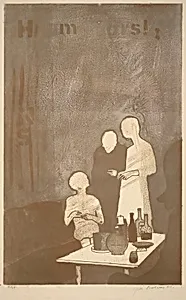
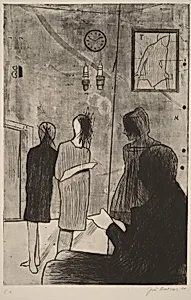
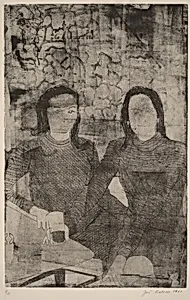
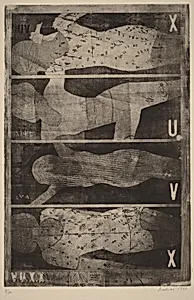
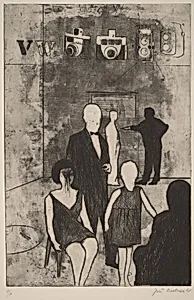
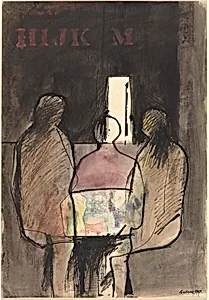
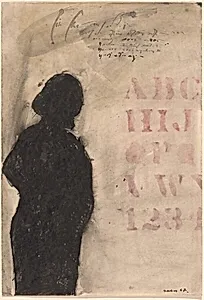
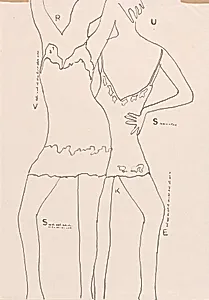
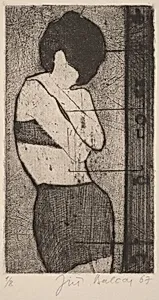
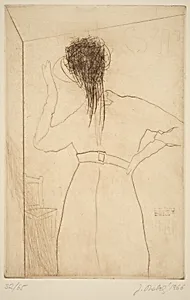
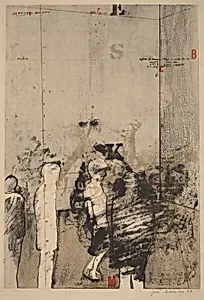
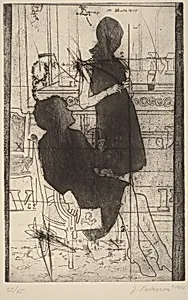
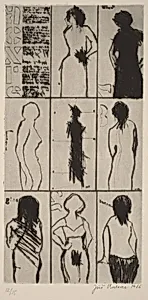
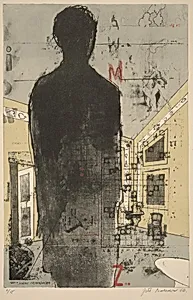
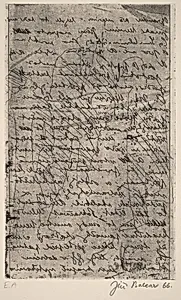
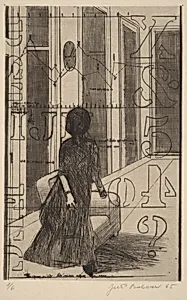
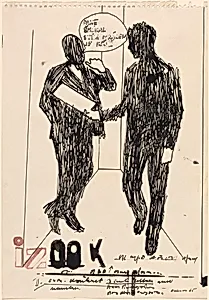
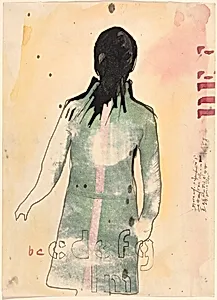
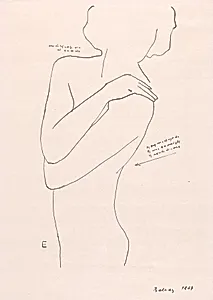
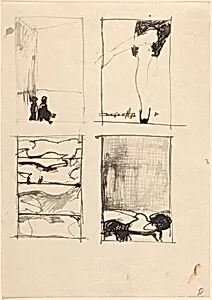
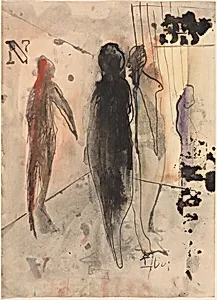
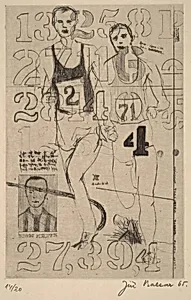
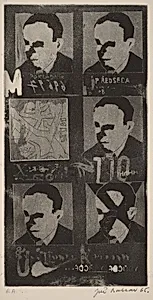
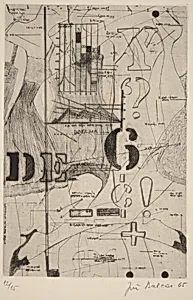
Balcar's style evolved from drypoint experiments during high school to typographic integrations in the early 1950s, marking his signature fusion of text and image. Influenced by Expo 58 in Brussels and other global shows, he pioneered Czechoslovakia's new wave of abstract painting, later incorporating Pop Art impulses and European figuration in monochrome, textured works exploring social alienation and everyday absurdity. Associated with the experimental Skupina Máj 57 (May 57 Group), he critiqued society through faceless figures and fragmented forms. Major works include the etching series *Homage to Kafka* (e.g., Plate VIII), *The Society Which Is Difficult to Describe* (1966), *Four Figures at a Table* (1967), and acclaimed film posters like *Moby Dick* (1962, Toulouse-Lautrec Prize winner), *The Death of Tarzan* (1962), and *The Dacians* (1967).
In the 1960s, Balcar edited for the magazine *Květen*, designed book covers, and traveled extensively, including a 1964 stint at Farleigh-Dickinson University in the U.S., where he exhibited in New York. His graphics and posters garnered solo shows in Prague (1959), Chicago's Jacques Baruch Gallery (1970, 1979 posthumous), and Brno. Tragically killed in a Prague car crash at 39, Balcar's oeuvre endures in premier institutions like the National Gallery of Art (52 works), Art Institute of Chicago, MoMA, Centre Pompidou, and Prague's National Gallery, cementing his legacy as a bold voice in Czech postwar art.