
Ctrl K
1754–1810
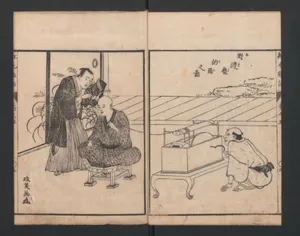
Jiro Morishima (1754–1810) was a Japanese artist active during the Edo period, best known for his contributions to ukiyo-e woodblock prints. His works frequently captured scenes from everyday life, reflecting the vibrant urban culture of the time with a focus on ordinary people, rituals, and domestic moments. One notable example is a diptych print depicting a tonsure ceremony, symbolizing themes of renunciation and devotion, which highlights his skill in narrative composition and detailed figural representation.
Morishima produced illustrated books as well, including a five-volume set dated 1787 executed in ink on paper. These publications demonstrate his engagement with the print medium’s potential for storytelling and visual documentation, aligning with the broader ukiyo-e tradition of disseminating images widely through woodblock techniques. His output, though limited in surviving examples, underscores the era’s emphasis on accessible art that blended entertainment with cultural observation.
Little is documented about Morishima’s early training or personal life, yet his technical proficiency suggests familiarity with the conventions of ukiyo-e workshops. With only one known artwork preserved in the museum’s collection, his legacy rests on these intimate glimpses into Edo-period society. His prints continue to offer valuable insight into the artistic currents of late eighteenth-century Japan, where woodblock media served both as popular entertainment and subtle social commentary.