
Ctrl K
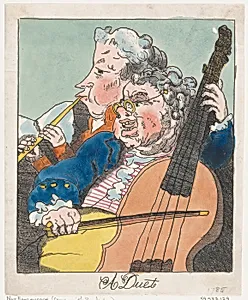
**Johann Christian Bach (1735–1782)** was a German composer of the early Classical era, often called the “London Bach” or “English Bach.” Born in Leipzig as the youngest surviving son of Johann Sebastian Bach, he received his initial musical training from his father on keyboard instruments and in music theory. After Johann Sebastian’s death in 1750, the fourteen-year-old Johann Christian continued his studies in Berlin under his half-brother Carl Philipp Emanuel Bach. He later traveled to Italy, where he studied composition with Padre Martini in Bologna, converted to Catholicism, and began composing church music and operas in the emerging galant style.
In 1762 Bach moved to London, where he quickly established himself as a leading figure in the city’s musical life. Appointed music master to Queen Charlotte, he composed operas such as *Orione* (1763) for the King’s Theatre and a series of successful symphonies, keyboard concertos, and chamber works. He was among the first to specify the pianoforte as the preferred instrument for his keyboard sonatas (Op. 5, 1766) and gave the first known solo piano recital in London in 1768. Together with the viola da gamba virtuoso Carl Friedrich Abel, he co-founded the celebrated Bach-Abel subscription concerts (1764–1782), which introduced new works to London audiences and helped shape the public concert tradition.
Bach’s elegant, melodic style bridged late Baroque and Classical idioms and exerted a direct influence on the young Wolfgang Amadeus Mozart, who arranged several of Bach’s sonatas as piano concertos. His legacy also includes pioneering copyright protection for musical scores in a landmark 1774 lawsuit and a body of operas, symphonies, and concertos that remain staples of the early Classical repertoire. Despite financial difficulties in his final years, Bach’s music continued to be admired for its graceful invention and orchestral color long after his death in London on 1 January 1782.