Ctrl K
1761–1847
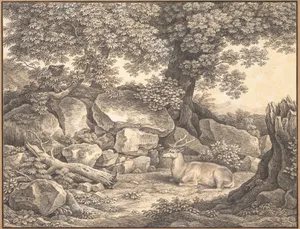
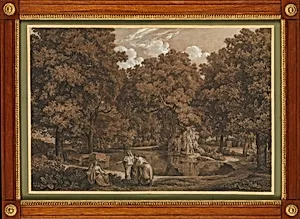
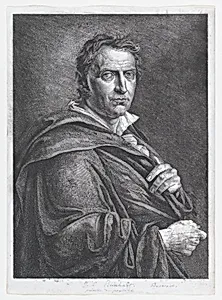
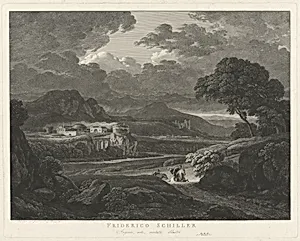
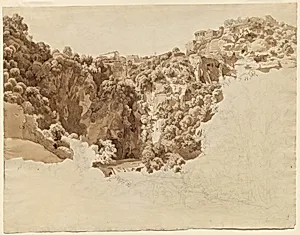
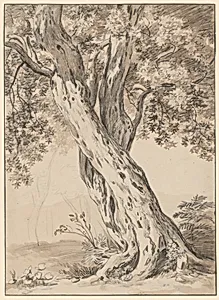
Johann Christian Reinhart (1761–1847) was a German painter and engraver who became one of the founding figures of German Romantic classical landscape painting, spending nearly six decades in Rome and transforming his adopted city into an inexhaustible subject. Born in Hof, Bavaria, on 24 January 1761, Reinhart initially followed his father into theological study before his passion for drawing took precedence. He trained under Adam Friedrich Oeser in Leipzig, then deepened his formation in Dresden under Johann Christian Klengel, who guided him through the Dutch masters and instilled in him a meticulous attention to natural detail. A significant friendship formed in 1785 with Friedrich Schiller added a literary and intellectual dimension to his sensibility.
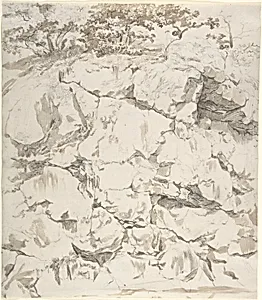
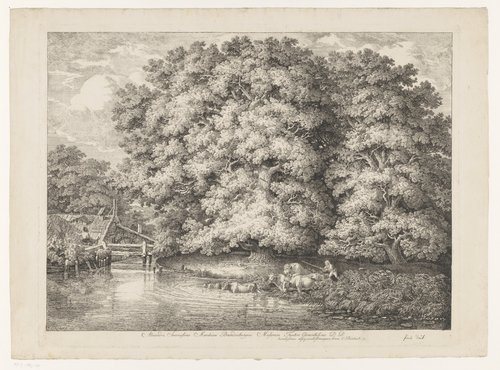
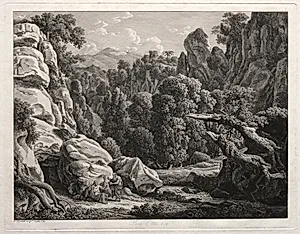
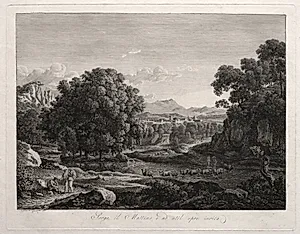
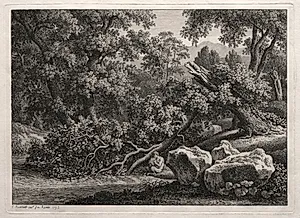
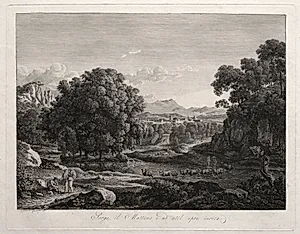
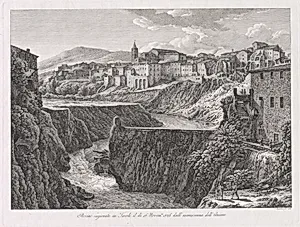
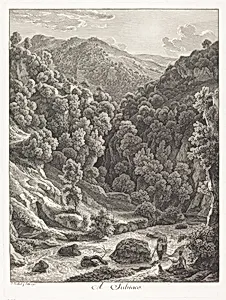
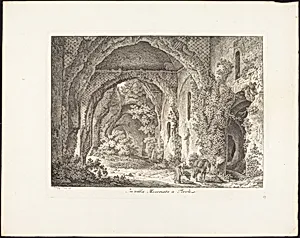
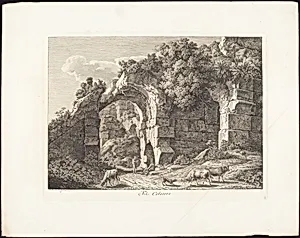
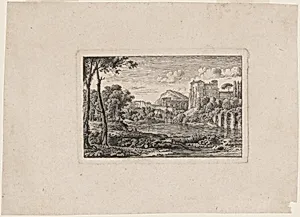
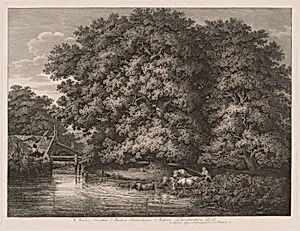
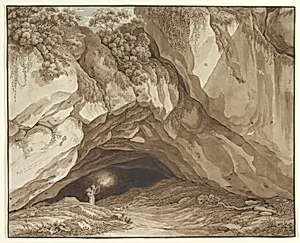
In 1789, supported by a grant from the Margrave of Ansbach-Bayreuth, Reinhart left for Rome at the age of twenty-eight and never returned to Germany. Working alongside Joseph Anton Koch, with whom he is jointly credited as a founder of German Romantic classical landscape, Reinhart developed an approach that fused the classical compositional logic of Claude Lorrain with Romantic feeling and an empiricist's eye for the Italian countryside. His output encompassed more than thirty paintings, around ninety drawings, numerous watercolors, and approximately 170 etched plates — including contributions to the series Malerisch radirte Prospecte aus Italien (1792–98).
His most prestigious commission came in 1829, when the future King Ludwig I of Bavaria asked him to paint four large panoramic views of Rome as seen from the royal villa on the Pincio — north, south, east, and west. These monumental tempera panels for Villa Malta secured his reputation and his appointment as court painter to King Ludwig I in 1839. He was also elected to the Academies of Berlin (1810), Rome (1813), and Munich (1830), reflecting the breadth of his European standing.
Reinhart died in Rome on 9 June 1847, aged eighty-six. His significance lies not in radical innovation but in the way he synthesized classical and Romantic currents into a sustained, luminous vision of the Italian landscape — revitalizing the tradition of heroic landscape painting for a new generation.