Ctrl K
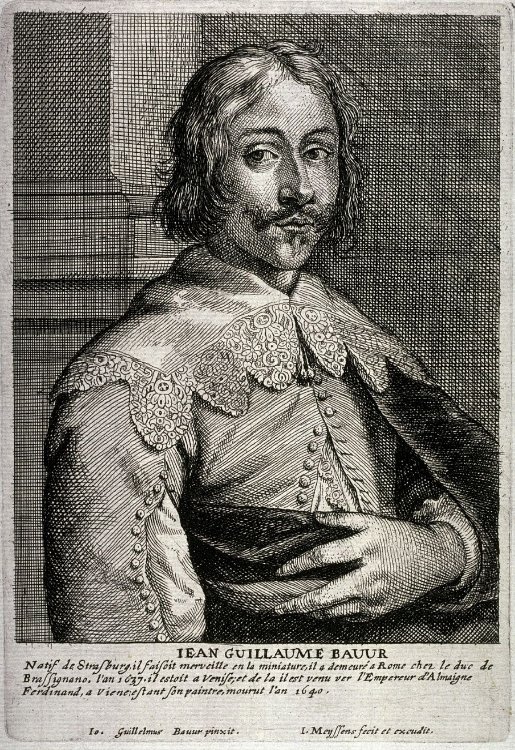
1607–1642
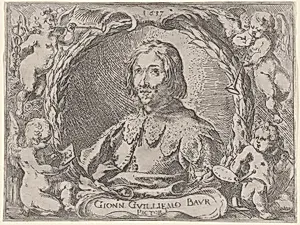
Johann Wilhelm Baur was a German draughtsman, painter, and printmaker who came of age in the early seventeenth century and built his reputation through the production of finely detailed illustrations and miniatures. Though the precise details of his training remain incompletely documented, Baur developed his skills in the tradition of German and Northern European graphic art, showing influences from the Mannerist and early Baroque currents then circulating across the continent. He spent time in Rome and Vienna, where exposure to Italian art and the patronage of the Habsburg court helped shape his refined, meticulous approach to composition and narrative.
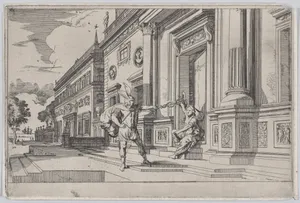
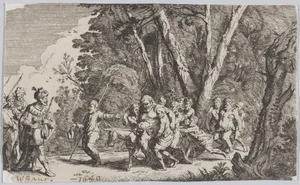
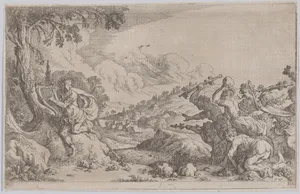
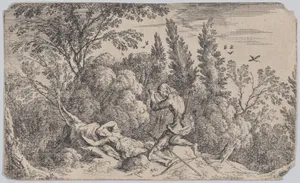
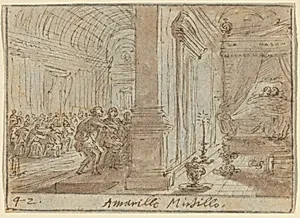
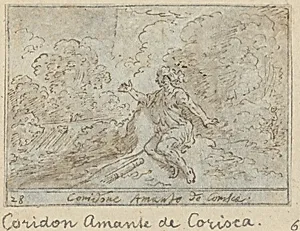
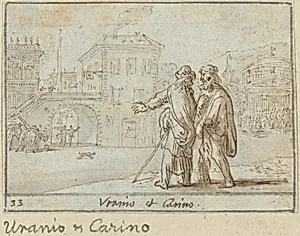
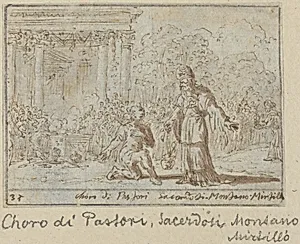
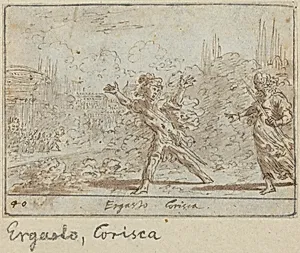
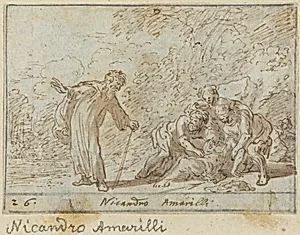
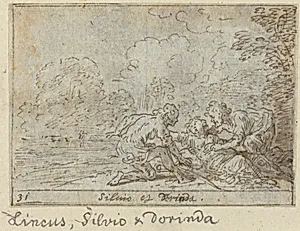
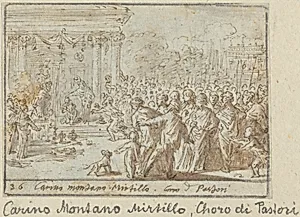
Baur became especially celebrated as an illustrator, contributing to some of the most ambitious publishing projects of his era. He produced drawings and engravings for illustrated editions of Ovid's Metamorphoses and Virgil's Aeneid, works that demonstrated his gift for distilling complex mythological narratives into vivid, elegantly staged scenes. His compositions balance clarity of storytelling with an ornamental richness typical of the courtly taste of his time, and his figures display a graceful, elongated quality rooted in the Mannerist tradition.
Working within the fertile crossroads of book illustration, miniature painting, and printmaking, Baur occupied an important place in the transmission of classical literary culture to a broad European readership. His illustrated books reached audiences far beyond the German-speaking world, contributing to a shared visual vocabulary for ancient myth and epic poetry during a period when illustrated volumes were among the most prestigious and widely circulated cultural objects.
Although Baur does not command the same recognition today as some of his contemporaries, his work represents a significant moment in the history of European book illustration and the decorative arts. His illustrations continued to be reprinted and copied well after his death, a testament to the enduring appeal of his compositional inventiveness and his ability to make the ancient world visually immediate for seventeenth-century viewers.