Ctrl K
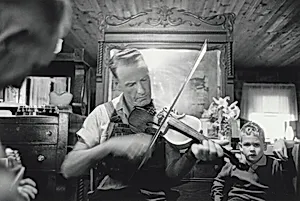
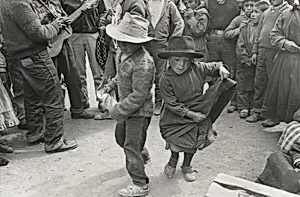
John Cohen (1932–2019) was a pioneering American photographer, painter, musician, and filmmaker whose multifaceted career bridged the vibrant art scenes of mid-20th-century New York and the raw authenticity of Appalachian folk traditions. Born on August 2, 1932, in Sunnyside, Queens, to Israel Cohen, a shoe store owner, he grew up on eastern Long Island, where he first picked up the guitar and banjo.) Cohen studied painting at Yale University under Josef Albers and photography with Herbert Matter, earning an MFA in the 1950s. His early academic pursuits included a master's thesis on indigenous Andean weaving traditions in Peru, sparking lifelong expeditions to document Q'ero culture through photographs, films, and recordings.)
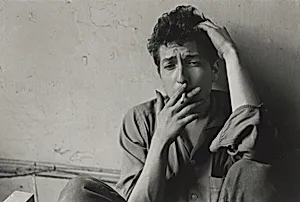
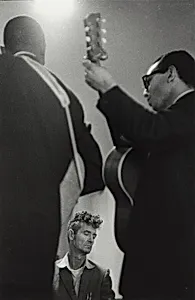
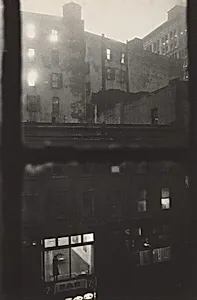
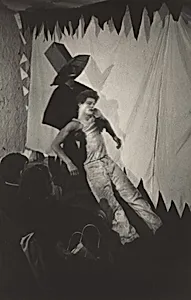
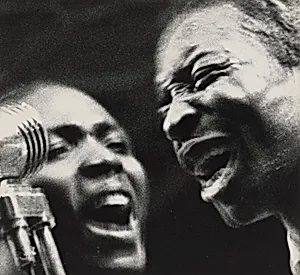
In the late 1950s, Cohen immersed himself in Manhattan's bohemian milieu, working as an assistant to Robert Frank on the seminal Beat film *Pull My Daisy* (1959) and capturing intimate portraits of Abstract Expressionists like Franz Kline and Red Grooms, as well as poets such as Allen Ginsberg, Jack Kerouac, and Gregory Corso. Iconic works from this period include *Robert Frank During the Filming of Pull My Daisy* (1959), *Jack Kerouac, Chinatown* (1959), and *Grace Hartigan, Aristodimos Kaldis and George Spaventa in the Cedar Tavern* (1959), which evoke the gritty energy of the Cedar Tavern and Tanager Gallery scenes. As a founding member of the New Lost City Ramblers in 1958, he championed the folk revival, documenting musicians like Roscoe Holcomb in his landmark film *The High Lonesome Sound* (1962) and early photographs of Bob Dylan at his loft (1962). His documentary style—personal, unpolished, and immersive—aligned with the Beat ethos and folk authenticity movements, extending to Peruvian festivals and Appalachian fieldwork alongside figures like Alan Lomax.)
From 1972 to 1997, Cohen served as a professor of visual arts at SUNY Purchase, directing its photography program and mentoring a new generation. He produced over a dozen ethnographic films, including *Q'eros: The Shape of Survival* (1979) and *Dancing with the Incas* (1990), and published monographs like *There Is No Eye: John Cohen Photographs* (2001), *Young Bob: John Cohen’s Early Photographs of Bob Dylan* (2003), and *Speed Bumps on a Dirt Road* (2019).) His photographs grace permanent collections at the Metropolitan Museum of Art, MoMA, and the Victoria & Albert Museum, with solo exhibitions at Yale's Art Gallery (his first, alongside Anni Albers) and institutions like the Centre Pompidou. In 2011, his vast archive—encompassing thousands of images, films, and recordings—entered the Library of Congress, cementing his legacy as a chronicler of America's cultural undercurrents and a bridge between high art and vernacular traditions.
All 8 artworks loaded