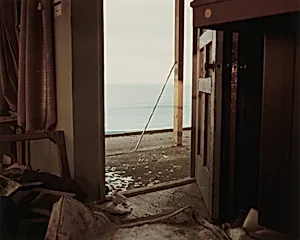
John Divola, born on June 6, 1949, in Los Angeles, California, spent his early years in Venice before his family relocated to the San Fernando Valley around age seven; his father worked at Douglas Aircraft in Santa Monica. He earned a B.A. from California State University, Northridge, in 1971, studying photography under Ed Steivers, a student of Harry Callahan, with visits from Robert Frank. Divola then pursued graduate studies at the University of California, Los Angeles, receiving an M.A. in 1973 and an M.F.A. in 1974, where he studied under photographer Robert Heinecken.
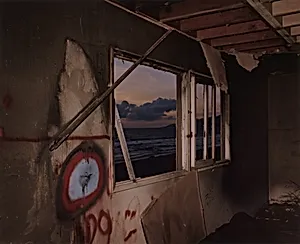
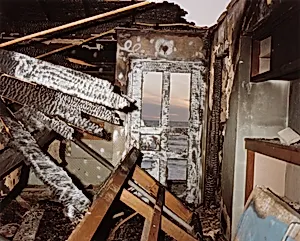
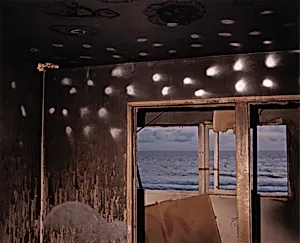
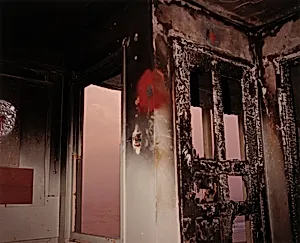
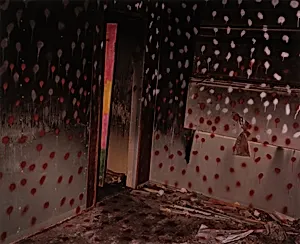
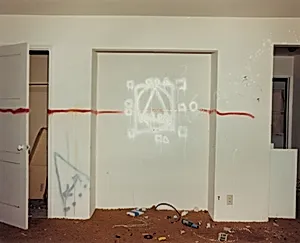
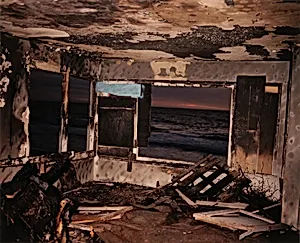
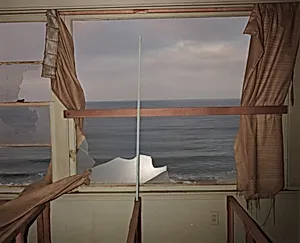
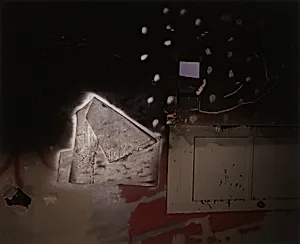
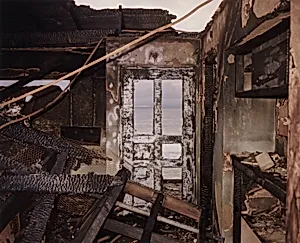
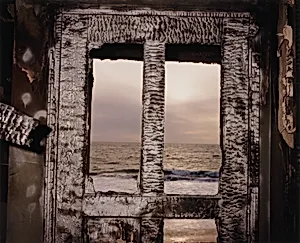
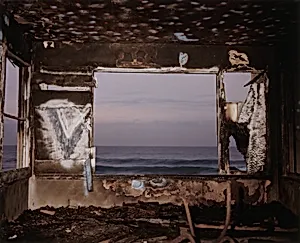
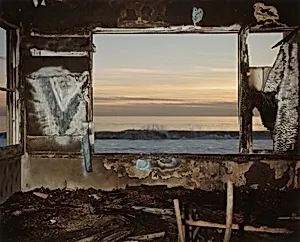
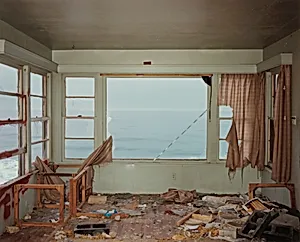
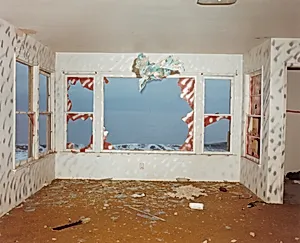
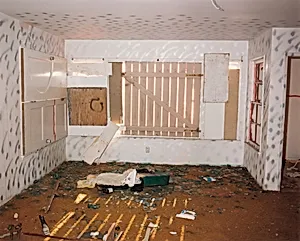
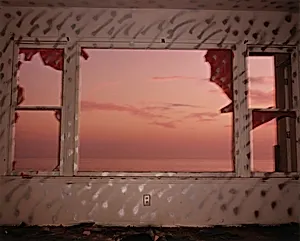
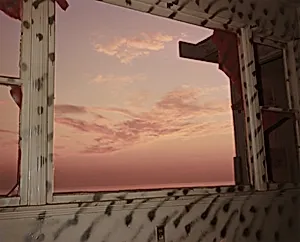
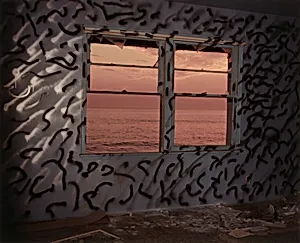
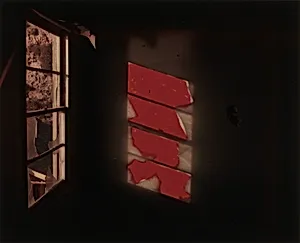
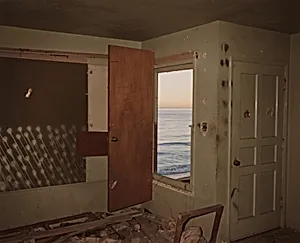
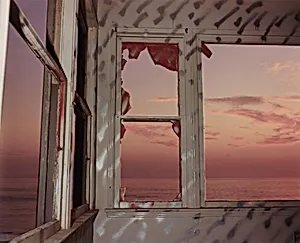
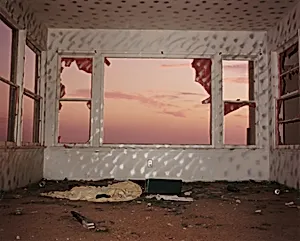
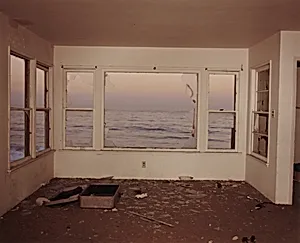
Divola's artistic practice centers on photography and digital imaging, probing the boundaries between abstraction and specificity, reality and artifice, destruction and creation—often through site-specific interventions in abandoned Southern California landscapes. Influenced by Minimalist and Conceptual art, as well as photographers like Walker Evans and Lee Friedlander, he blurs documentary observation with performative elements. Key series include *Vandalism* (1973–1975), where he spray-painted abstract marks, strings, and cardboard in derelict Los Angeles houses before photographing them; *Zuma* (1977–1978), capturing graffiti-filled abandoned beach structures against romantic skies; *Dogs Chasing My Car in the Desert* (1996–1998), kinetic black-and-white images of pursuing dogs; and *As Far As I Could Get* (1996–1997), self-timer photographs of himself fleeing the lens. Later works like *Isolated Houses* (1995–1998), *Abandoned Painting* (2006–2008), and *George Air Force Base* (2015–2020) continue exploring ruin and transcendence in forsaken spaces.
Since 1975, Divola has taught photography at institutions including California Institute of the Arts (1978–1988) and as a professor at the University of California, Riverside since 1988, profoundly shaping generations of artists. His oeuvre has appeared in over 200 group exhibitions, including Museum of Modern Art's "Mirrors and Windows" (1978) and Whitney Biennials (1981, 2017), alongside more than 90 solos worldwide; accolades include National Endowment for the Arts fellowships (1973, 1976, 1979, 1990) and a 1986 Guggenheim. Divola's legacy endures in his playful yet profound interrogation of photography's limits, transforming ephemeral vandalism into timeless meditations on entropy and escape.