Ctrl K
1706–1772
**John Ellicott (1706–1772)** was a leading English clockmaker, watchmaker, and scientist of the 18th century, renowned for his precision instruments and innovative contributions to horology. Born in London, he was the son of John Ellicott (d. 1733), a respected clockmaker who had been admitted to the Clockmakers’ Company in 1696 and served as its Warden.)
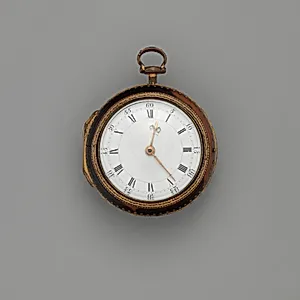
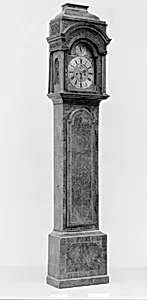
Ellicott trained under his father and quickly established himself in the family trade, becoming one of the most eminent makers of his era. He specialized in high-quality longcase clocks and pocket watches, often incorporating advanced scientific features such as temperature-compensated pendulums to improve accuracy. Elected a Fellow of the Royal Society in 1738, he combined craftsmanship with scientific inquiry, earning a reputation for both the beauty and technical excellence of his work.)
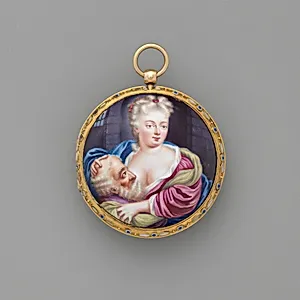
Among his notable creations are elegant longcase clocks from the 1730s and 1740s, including examples in walnut cases now held in major collections such as the Metropolitan Museum of Art. He also produced fine pocket watches, some featuring enamel decoration. His clientele included royalty, and he is sometimes noted as clockmaker to King George III.
Ellicott’s legacy endures through the survival of his instruments in museums worldwide and his influence on subsequent generations of British clockmakers. His integration of scientific principles into practical horology helped elevate the status of clockmaking as both an art and a science during the Enlightenment.
All 3 artworks loaded