Ctrl K
1816–1872
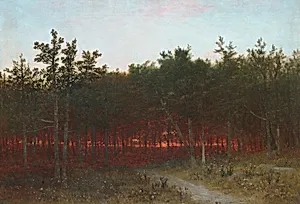
John Frederick Kensett (1816–1872) was one of the most admired American landscape painters of the nineteenth century, a central figure of the Hudson River School whose late work pioneered the atmospheric, light-saturated style now known as Luminism. Born in Cheshire, Connecticut, into a family of engravers, Kensett learned the craft of engraving in his youth, a discipline that gave him an early training in precision and an acute sensitivity to tone. In 1840 he traveled to Europe with fellow artists Asher B. Durand and John Casilear, spending seven formative years studying and painting in England, France, and Italy, where he absorbed the lessons of Constable, the Old Masters, and the example of his traveling companions.
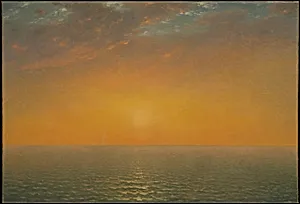
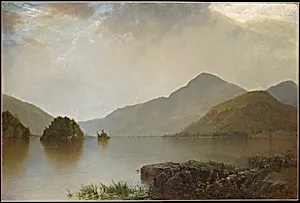
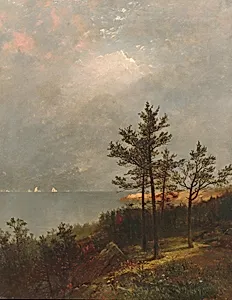
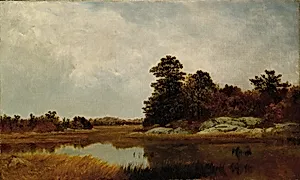
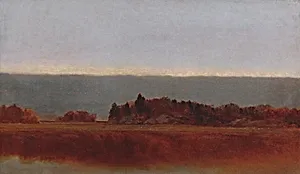
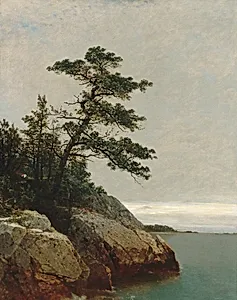
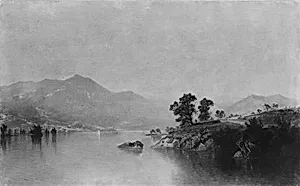
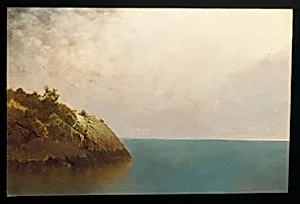
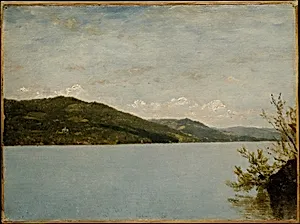
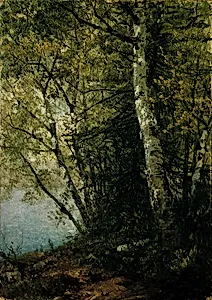
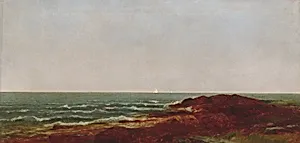
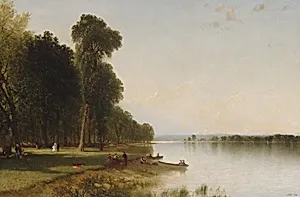
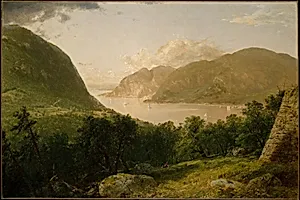
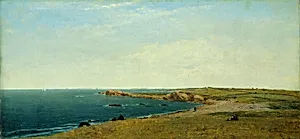
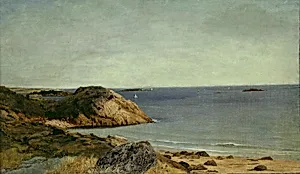
Returning to the United States in 1847, Kensett quickly established himself as one of the most sought-after landscape painters in the country. His work of the 1850s falls clearly within the Hudson River School tradition — expansive, detailed views of the American wilderness imbued with a sense of divine presence in nature. By the 1860s, however, Kensett's paintings underwent a remarkable transformation: compositions became more spare and horizontal, detail gave way to expanses of luminous sky and still water, and color was refined to a hushed palette of silvers, blues, and greens. Works such as his series of Long Island Sound views exemplify this late style, which achieves a meditative stillness that has no precise equivalent in the work of his contemporaries.
Kensett was also a man of considerable institutional importance in American art life, a founder of the Metropolitan Museum of Art in New York and a generous supporter of younger artists. His sudden death in 1872, following a boating accident, cut short a career still in full creative development.
The large bequest of his studio works — sold after his death to benefit a charitable fund — constitutes one of the richest single-artist bodies of work to enter American collections, and Kensett's reputation has only grown since, with his Luminist paintings now recognized as among the most original achievements of nineteenth-century American art.