Ctrl K
1854–1907
John Frederick Peto, born on May 21, 1854, in Philadelphia to picture-frame gilder Thomas Hope Peto and Catherine Marion Ham, grew up as the eldest of five children, primarily raised by his maternal grandparents and aunts. Largely self-taught, he briefly studied at the Pennsylvania Academy of the Fine Arts in 1877, where he first exhibited and befriended fellow trompe-l'œil artist William M. Harnett, though he did not train under a specific mentor. After working in a Chestnut Street studio amid Philadelphia's artist community, Peto married schoolteacher Christine Pearl Smith in 1889 and relocated to Island Heights, New Jersey, the following year, building a home with an attached studio where his daughter Helen was born in 1893 and his aunts joined the household.
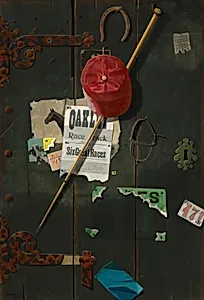
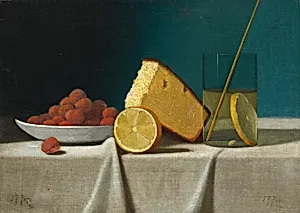
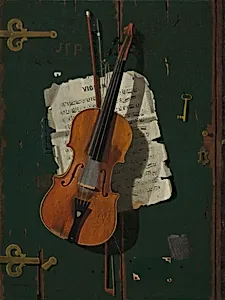
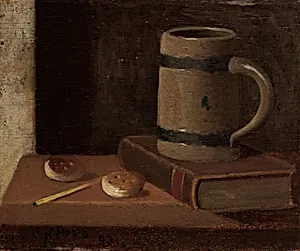
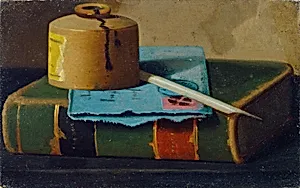
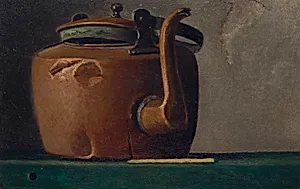
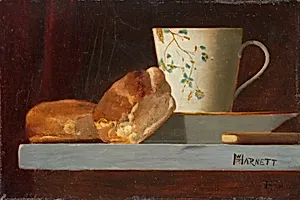
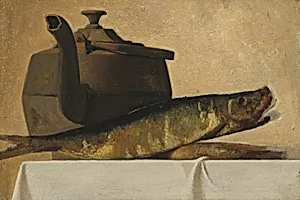
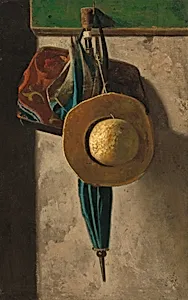
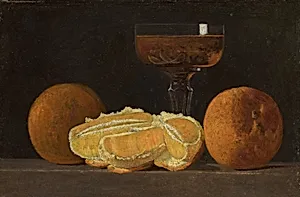
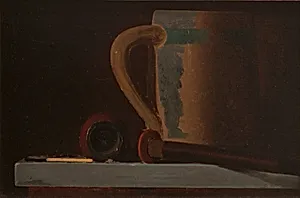
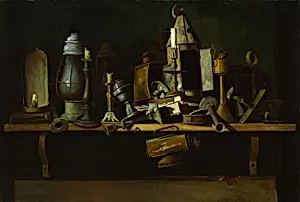
Peto worked in the trompe-l'œil tradition, crafting hyper-realistic still lifes that "fooled the eye" with everyday objects rendered in soft, painterly contours, thick textures, bright palettes, and dramatic light effects—distinct from Harnett's crisper realism. His subjects evolved from newspapers, pipes, and food in early works like *Take Your Choice* (1885) and *Still Life with Oranges and Goblet of Wine* (1880–1890s) to more abstract letter racks and office boards in later pieces, such as *The Old Violin* (c. 1890), *For the Track* (1895), *Fish House Door* (1905), and *Letter Rack* (1907). These compositions, often featuring worn, humble items like violins against weathered doors or crowded ephemera, evoked nostalgia and emotional depth, achieving near-modernist patterns.
Though he exhibited regularly at the Pennsylvania Academy until 1888, Peto lived in obscurity after moving to Island Heights, supplementing income by selling small paintings to tourists, bartering, and playing cornet at Methodist camp meetings amid struggles with Bright's disease. He died on November 23, 1907, at age 53, his oeuvre overshadowed—many canvases even bore forged Harnett signatures.
Rediscovered in the late 1940s by critic Alfred Frankenstein through stylistic analysis, Peto's paintings gained acclaim via a 1950 Brooklyn Museum show and Frankenstein's 1969 book *After the Hunt*, influencing artists like Jasper Johns and Roy Lichtenstein. Today, his works grace institutions like the National Gallery of Art and Metropolitan Museum, while his Island Heights studio museum preserves his legacy as a master of illusionistic intimacy.