John Gossage was born in Staten Island, New York City in 1946, and his path into photography was unconventional: he left school at sixteen to pursue private instruction from three giants of mid-twentieth-century photography — Lisette Model, Alexey Brodovitch, and Bruce Davidson. This early, intensive mentorship shaped a deeply personal and intellectually rigorous practice. Gossage later relocated to Washington, D.C., where a grant from the Washington Gallery of Modern Art allowed him to refine his vision, and where he would eventually teach for many years at the University of Maryland.
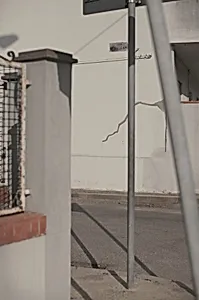
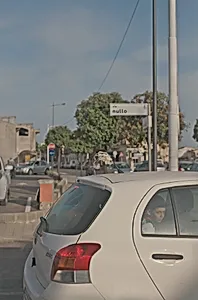
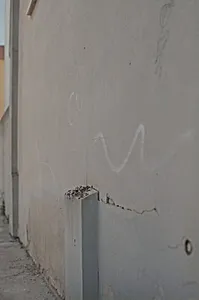
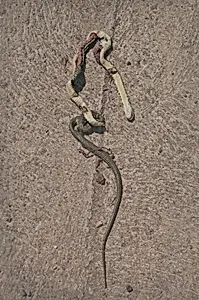
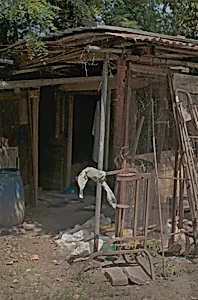
Gossage's work is defined by an unflinching attention to the overlooked and discarded: abandoned tracts of urban land, graffiti, debris, and the structures of surveillance and power embedded in the built environment. Rather than the heroic or picturesque, he seeks out the interstitial spaces of cities — the edges and margins that reveal how memory and politics shape physical space. He is particularly celebrated for his artist's books, a form he uses to control the sequencing and rhythm of his photographs with the care of a novelist.
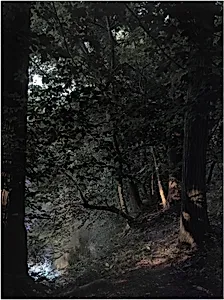
Among his most acclaimed projects is The Pond (1985), a meditative exploration of a neglected park in Washington, D.C., that became a landmark in photobook history. His long engagement with Berlin — where he photographed derelict landscapes over years in the 1980s — produced a vast body of work documenting a city defined by rupture and forgetting. In 2010, Steidl published The Thirty-Two Inch Ruler / The Map of Babylon, two companion volumes marking his first foray into color photography. His work is held in major collections including the Museum of Modern Art, the Art Institute of Chicago, and the Menil Collection, and he received a Guggenheim Fellowship in 2012.