Ctrl K
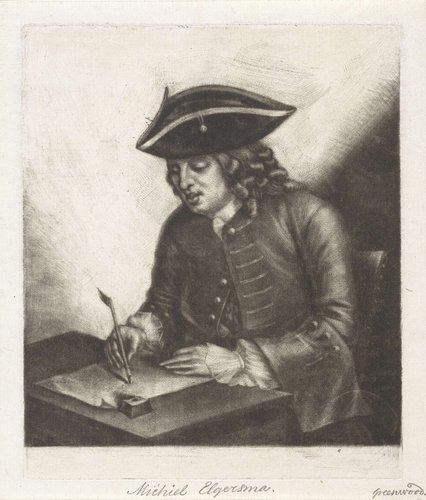
John Greenwood (born 1959) is a contemporary British painter who rose to prominence in the early 1990s as part of the Young British Artists (YBA) movement that transformed the British art scene. Born in Leeds, Yorkshire, Greenwood studied at York College of Arts and Technology, Cheltenham, and the Royal College of Art, graduating in 1990 with multiple prestigious awards. His work, characterized by meticulous technique, pictorial wit, and recurring themes of sexuality, came to national attention when he exhibited in the inaugural Young British Artists show at the Saatchi Gallery in 1992 alongside Rachel Whiteread, Damien Hirst, and other artists who would define 1990s British art. Greenwood's paintings draw inspiration from 17th-century Spanish and Dutch still life traditions, employing one-point perspective and painstaking painting technique to create symmetrical compositions in confined, claustrophobic spaces that combine technical virtuosity with conceptual mischief.
John Greenwood was born in 1959 in Leeds, Yorkshire, an industrial city in northern England. Growing up during the 1960s and 1970s, Greenwood would have witnessed profound social and cultural transformations in British society.
His artistic education began at York College of Arts and Technology before continuing at Cheltenham and culminating at the Royal College of Art in London, one of Britain's most prestigious art schools. At the RCA, Greenwood developed his distinctive approach combining old master techniques with contemporary sensibilities.
In 1990, Greenwood graduated from the Royal College of Art with exceptional honors, receiving the Cite Internationale Paris residency award, the Burston Award, and the Midland Bank purchase award. These multiple accolades signaled his emergence as a significant talent, providing crucial early career support and recognition.
In 1992, Greenwood achieved breakthrough recognition when his work was featured in the inaugural Young British Artists exhibition at the Saatchi Gallery's Boundary Road location. This show, curated by Charles Saatchi, introduced a generation of artists who would dominate British art discourse through the 1990s and beyond.
Exhibiting alongside Rachel Whiteread, Langlands & Bell, Alex Landrum, and Damien Hirst, Greenwood found himself part of a movement that combined conceptual rigor with media savvy and market awareness. While many YBAs worked in installation, sculpture, and new media, Greenwood maintained commitment to traditional painting, albeit with contemporary twists.
His paintings from this period demonstrated his mature style: meticulous, technically accomplished works inspired by 17th-century still life painting, particularly Spanish and Dutch traditions. However, Greenwood subverted these historical models through contemporary subject matter, pictorial wit, and recurring exploration of sexuality.
A distinctive technical characteristic was his use of one-point perspective creating confined, claustrophobic spaces where symmetrical creations appear imprisoned. This combination of old master technique with unsettling spatial compression and contemporary content created paintings that were simultaneously familiar and disorienting.
Following his initial success in the 1990s, Greenwood took a career break from active exhibition, stepping back from the art world at a time when many of his YBA contemporaries were achieving increasing commercial success and international recognition.
In 2014, Greenwood returned with "Being John Greenwood," a solo exhibition curated by Juan Bolivar at the C+C Gallery in London. This show, covering works from 1994–2014, reintroduced his work to audiences and allowed reassessment of his contribution to British painting.
In 2015, Greenwood received the Bronze Award at the 2nd Nanjing International Art Festival, demonstrating continued recognition and his work's international appeal. This award marked his re-engagement with active artistic practice and exhibition after his hiatus.
Greenwood's recent work continues exploring the themes and techniques that characterized his earlier production: meticulous painting combining old master influences with contemporary sensibilities, exploration of sexuality and psychological tension, and technical virtuosity in service of conceptually complex imagery.
Artheon Research Team
Last updated: 2025-11-09
Biography length: ~920 words
Wikidata (CC0)