Ctrl K
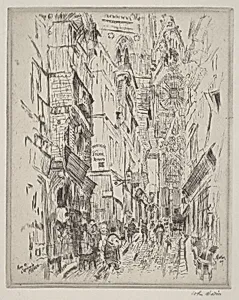
1870–1953
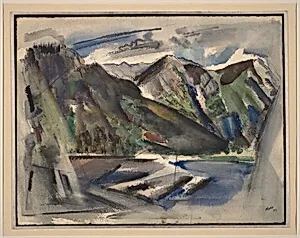
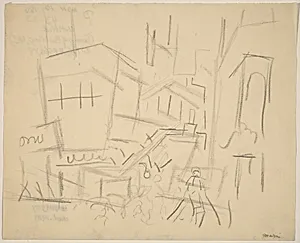
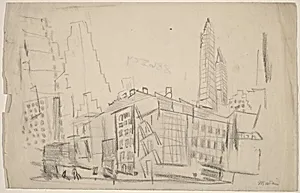
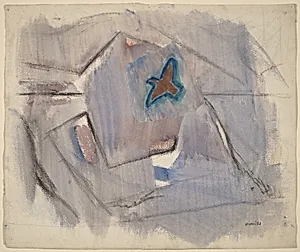
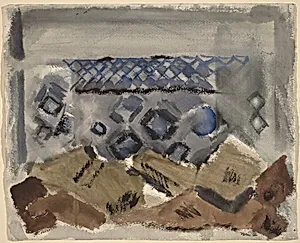
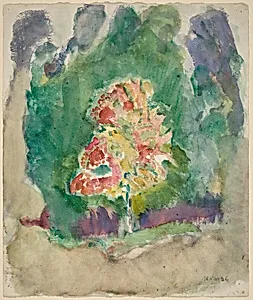
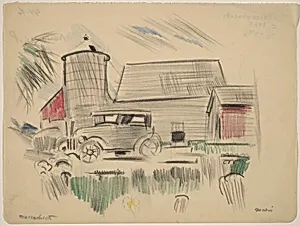
John Marin (1870-1953) was a pioneering American modernist known for his dynamic watercolors and oils of the Maine coast and New York City. A late bloomer who didn't commit to art until nearly 30, Marin developed a distinctive style combining European modernism with American subjects, capturing the energy of skyscrapers and the elemental power of the sea through fractured planes, vibrant color, and expressive brushwork. His four-decade association with Alfred Stieglitz—who exhibited and promoted his work at 291, The Intimate Gallery, and An American Place—made him one of America's most celebrated artists. By 1947, Look magazine declared him 'America's Artist No. 1,' and in 1950 he became the first American to exhibit at the Venice Biennale.
Born December 23, 1870, in Rutherford, New Jersey, Marin lost his mother nine days after birth and was raised by two aunts in Weehawken. He attended Stevens Institute of Technology briefly and worked unsuccessfully as an architect before turning to art at age 28.
From 1899 to 1901, he studied at the Pennsylvania Academy of Fine Arts under Thomas Anshutz and William Merritt Chase, then at the Art Students League in New York. His formal training was conventional, giving little hint of the modernist to come.
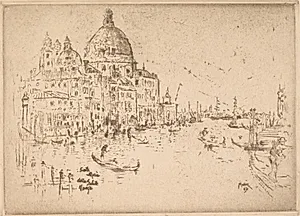
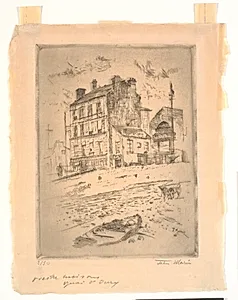
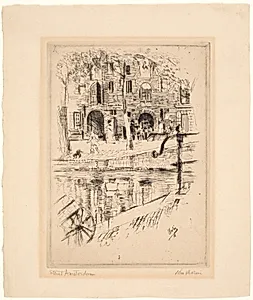
Marin traveled to Europe in 1905, spending six years painting in Paris, the Netherlands, Belgium, England, and Italy. Exhibiting at the Paris Salons, he encountered Fauvism, Cubism, and other modernist movements that would transform his approach.
In 1909, photographer Edward Steichen noticed Marin's watercolors at the Salon d'Automne and introduced him to Alfred Stieglitz, beginning a relationship that would shape Marin's career. That same year, Stieglitz gave Marin his first one-man show at 291 gallery.
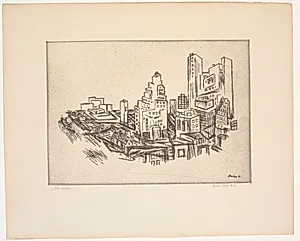
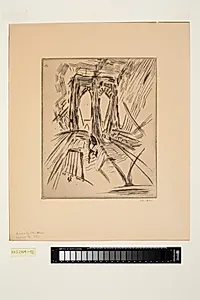
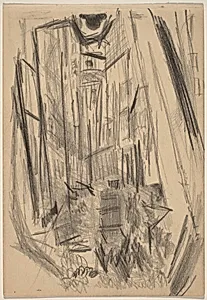
Returning to America, Marin became central to the Stieglitz circle alongside Georgia O'Keeffe, Arthur Dove, and Marsden Hartley. His watercolors of the Woolworth Building and Brooklyn Bridge captured Manhattan's dynamic energy through fractured, Cubist-influenced compositions.
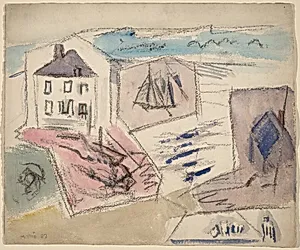
He participated in the landmark 1913 Armory Show and began spending summers in Maine in 1914. The rocky coast immediately captivated him, becoming—along with New York—his primary subject for the rest of his life.
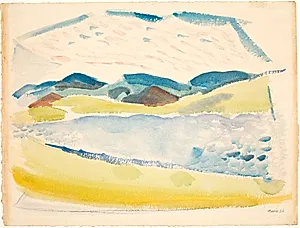
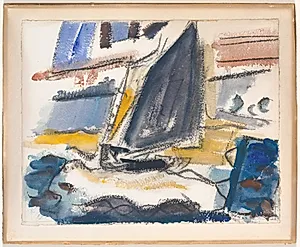
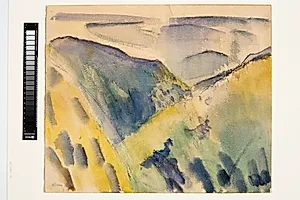
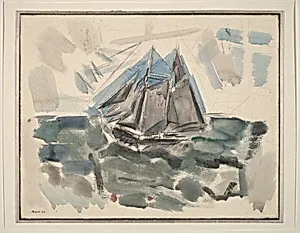
Through the 1920s and 30s, Marin refined his distinctive style—watercolors treated with oils' boldness, oils handled with watercolor's spontaneity. His Maine seascapes captured waves, rocks, and weather with unprecedented immediacy. Summers in Taos, New Mexico (1929-30) produced 100 acclaimed desert watercolors.
A 1936 MoMA retrospective confirmed his stature. By the late 1940s, he was America's most famous living artist, influencing emerging Abstract Expressionists with his gestural freedom and use of bare canvas. He died October 2, 1953, in Addison, Maine.
Biography length: ~860 words