Ctrl K
1874–1937
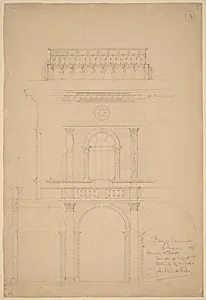
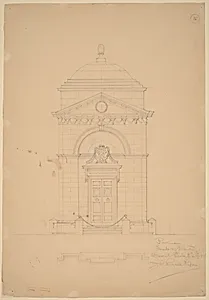
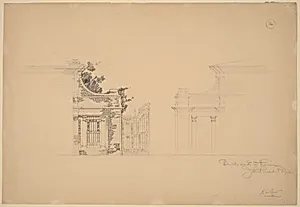
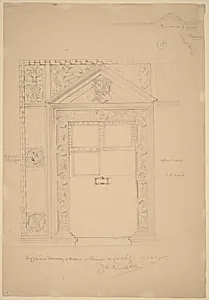
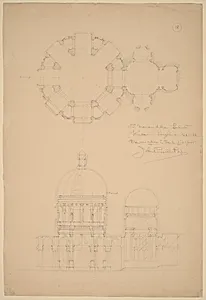
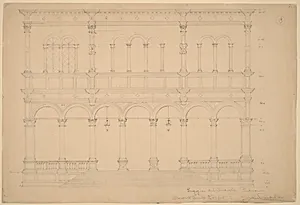
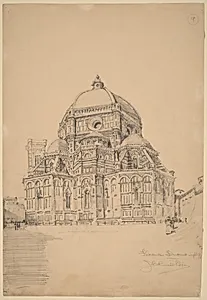
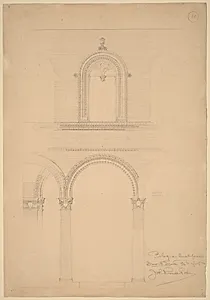
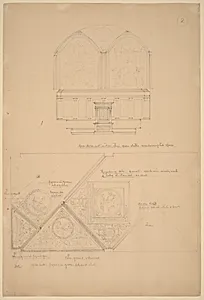
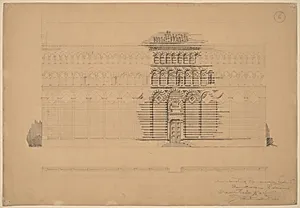
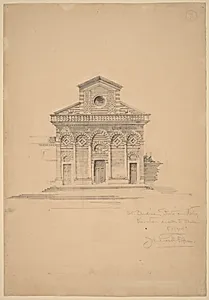
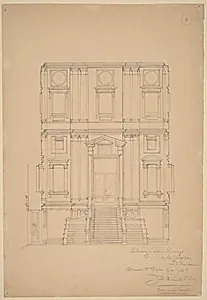
John Russell Pope (1874–1937) was a preeminent American architect whose monumental neoclassical designs defined much of Washington's monumental core. Born on April 24, 1874, in New York City to portrait painters John Pope and Mary Avery Loomis Pope, he grew up immersed in an artistic milieu that foreshadowed his own career. After initial studies at the City College of New York in 1888 and graduation from Columbia University's School of Mines in 1894, Pope pursued advanced training abroad. He became the first architect to win the Rome Prize, studying at the American Academy in Rome for 18 months, followed by three years at the École des Beaux-Arts in Paris, where he honed his Beaux-Arts mastery through travels sketching ancient Roman, Gothic, and Renaissance structures. Upon returning in 1900, he worked in the office of architect Bruce Price before establishing his independent practice in 1903.
Pope's oeuvre embodied the refined restraint of Beaux-Arts classicism, blending neoclassical grandeur with eclectic revivals—Gothic, Georgian, and French eighteenth-century motifs—while prioritizing symmetry, scale, and historical allusion. Early commissions included summer houses in Newport, Rhode Island, and Washington residences like the McLean House (1907), but his reputation soared with the House of the Temple for the Scottish Rite (1911–1915) and the Abraham Lincoln Birthplace Memorial (1909–1911). He crafted master plans for Yale University (1919) and Dartmouth College (1922), alongside cultural landmarks such as the Baltimore Museum of Art (1927–1929), Theodore Roosevelt Memorial Hall at the American Museum of Natural History (1929–1935), and the British Museum's Duveen Gallery (1931–1938).
In his later years, Pope dominated Washington's skyline, designing more National Mall structures than any contemporary. Iconic masterpieces include the National Archives Building (1933–1935), Constitution Hall (1929), and posthumously completed gems like the West Building of the National Gallery of Art (1938–1941) and the Jefferson Memorial (1939–1943), the latter modeled on his Huntington Mausoleum (1927). Serving on the U.S. Commission of Fine Arts (1912–1922), he championed civic monumentality amid modernist critiques, earning accolades like the Architectural League Medal (1916). Pope's legacy endures in these enduring symbols of American democracy, reappraised in exhibitions like the National Gallery's 1991 tribute, affirming his pivotal role in classical revival architecture.