Ctrl K
1856–1925
John Singer Sargent, born on January 12, 1856, in Florence to American expatriate parents FitzWilliam Sargent, an eye surgeon and medical illustrator, and Mary Newbold Singer, an amateur artist, enjoyed a nomadic childhood across Europe. His mother nurtured his artistic inclinations with sketchbooks and museum visits, while he received early watercolor lessons from German landscape painter Carl Welsch at age thirteen. Sargent's formal training began in 1868 in Rome, followed by sporadic attendance at Florence's Accademia di Belle Arti from 1870 to 1873. In 1874, he moved to Paris, studying under the innovative portraitist Carolus-Duran from 1874 to 1878, whose atelier championed the alla prima technique inspired by Diego Velázquez—painting directly with bold brushwork sans preparatory drawings. He also took drawing classes at the École des Beaux-Arts with Adolphe Yvon, earning a silver prize, and briefly under Léon Bonnat.
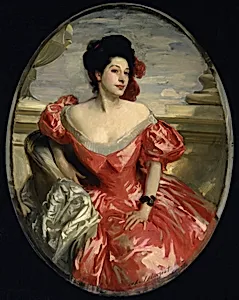
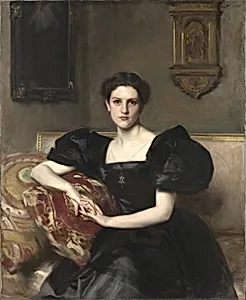
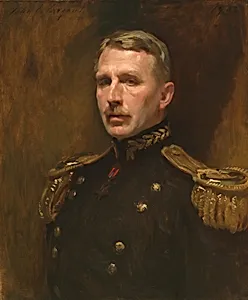
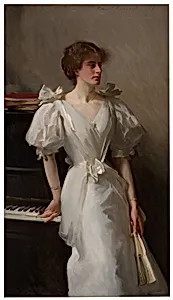
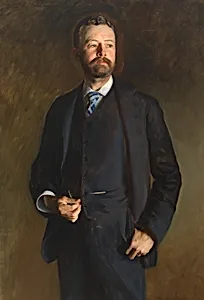
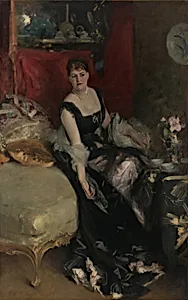
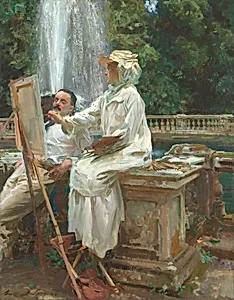
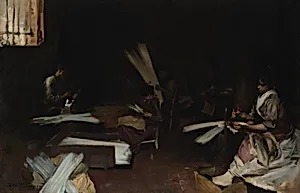
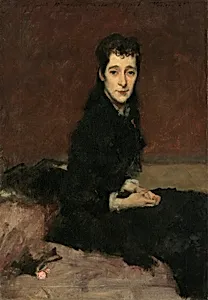
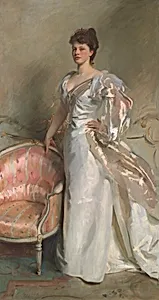
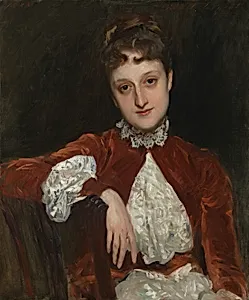
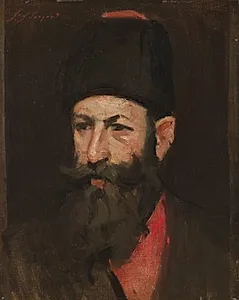
Sargent's style blended grand manner portraiture with Impressionist looseness, drawing fluidly with the brush to capture Edwardian opulence and psychological depth, influenced by Velázquez, Frans Hals, Édouard Manet, and friends like Claude Monet. Debuting at the Paris Salon in 1877 with *Fanny Watts*, he gained acclaim for works like *Oyster Gatherers of Cancale* (1878) and early portraits such as *Dr. Pozzi at Home* (1881). His masterpiece *Portrait of Madame X* (1884), a daring depiction of Virginie Amélie Avegno Gautreau, sparked scandal for its provocative strap-slip, prompting his relocation to London in 1885–86 where he became the era's preeminent portraitist. Icons followed: *The Daughters of Edward Darley Boit* (1882), *Carnation, Lily, Lily, Rose* (1885–86), *Lady Agnew of Lochnaw* (1892), and *Ellen Terry as Lady Macbeth* (1889).
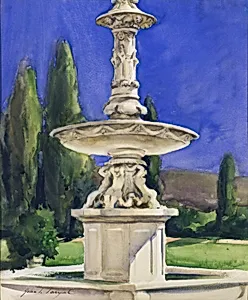
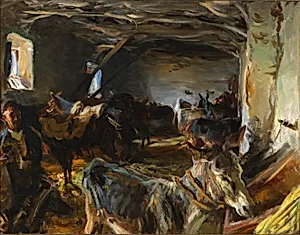
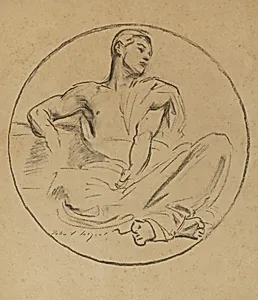
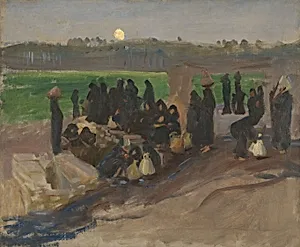
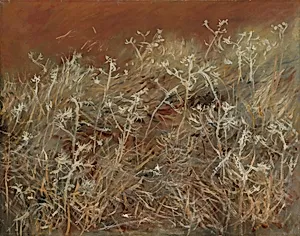
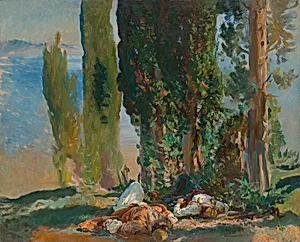
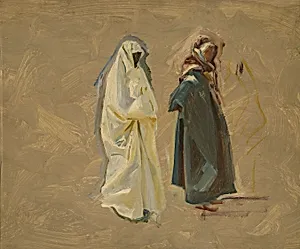
By the early 1900s, weary of flattering sitters, Sargent largely ceased commissioned portraits, turning to luminous watercolors—over 2,000 produced during travels to Venice, the Alps, and the Middle East—and ambitious murals, including the *Triumph of Religion* series for Boston Public Library (1895–1919) and installations at the Museum of Fine Arts, Boston. As a World War I artist, he created the harrowing *Gassed* (1919). Sargent died on April 15, 1925, in London, leaving nearly 900 oils that chronicled Belle Époque glamour. Once dismissed amid modernism's rise, his reputation revived in the late 20th century through exhibitions revealing his nuanced engagement with identity, race, and globalism, cementing his status as a virtuoso whose technical bravura endures.