Ctrl K
1850–1870
José María Marés was a Spanish printer, publisher, and broadside producer active in Madrid from approximately 1850 to 1870. Operating first from addresses on the Calle de Relatores and later from the Plazuela de la Cebada under the imprint Imprenta de Marés y Compañía, he ran one of the more prolific popular-print establishments in mid-nineteenth-century Madrid. His presses produced illustrated broadsides—large single sheets combining wood-engraved imagery with letterpress text—that reached broad audiences in an era before illustrated periodicals became widespread.
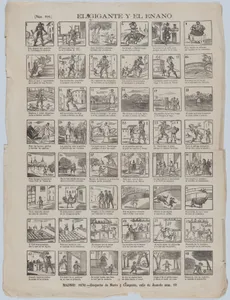
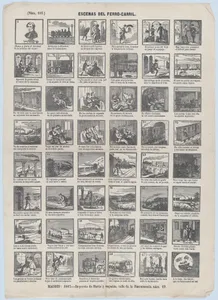
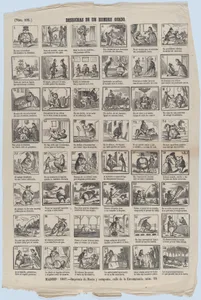
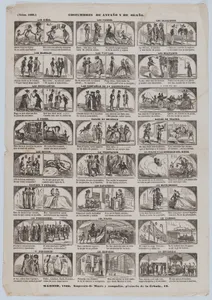
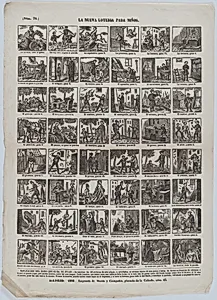
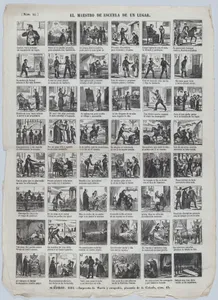
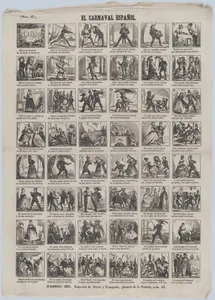
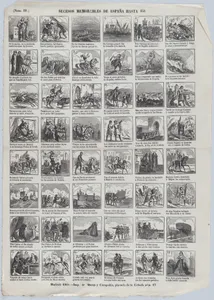
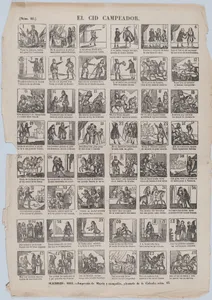
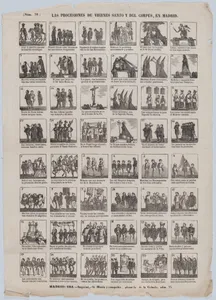
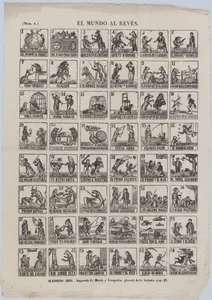
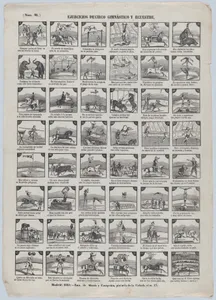
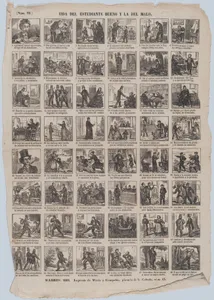
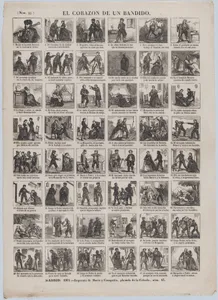
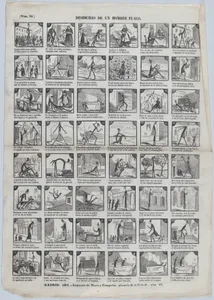
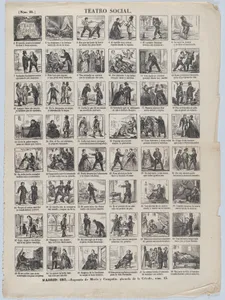
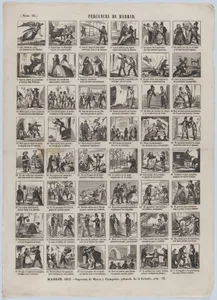
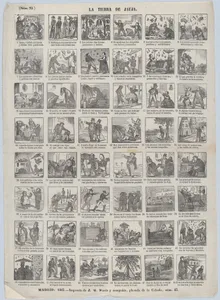
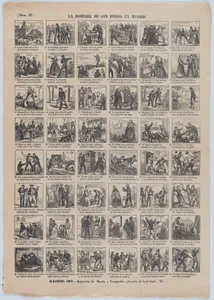
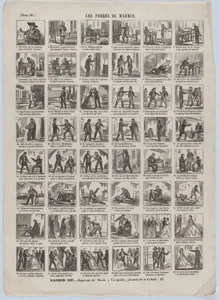
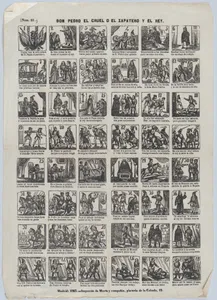
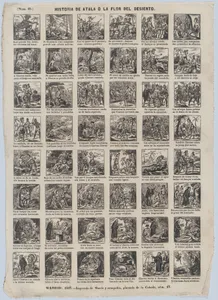
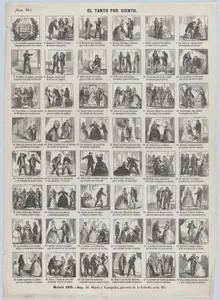
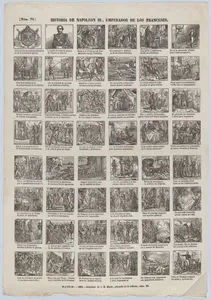
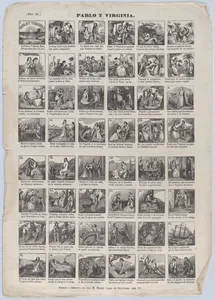
The broadsides that Marés issued are distinguished by their ambitious pictorial programs: many sheets contain forty-eight or more individual vignettes arranged in grids, each accompanied by a caption. His subjects ranged widely across Spanish popular culture: scenes from Aesop's Fables (1861), episodes from the zarzuela The Valley of Andorra, passages of Holy Scripture, the legend of the Wandering Jew, theatrical subjects drawn from Don Juan Tenorio, the world of the commedia dell'arte figure Pulcinella, and pointed social commentary contrasting Spanish customs past and present. A broadside from 1866, depicting twenty-four paired scenes of old and new customs, is among the most vivid documents of the cultural tensions of the period.
Marés worked within a tradition of popular print culture that served as one of the primary visual media for working-class and middle-class audiences in nineteenth-century Spain—offering moral instruction, entertainment, literary illustration, and social satire in an accessible and affordable format. The skill of the engravers employed in his shop varied, but the best of the sheets attributed to his press demonstrate a confident command of narrative composition within the demanding format of the multi-scene broadside.
The Metropolitan Museum of Art holds a significant group of broadsides published by Marés, acquired through the Max G. Wildnauer Fund and preserved in the Drawings and Prints department. These works constitute one of the most substantial surviving records of his output and offer an invaluable window into the visual culture of mid-nineteenth-century Madrid.