
Ctrl K
1686–1695
José Sánchez stands as a shadowy yet pivotal figure in the vibrant world of late 17th-century Mexican colonial painting, active in Mexico City from 1686 to 1695. Little is known about his early life or formal training, as biographical details remain sparsely documented amid the era's guild records. What survives points to his rapid ascent within the Reformed Painters' Guild of Mexico City, established in 1686 to regulate artistic standards and elevate painting to a liberal art. Sánchez quickly emerged as an authority, serving as an examiner alongside the esteemed Cristóbal de Villalpando (ca. 1649–1714) from 1686 to 1688, evaluating aspiring masters like José de Rojas and shaping guild practices that echoed into the 18th century.
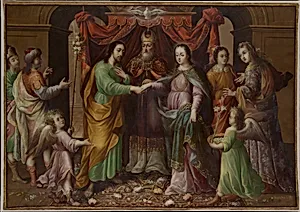
Working firmly within the Mexico City painters' guild tradition, Sánchez produced religious works emblematic of New Spain's Baroque style—dramatic, devotional scenes blending European techniques with local materials. His known oeuvre is limited, but *The Marriage of the Virgin* (ca. 1690), an expansive oil on canvas measuring 50¼ × 72 inches, exemplifies his skill. This monumental piece, part of a series on the Virgin Mary's life, depicts the holy union with rich color, intricate figures, and innovative grounds incorporating plant ash and calcite pseudomorphs over a double red layer—hallmarks of guild-approved innovation. Acquired by the Metropolitan Museum of Art in 2016, it reveals Sánchez's mastery of light, composition, and theological narrative, tailored for ecclesiastical patrons.
Sánchez's legacy endures through his guild influence rather than prolific output, as his brief career bridged Villalpando's grandeur and the Juárez family's innovations. By enforcing rigorous examinations and material standards, he helped professionalize Mexican painting, fostering a legacy of technical sophistication amid the Counter-Reformation's fervor. Today, his sole surviving major work serves as a window into the guild's "Old World, New World" synthesis, where imported traditions met indigenous resources, cementing Mexico City's role as a colonial art hub.