Ctrl K
1815–1863
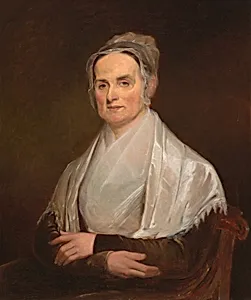
Joseph Kyle (1815–1863) was a prominent American portrait painter and pioneering panorama artist, born in Clermont County, Ohio, where he was orphaned at an early age. His artistic training began in Cincinnati before he relocated to Philadelphia around 1834, studying under the esteemed portraitists Thomas Sully and Bass Otis. There, Kyle honed his skills in meticulous oil portraiture, capturing light and detail with a precision reminiscent of contemporaries like Charles Loring Elliott and G.P.A. Healy. By the early 1840s, he had established a reputation with works such as his 1840 portrait of a young boy and the 1841 oil-on-canvas depiction of abolitionist Lucretia Coffin Mott, now in the National Portrait Gallery.
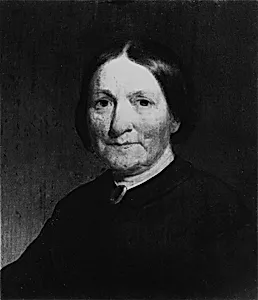
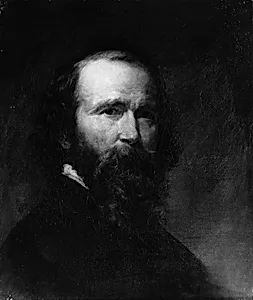
In 1846, Kyle moved to New York City, where he exhibited portraits and still lifes at the National Academy of Design starting in 1847 and was later elected an Associate (A.N.A.). His oeuvre includes intimate cabinet portraits like *Portrait of a Lady* (1861) and his own *Self-Portrait* (ca. 1859), both held by the Metropolitan Museum of Art, showcasing his ability to compete with emerging photography through refined brushwork. Kyle also ventured into landscape scenes, such as *Halt on the Prairie* (1852), reflecting mid-19th-century American expansionist themes.
Kyle's most ambitious phase came in the late 1840s, when he pivoted to moving panoramas—a popular 19th-century spectacle blending fine art and theater. Partnering with his son-in-law Jacob Dallas (1825–1857), an illustrator for Harper's and Leslie's, he produced at least nine such works between 1848 and 1858, including massive 900-foot-long depictions of the St. Lawrence River (1848), Mississippi River, and two versions of John Bunyan's *Pilgrim's Progress* (1850–1851). Incorporating designs from National Academy associates like Daniel Huntington, these toured North America for decades, drawing 200,000 visitors in New York alone and bridging academic painting with mass entertainment.
Illness struck around 1859 while working in New Haven, Connecticut, curtailing Kyle's output until his death in New York City in 1863. Though his panoramas are largely lost, Kyle's legacy endures in his surviving portraits, which exemplify the technical virtuosity of antebellum American art, and his innovative role in the "Age of Panoramas," influencing public engagement with visual storytelling.
All 3 artworks loaded