Ctrl K
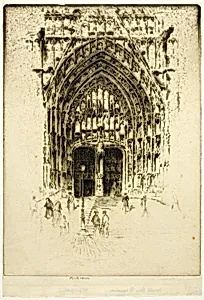
1857–1926
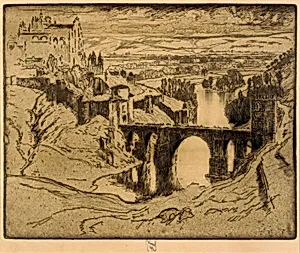
Joseph Pennell (1857–1926) was born in Philadelphia to Quaker parents and displayed an early aptitude for drawing, finding solace in sketching amid a challenging childhood. He received initial drawing instruction from James R. Lambdin and his first etching lessons from Stephen Ferris in 1879. Pennell attended night classes at the Pennsylvania Museum and School of Industrial Art before studying at the Pennsylvania Academy of the Fine Arts under Thomas Eakins, though his abrasive personality led to conflicts there. Opening his own studio in 1880, he quickly secured commissions from magazines like Scribner's and Harper's, producing early watercolors and sketches of industrial sites such as the Bethlehem Steel works. In 1884, he married author Elizabeth Robins Pennell and relocated to London, where he immersed himself in European subjects, etching landmarks like The Ponte Vecchio in Florence (1883) and industrial scenes including The Great Stack, Sheffield.
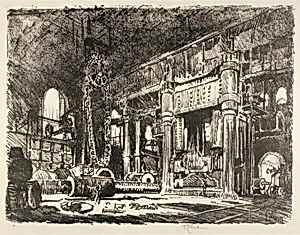
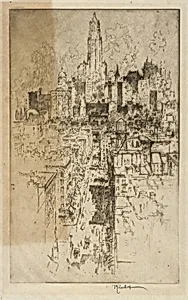
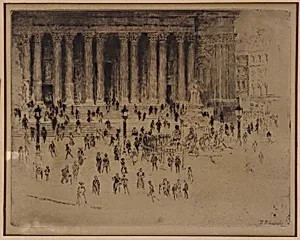
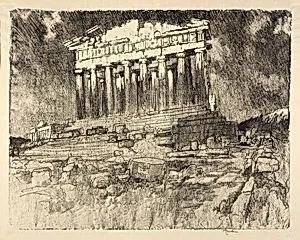
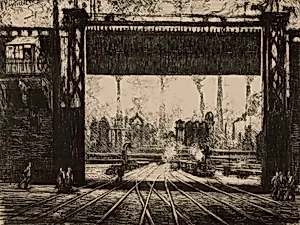
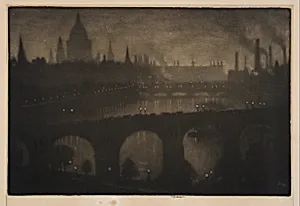
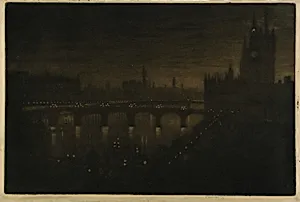
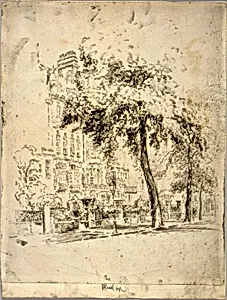
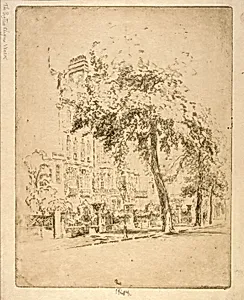
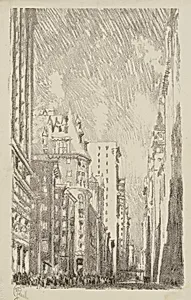
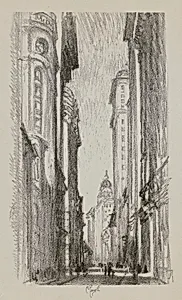
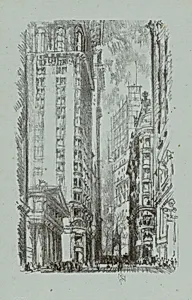
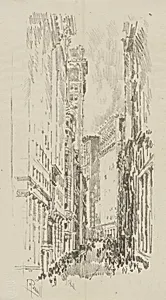
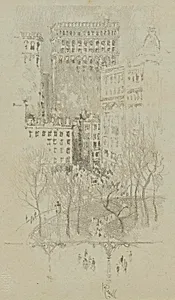
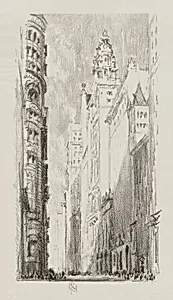
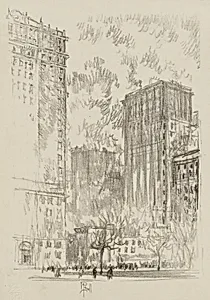
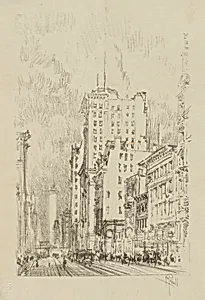
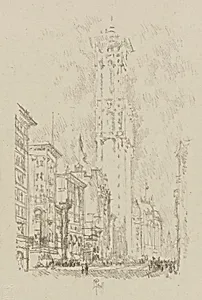
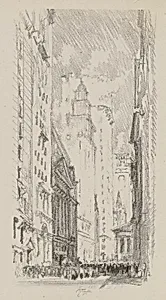
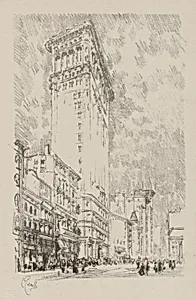
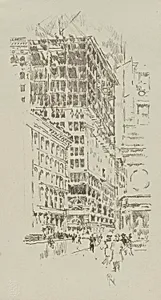
Pennell's style emphasized direct observation in etching and lithography, favoring graphic arts over painting and capturing the drama of architecture, urban growth, and machinery—what he termed the "Wonders of Work." Deeply influenced by his friend James McNeill Whistler, with whom he collaborated in Paris, Pennell produced over 900 etchings and mezzotints and more than 600 lithographs, often drawn on copper plates en plein air. His works bridged Romantic picturesque traditions with modern industrial vigor, depicting cathedrals, New York skyscrapers like the Flatiron Building, and engineering marvels. Collaborating extensively with his wife, they co-authored travel books such as A Canterbury Pilgrimage (1885) and the definitive Whistler biography (1908).
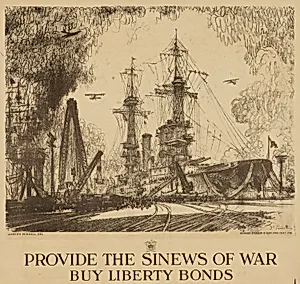
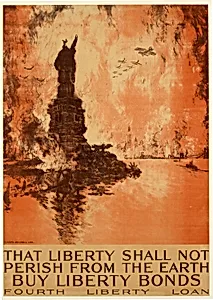
During World War I, Pennell documented munitions factories and shipyards in Lithographs of War (1914) and created iconic posters like "That Liberty Shall Not Perish from the Earth" (1918), envisioning a bombed New York Harbor. He also produced Panama Canal lithographs, including Steam Shovel in the Cut at Bas Obispo (1912), and Pictures of the Wonders of Work (1915). Returning to the U.S., he taught at the Art Students League and Slade School of Art, co-founding the Philadelphia Society of Etchers in 1880.
Dubbed the "Dean of American Printmaking" and "pictorial laureate of the industrial revolution," Pennell's prolific output and advocacy spurred the early 20th-century etching revival and print collecting. His vast archive, bequeathed to the Library of Congress, ensures his enduring influence on American graphic arts.