Ctrl K
1734–1797
Joseph Wright of Derby (1734–1797) was an English painter celebrated for his dramatic use of candlelight and artificial illumination, which earned him a unique position in eighteenth-century British art as the painter of the Industrial Revolution and the Enlightenment. Born in Derby in the English Midlands, he studied in London under Thomas Hudson, a leading portrait painter, before returning to Derby, where he spent most of his career.
Wright's most famous paintings are his candlelight scenes depicting scientific experiments and industrial processes — most notably "A Philosopher Lecturing on the Orrery" (c. 1766) and "An Experiment on a Bird in the Air Pump" (1768). These works are extraordinary for their period: they depict science and technology as subjects worthy of the grandest pictorial treatment, illuminated by dramatic chiaroscuro that transforms philosophical demonstrations into scenes of almost religious intensity.
As a painter in Derby — at the heart of England's Industrial Revolution — Wright moved in circles that included Erasmus Darwin, Josiah Wedgwood, and other members of the Lunar Society, the group of industrialists, scientists, and intellectuals who drove the Enlightenment in the English Midlands. His paintings of iron forges, cotton mills, and fireworks displays are unique visual documents of the birth of the industrial age.
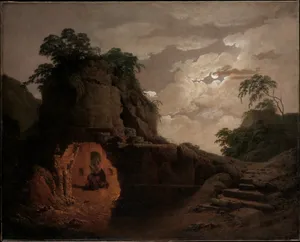
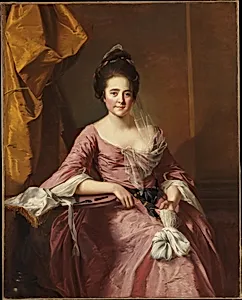
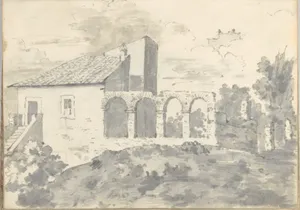
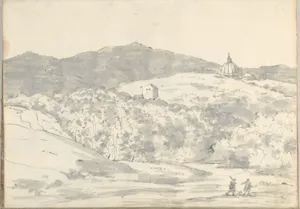
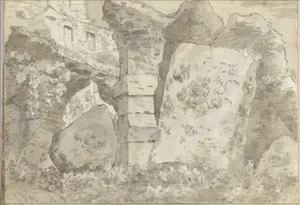
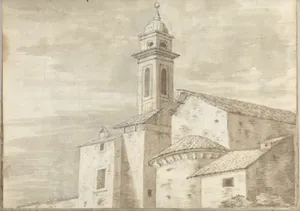
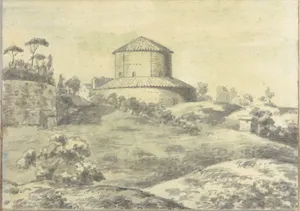
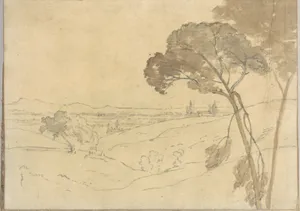
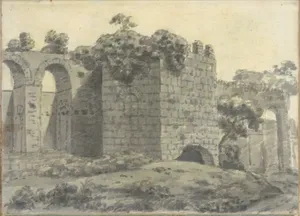
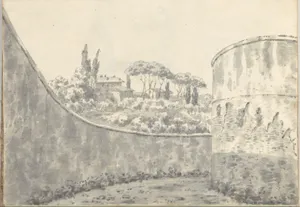
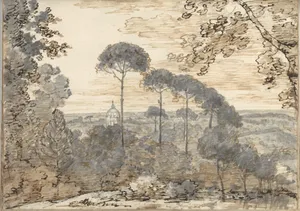
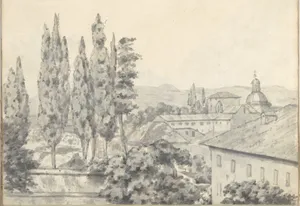
Wright also visited Italy in the 1770s, where he painted dramatic views of Vesuvius erupting and moonlit Italian landscapes. His portraits, landscapes, and subject pictures are held by the Derby Museum and Art Gallery (which has the largest collection), the National Gallery in London, the Tate, the Yale Center for British Art, and the Getty Museum.