
Ctrl K
1799–1868
William Darracott, Jr. (1799–1868) was a prolific American luthier and inventive mechanic based in Milford, New Hampshire, whose craftsmanship bridged folk music traditions and practical innovation during the early to mid-19th century. Born on June 22, 1799, he spent his life in Milford, residing in a home on the south side of Elm Street until his death on December 7, 1868. Little is documented about his early training, but Darracott emerged as a mechanic of unusual ability, manufacturing string instruments such as violins, larger bass viols, and drums in the first part of his career. He worked within the robust New England tradition of folk instrument makers, producing sturdy, regionally inspired pieces like the Yankee bass viol—a compact cello-like bass designed to accompany church choirs in rural congregations.
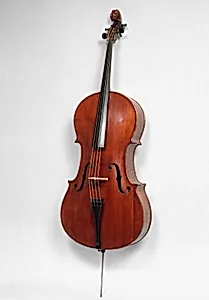
Among his notable works is the Hutchinson bass viol, crafted around 1835 for the famed Hutchinson Family Singers, a troupe that toured nationally and internationally promoting abolitionism, temperance, women's rights, and anti-poverty causes; this instrument remains in Milford's Hutchinson collection. His Yankee Bass Viol of 1861, held by The Metropolitan Museum of Art, exemplifies his skill with its precise dimensions—body length 83.3 cm, vibrating string length 75.2 cm—and robust wood construction tailored for practical use. Darracott also supplied components to peers, including tuning machines for fellow New Hampshire luthier Abraham Prescott and piano actions for the Chickering firm, underscoring his versatility in the burgeoning American musical instrument trade.
Darracott's personal life intertwined with his community: he married Myra Hutchinson on October 19, 1823, fathering five children, before wedding Caroline Putnam in 1837 and having two more. In 1843, he pivoted to become Milford's inaugural professional dentist—a role he filled as the area's sole practitioner for years, blending his mechanical prowess with a sympathetic bedside manner that eased patients' fears. His instruments grace collections in Boston, New York, and Washington, D.C., cementing his legacy as a key figure in 19th-century American folk music craftsmanship and local ingenuity.