Ctrl K
1852–1919
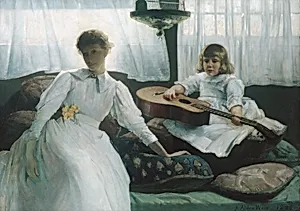
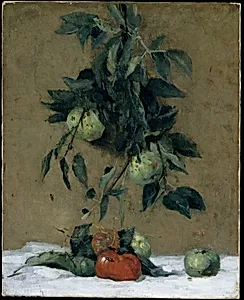
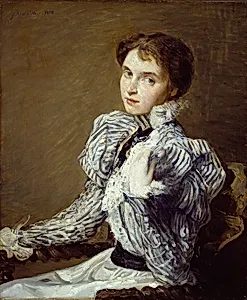
Julian Alden Weir (1852–1919) was one of the central figures of American Impressionism, a painter whose luminous canvases helped transform the reception of modern French art in the United States and whose personal influence shaped a generation of American artists. Born in West Point, New York, into a family steeped in art — his father Robert Weir was a drawing instructor at West Point — he received an exceptional early training before entering the École des Beaux-Arts in Paris, where he studied under Jean-Léon Gérôme. His Parisian years gave him rigorous academic grounding and also brought him into contact with the Barbizon painters and, gradually, with the Impressionist movement, which he initially resisted before it transformed his practice entirely.
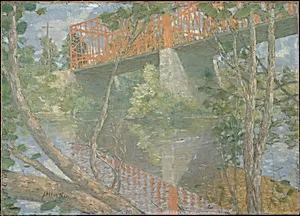
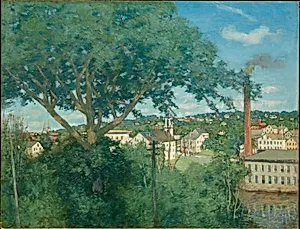
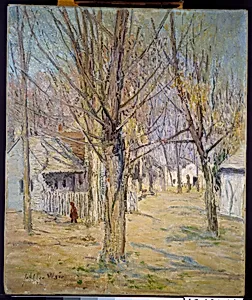
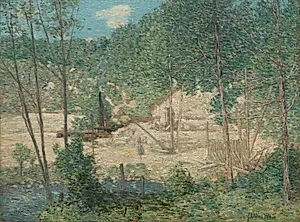
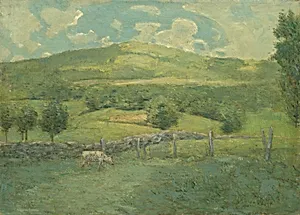
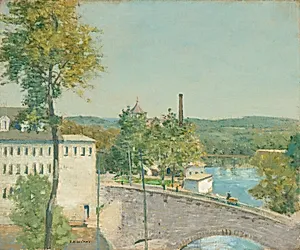
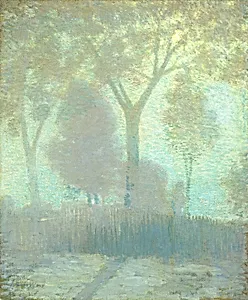
Returning to the United States, Weir settled in New York and eventually on his farm in Branchville, Connecticut, which became one of the most beloved subjects of his mature work. His Connecticut landscapes — depicting stone walls, rolling fields, trees in soft light, and the quiet rhythms of rural life — are painted with a broken, flickering brushwork and a silvery, muted palette quite distinct from the brighter tones of French Impressionism. They are among the most distinctive and poetic achievements in American painting of the late nineteenth century.
Weir was a founding member of The Ten American Painters, a group that broke from the Society of American Artists in 1897 to exhibit together on their own terms, and he later served as president of the National Academy of Design. He was also a devoted friend and champion of other artists, playing a key role in introducing Impressionism and Post-Impressionism to American collectors.
His farm in Branchville is today preserved as Weir Farm National Historical Park, the only national park dedicated to American painting. His legacy endures both through his luminous canvases and through the community of artists and ideas he helped nurture.