Ctrl K
1870–1917
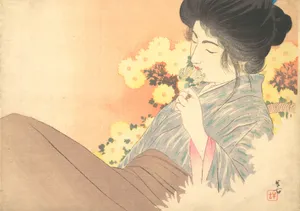
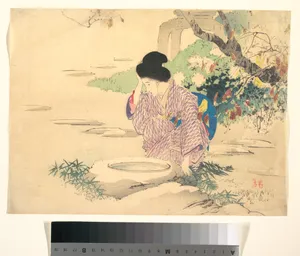
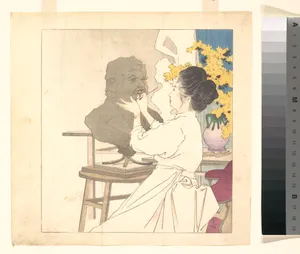
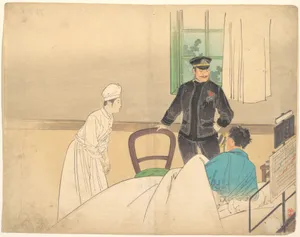
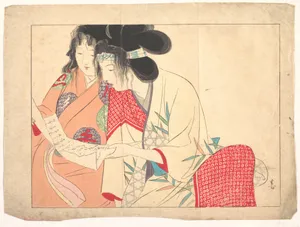
**Kajita Hanko** (梶田半古, 1870–1917) was a Japanese painter and print artist of the late Meiji and early Taishō periods, renowned for his kuchi-e illustrations and contributions to the transition from traditional ukiyo-e to modern Japanese printmaking. Born Jojirō Kajita on July 23, 1870, in Shitaya, Tokyo, he was the son of a respected metal engraver whose family had earlier served as keepers of the shogun’s hawks. He began his artistic training around age eleven or thirteen, studying Shijō-school painting under Nabeta Gyokuei. He also trained with Suzuki Kason and Ohara Koson, absorbing both classical techniques and emerging influences.
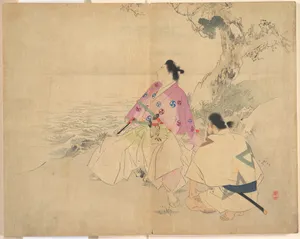
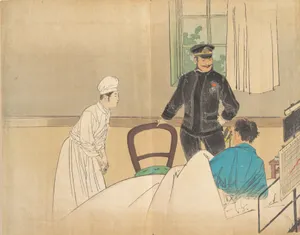
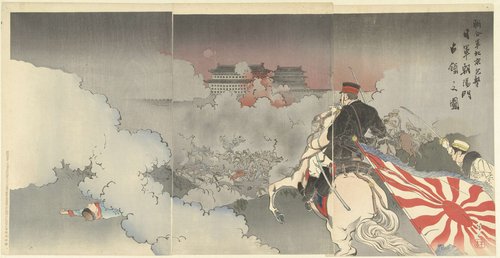
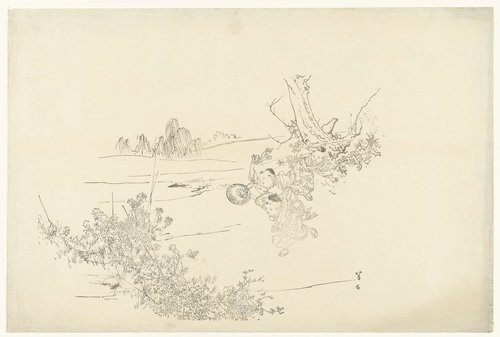
Hanko adopted his artist name around 1890 and quickly gained recognition for his woodblock prints and illustrations. He specialized in kuchi-e—frontispiece designs for novels and literary magazines—while also producing triptychs depicting scenes from the Sino-Japanese War and other narrative subjects. His work blended the refined lines and color sensibilities of ukiyo-e with more contemporary sensibilities, helping bridge traditional woodblock practices and modern printmaking alongside contemporaries such as Kaburagi Kyōka and Tomioka Eisen. He participated in several artists’ organizations and contributed illustrations to magazines and newspapers, earning a reputation for elegant depictions of women, literary themes, and everyday scenes.
In his personal life, Hanko married the writer Kitada Usurai in 1898; the couple had a daughter, Hiroe, the following year. Usurai died of intestinal tuberculosis in 1900. Hanko himself succumbed to the same disease on April 23, 1917, at age forty-seven.
Hanko’s legacy endures through his influential students, including Kokei Kobayashi, Seison Maeda, and Togyū Okumura, who carried forward elements of his style into the twentieth century. His prints and paintings are held in major collections worldwide, including the Metropolitan Museum of Art, the British Museum, and the Minneapolis Institute of Art, where they continue to illustrate the vibrant artistic ferment of Meiji-era Japan.