
Ctrl K
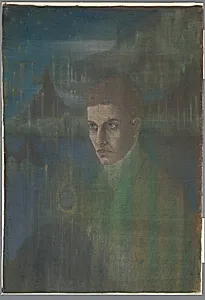
**Karel de Nerée tot Babberich (1880–1909)** was a Dutch symbolist artist whose short career produced some of the most distinctive decadent drawings of the fin-de-siècle period. Born Christophe Karel Henri de Nerée tot Babberich on 18 March 1880 at Huize Babberich in Zevenaar, he was the son of Frederik de Nerée tot Babberich and Constance van Houten. He began drawing and writing in 1898, initially balancing literary pursuits with visual art before concentrating on the latter.
Entirely self-taught, de Nerée drew inspiration from decadent and symbolist writers such as Charles Baudelaire, Paul Verlaine, and Gabriele d’Annunzio, as well as artists including Georges de Feure, Francisco Goya, Johan Thorn Prikker, and especially Jan Toorop. A pivotal influence came in 1901 when his friend Henri van Booven gave him Aubrey Beardsley’s *The Early Work*, shaping the elegant line work, eroticism, and theatricality that defined his mature style. He worked briefly in Madrid for the Dutch Foreign Service that same year, where he contracted tuberculosis—an illness that would shadow the rest of his life. Around 1904–1905 he developed a personal idiom featuring *femmes fatales*, clownish figures, and rich gold accents, creating works that rank among the most fascinating Dutch contributions to European Symbolism.
Notable drawings include *Introduction to Extaze* (1900–01), *Salome* (1901), *La Musique* (1904), and *Le mauvais regard* (1906). He rarely exhibited during his lifetime and was better known as a society figure in The Hague, occasionally giving drawings to friends or selling a few to German collectors around 1905. Declining health after 1906–1907 limited his output, though later pieces show bolder color and more modernist compositions. De Nerée died of tuberculosis on 19 October 1909 in Todtmoos, Germany, at the age of twenty-nine; he was buried in Clarens near Montreux.
Although his work remained relatively obscure in the twentieth century, posthumous exhibitions beginning in 1910 and continuing through the 1990s have secured him a modest but secure place in European art history as one of the few truly decadent Dutch representatives of the Symbolist movement. His drawings continue to attract collectors and scholars for their refined line, psychological intensity, and distinctive fusion of Beardsleyan elegance with Dutch Symbolist sensibility.