Ctrl K
1798–1840
**Carl Blechen** (also known as Karl Blechen; 1798–1840) was a German landscape painter whose work embodied the Romantic emphasis on nature’s sublime power and emotional resonance. Born Carl Eduard Ferdinand Blechen on 29 July 1798 in Cottbus, in the Kingdom of Prussia, he came from modest circumstances—his father was a minor tax official from Regensburg and his mother was Sorbian. After attending the local Lyceum from 1805 to 1815, financial constraints led his parents to apprentice him to a banker, a path he followed until 1822, when his growing passion for art prompted him to enroll at the Berlin Academy.
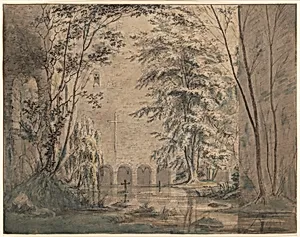
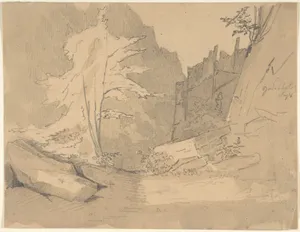
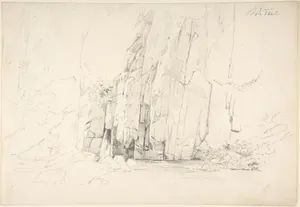
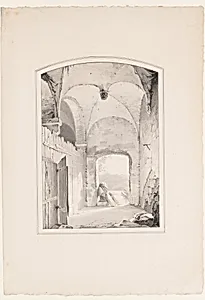
Blechen’s formal training at the Berlin Academy was supplemented by early travels, including a study trip to Dresden and Saxon Switzerland. He briefly worked as a decorator for the Royal Theater in Berlin before embarking on more ambitious journeys: a 1828 trip to the Baltic Sea and, most significantly, an extended stay in Italy that yielded hundreds of sketches later developed in his studio. These experiences profoundly shifted his approach, infusing his paintings with luminous Italian light and atmospheric drama. In 1831, on the recommendation of architect Karl Friedrich Schinkel, he was appointed Professor of Landscape Painting at the Berlin Academy; he became a full member in 1835.
His artistic style aligned with German Romanticism, sharing affinities with Caspar David Friedrich and Johan Christian Clausen Dahl, yet distinguished by a more subjective, imaginative transformation of observed reality. Blechen excelled at capturing both serene natural vistas and the emerging industrial landscape, making him one of the earliest European artists to integrate factories and machinery into Romantic compositions. Among his notable works are *The Ruined Tower of Heidelberg Castle* (c. 1830), Italian scenes such as *Marina Grande, Capri* (1829) and *View of Assisi* (1832–35), and the commissioned *The Interior of the Palm House on the Pfaueninsel Near Potsdam* (1834).
Blechen’s career was cut short by mental illness that began around 1835; he died in Berlin on 23 July 1840 at age 41. Though many of his paintings remain in private collections, his legacy endures through public honors in Cottbus—including a street, park, and school named after him—and his pioneering role in bridging Romantic idealism with early industrial themes. His works continue to be studied for their technical innovation and emotional depth within 19th-century German art.