Karl Blossfeldt (1865–1932), born in the rural village of Schielo near Germany's Harz Mountains, began his artistic journey as a sculptor. At age sixteen, he apprenticed at the Art Ironworks and Foundry in Mägdesprung, honing skills in casting and modeling that would inform his lifelong fascination with form and structure. He later studied at the Kunstgewerbemuseum in Berlin, the School of the Museum of Decorative Arts, before receiving a scholarship to work under Moritz Meurer, a professor of ornament and design. From 1890 to 1896, Blossfeldt assisted Meurer in Italy, Greece, and North Africa, photographing and casting botanical specimens to create teaching models—a pivotal experience that sparked his photographic practice, though he remained self-taught in the medium.
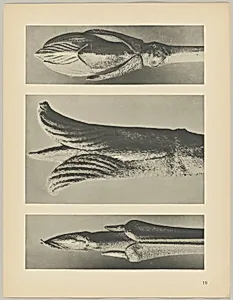
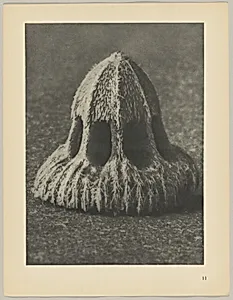
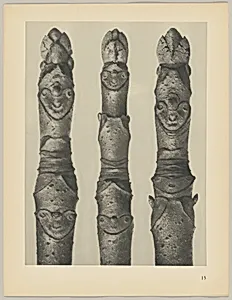
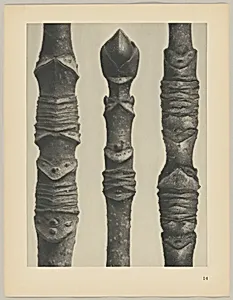
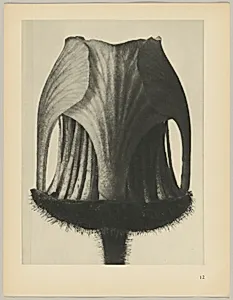
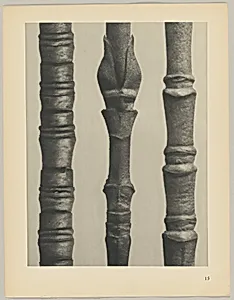
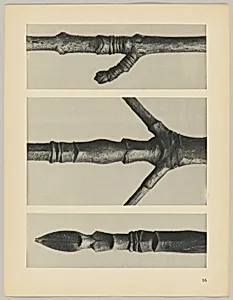
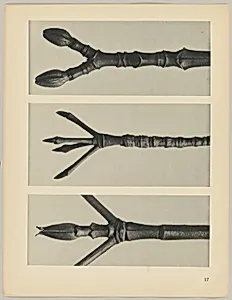
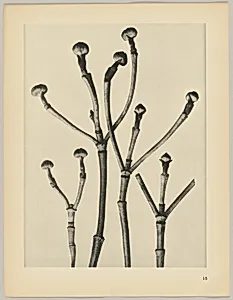
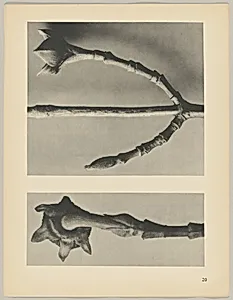
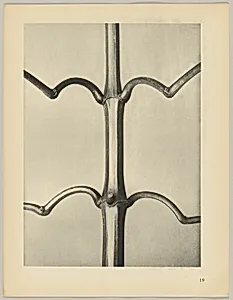
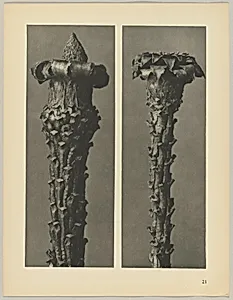
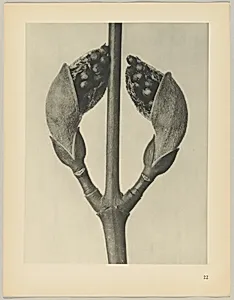
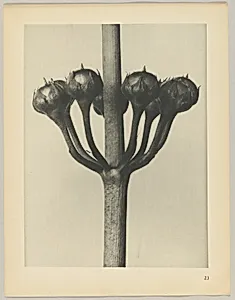
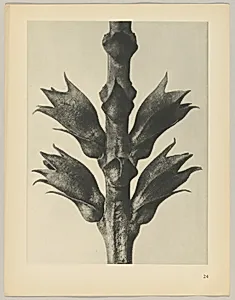
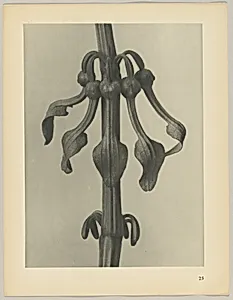
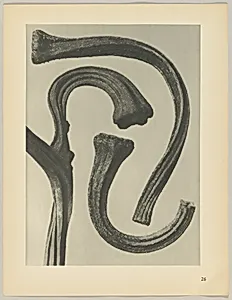
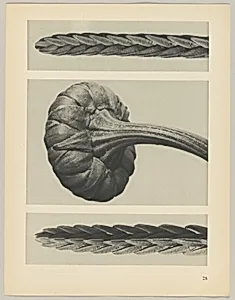
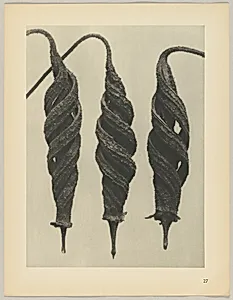
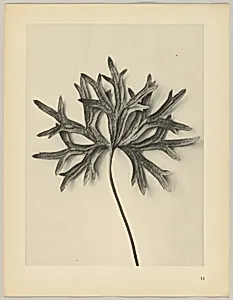
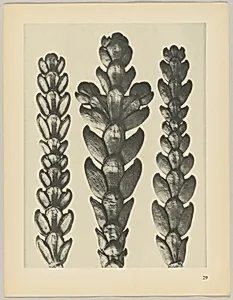
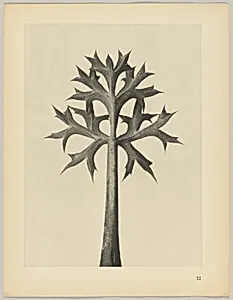
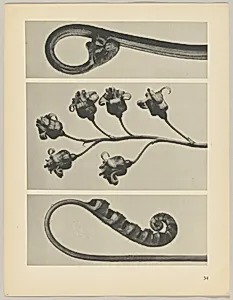
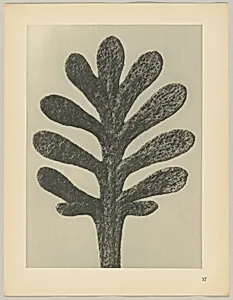
In 1898, Blossfeldt joined the faculty at Berlin's Kunstgewerbeschule, where he taught "Modeling from Plants" for over three decades until his retirement as professor emeritus in 1930 or 1931. He amassed an archive of some 6,000 photographs, using homemade cameras with custom lenses that magnified subjects up to thirty times their size. These stark, precisely focused images captured the intricate geometries of plants—thorns, seed pods, ferns like *Aspidium filix-mas* (shield fern)—against plain backgrounds, revealing nature's architectural wonders for his students. Working in the Neue Sachlichkeit (New Objectivity) tradition alongside figures like August Sander, Blossfeldt emphasized unadorned documentation of forms, textures, and patterns, bridging sculpture, science, and design.
Blossfeldt's recognition came late, in his sixties. Gallerist Karl Nierendorf mounted his first public exhibition in 1926, leading to the publication of *Urformen der Kunst* (Art Forms in Nature) in 1928—a sensation featuring 120 plates of magnified flora that sold out rapidly. This was followed by *Wundergarten der Natur* (Wonder Garden of Nature) in 1932, just before his death, and a posthumous volume, *Wunder in der Natur*, in 1942. His work transformed pedagogical tools into modernist icons, influencing photographers like Bernd and Hilla Becher and earning praise from Walter Benjamin for reshaping perceptions of the natural world. Today, Blossfeldt's legacy endures as a pioneer of macro photography, reminding us that nature's hidden designs prefigure human art.