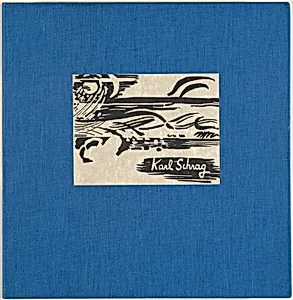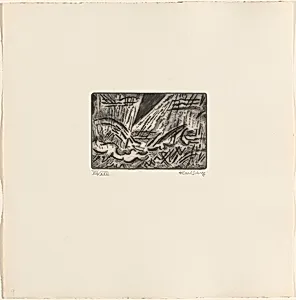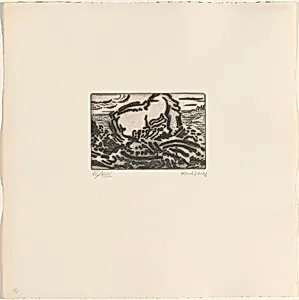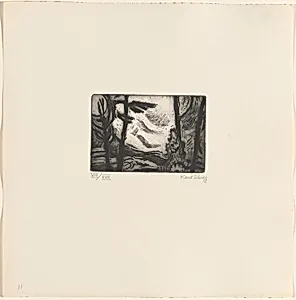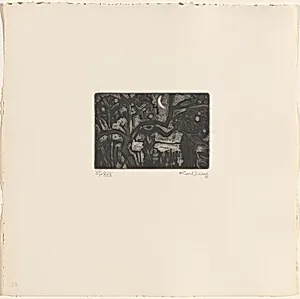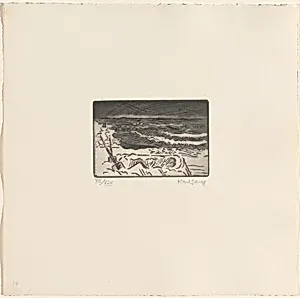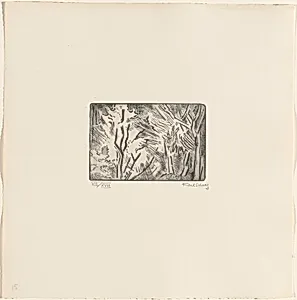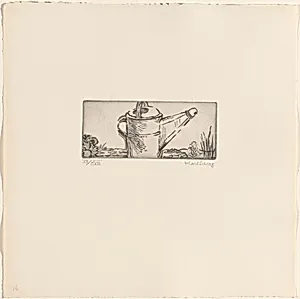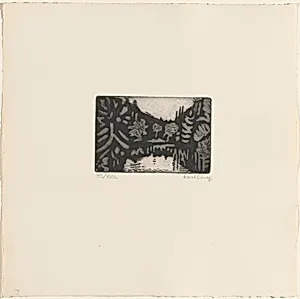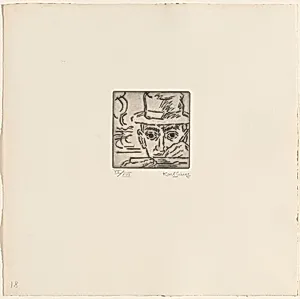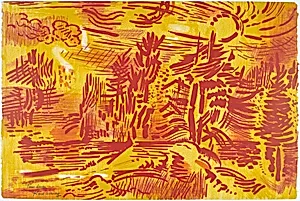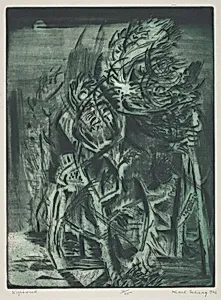
Karl Schrag (1912–1995) was a German-born American painter and printmaker whose richly expressive work occupied a distinctive space between abstraction and a deeply felt response to the natural world. Born in Karlsruhe, Germany, he studied in Geneva, Paris, and at the École des Beaux-Arts, immersing himself in the currents of European modernism before the rise of National Socialism forced him, like so many artists of his generation, to seek refuge elsewhere. He arrived in the United States in 1938 and eventually became a citizen, building his mature career in New York while maintaining an enduring connection to the coast of Maine.
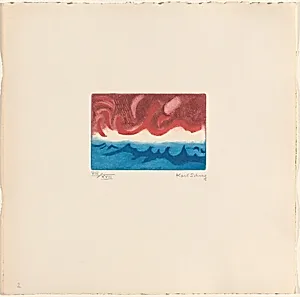
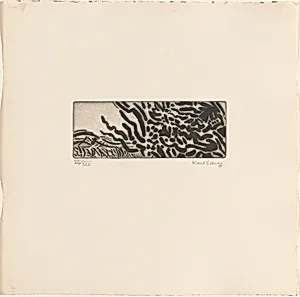
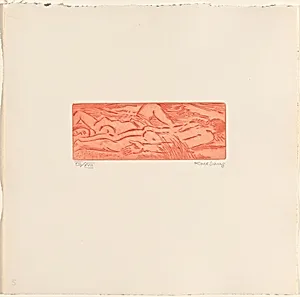
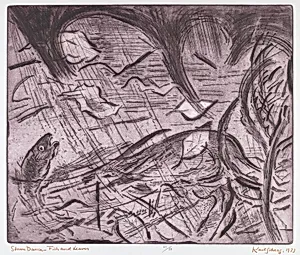
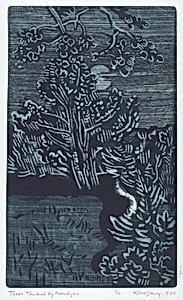
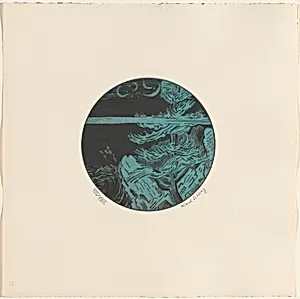
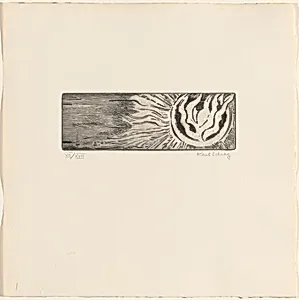
Schrag studied with Stanley William Hayter at the legendary Atelier 17 in New York, the printmaking workshop that served as a crucible for mid-century modernist graphics and counted Picasso, Miró, and Jackson Pollock among its participants. Hayter's influence deepened Schrag's commitment to intaglio printmaking as a medium capable of expressive complexity equal to painting, and Schrag went on to serve as director of Atelier 17 himself. His prints — etchings and aquatints in particular — are celebrated for their lyrical energy, their mastery of texture and tone, and their ability to evoke light filtering through foliage or breaking across open water.
His paintings share this lyrical quality, building shimmering, atmospheric surfaces from layered color that seem to vibrate with natural energy. Though he remained somewhat apart from the dominant movements of Abstract Expressionism and Pop Art, Schrag earned the respect of the New York art world and a devoted following among collectors who valued his sustained, meditative engagement with landscape and light.
Schrag's legacy is that of an artist who brought European printmaking traditions into productive dialogue with American modernism. His long tenure at Atelier 17 influenced generations of printmakers, and his own body of work stands as a testament to the enduring vitality of the intimate, hand-worked print.

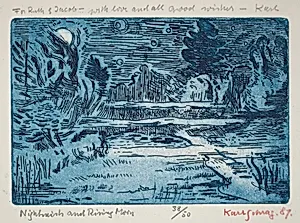
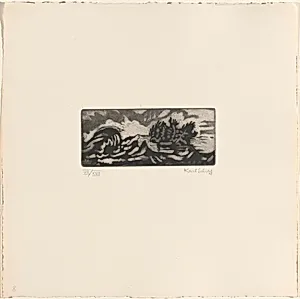
![Dark Wave and Island [cancelled plate] from By the Sea](https://images.artheonmuseum.org/nga/thumb/dark-wave-and-island-cancelled-plate-from-by-the-nga-51015.webp)