Ctrl K
1780–1801
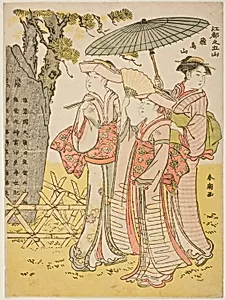
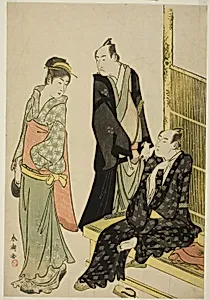
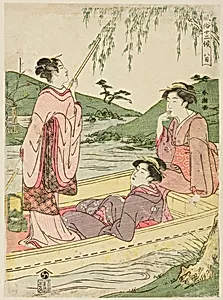
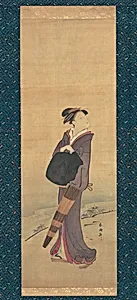
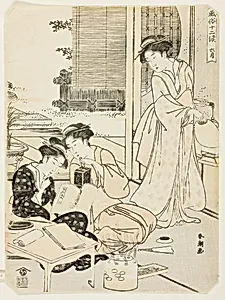
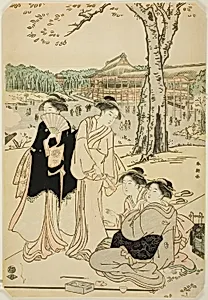
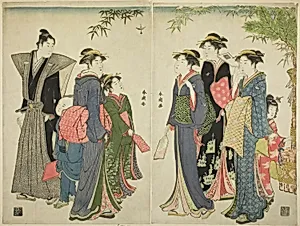
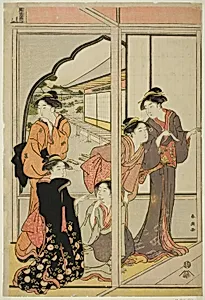
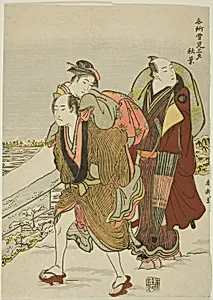
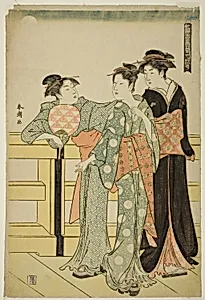
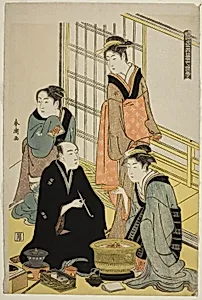
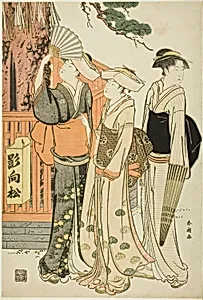
Katsukawa Shunchō was a Japanese designer of ukiyo-e woodblock prints active from approximately 1780 to 1795, one of the most graceful practitioners of the art of bijinga — pictures of beautiful women. He trained in the studio of Katsukawa Shunshō, the founding master of the Katsukawa School, whose pupils also included the young Hokusai. Shunshō's school was primarily known for realistic portraits of kabuki actors, and Shunchō produced actor prints early in his career. However, he was drawn away from that tradition toward the tall, elegant female figures being popularized by the rival master Torii Kiyonaga (1752–1815), whose influence became the dominant force in Shunchō's mature style.
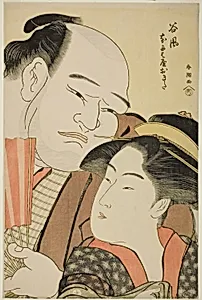
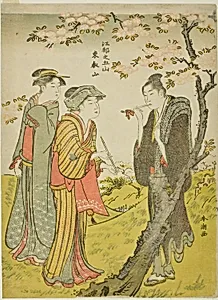
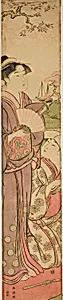
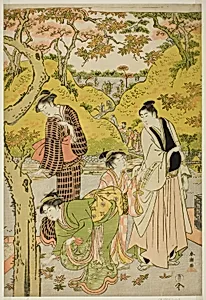
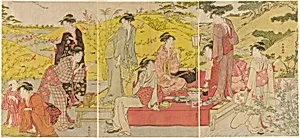
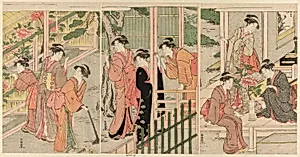
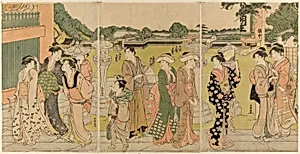
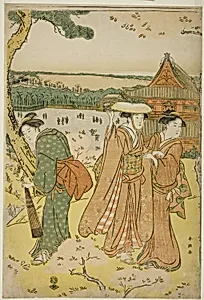
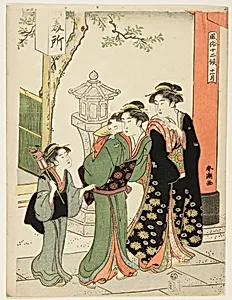
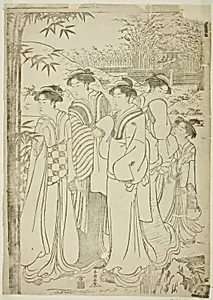
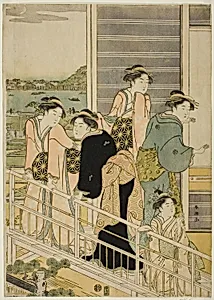
Shunchō's bijin-ga — images of courtesans, geisha, and anonymous beauties — are distinguished from Kiyonaga's by their subtler, more restrained use of color. Where Kiyonaga employed bright, clear tonalities, Shunchō worked with a more restricted palette of muted, harmonious hues, lending his figures a quiet elegance. He excelled in the large oban triptych format, arranging his tall, willowy women in outdoor settings that evoke the seasonal pleasures of the Edo leisure world. In the early 1790s, working with the publisher Tsuruya Kiemon, he produced a notable series of ōkubi-e — large-head portraits — of courtesans and celebrated beauties, often set against yellow or mica backgrounds, a format associated with the refined taste of the period. The Metropolitan Museum of Art holds examples of his work, including Courtesans in an Iris Garden.
Shunchō's activity appears to have ceased around 1795, and no further biographical record survives. The circumstances of his later life and death remain unknown. Within the compressed span of roughly fifteen years, however, he produced a body of work that places him among the most accomplished bijin-ga artists of the late eighteenth century, occupying a graceful middle position between the monumentality of Kiyonaga and the more psychological intensity that Kitagawa Utamaro would soon bring to the genre.