Ctrl K
1743–1812
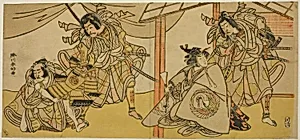
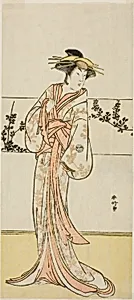
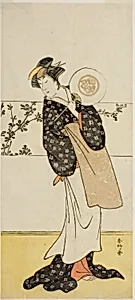
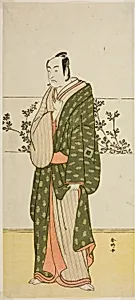
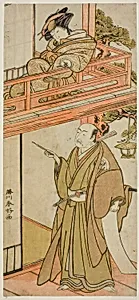
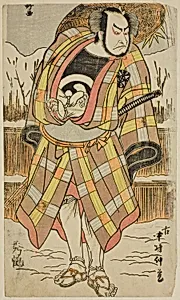
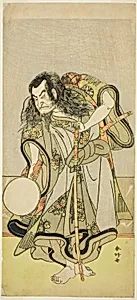
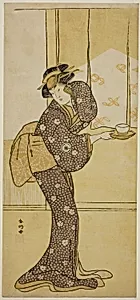
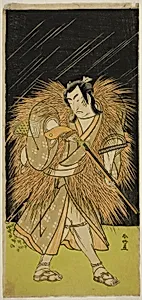
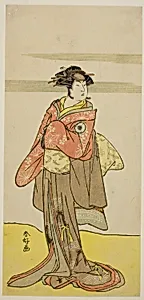
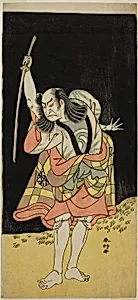
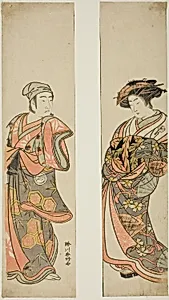
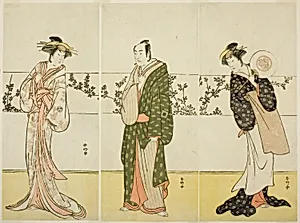
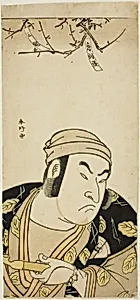
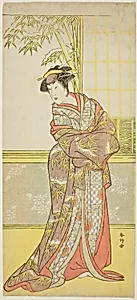
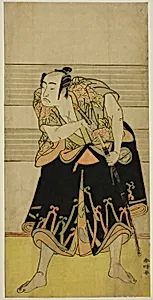
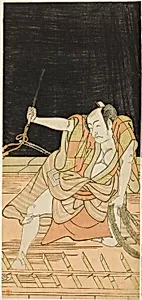
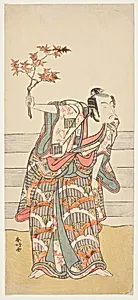
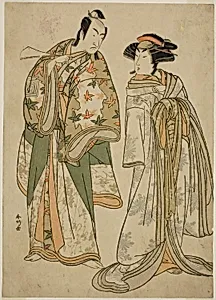
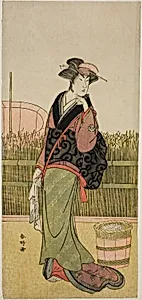
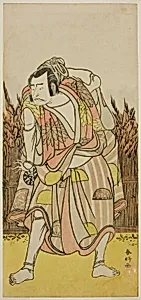
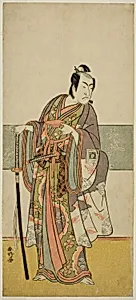
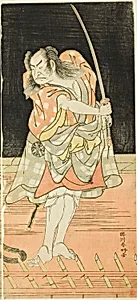
Katsukawa Shunkō I (1743–1812), born Denjiro Kiyokawa in Edo (modern Tokyo), emerged as a pivotal figure in ukiyo-e woodblock printing. His early life remains sparsely documented, but by the late 1760s, he had begun illustrating books such as *Talks about Debut Plays* (*Kaomise shibai banashi*, 1766). Shunkō studied under the master Katsukawa Shunshō, founder and leader of the Katsukawa school, and was possibly his first pupil—a relationship marked by shared seals on early works, Shunkō's small jar-shaped *kotsubo* alongside Shunshō's larger one. Active from around 1771, he designed *yakusha-e* (actor prints) in the narrow *hosoban* format, capturing kabuki performers with striking realism that emphasized individual likenesses and dramatic stage presence.
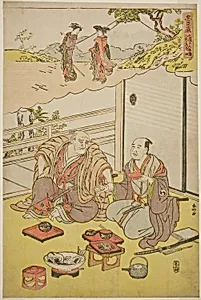
Shunkō's signature innovation came in 1788 with the *ōkubi-e*, large-head bust portraits that focused intensely on actors' faces and expressions, revolutionizing the genre and paving the way for later masters like Tōshūsai Sharaku. Iconic examples include *Matsumoto Kōshirō IV as Tsurunosuke*, *Ichikawa Monnosuke II in Shibaraku*, *Sawamura Sōjūrō III*, *Otani Hiroji III*, and *Iwai Hanshirō IV as Ohatsu*, alongside depictions of sumo wrestlers and scenes like *Teahouse at Sankoin Temple Yotsuya*. His style blended expressive facial details with dynamic poses, reflecting the Katsukawa school's emphasis on lifelike *yakusha-nigao-e*—portraits conveying actors' true appearances rather than idealized types.
In his later years, at age 45, a stroke partially paralyzed Shunkō's right side, prompting him to abandon print design for painting with his left hand; he assumed leadership of the Katsukawa school and remained a leading ukiyo-e designer into the early 19th century. He died on December 1, 1812, at age 70, and was buried at Zenshōji temple in Asakusa with the posthumous name Shaku Shunkō Shinji. Shunkō's pioneering *okubi-e* and mastery of actor portraiture profoundly influenced ukiyo-e's evolution toward psychological depth and individualism, with over 90 works surviving in major collections today. His legacy endures as a bridge between Shunshō's foundational realism and the expressive heights of subsequent generations.