Ctrl K
1889–1946
Kerr Eby (1889–1946) was a Canadian-born American printmaker and painter who became one of the most accomplished etchers of his generation and a powerful chronicler of the experience of war. Born in Tokyo to Canadian parents, he grew up in New York and studied at the Pratt Institute and the Art Students League under George Bridgman.
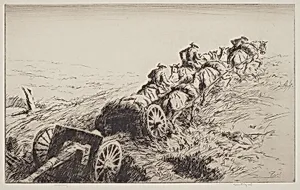
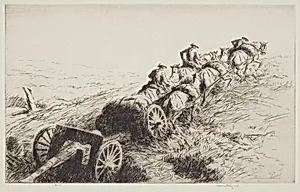
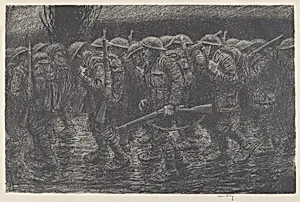
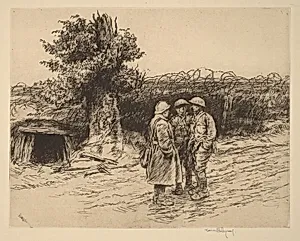
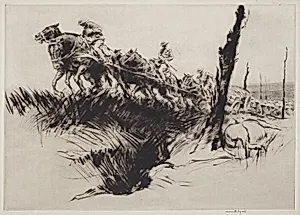
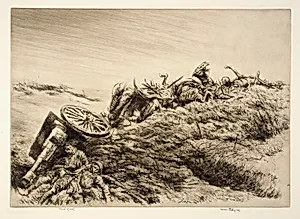
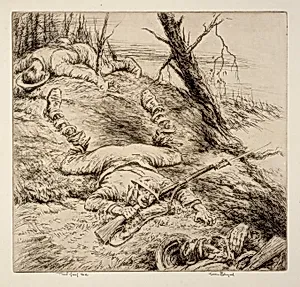
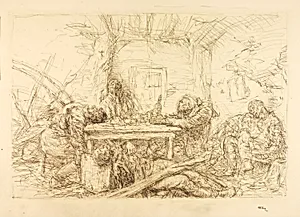
Eby volunteered for service in World War I and saw action in France, an experience that profoundly shaped his art. His postwar etchings and lithographs of the Western Front — depicting ruined landscapes, exhausted soldiers, and the desolate aftermath of battle — are among the most compelling visual records of the conflict. Unlike propagandistic or heroic depictions of war, Eby's prints convey the grim reality, emotional toll, and stark beauty of the devastated landscape with unflinching honesty.
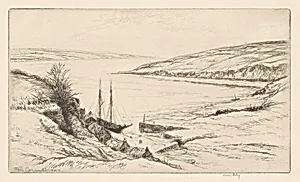
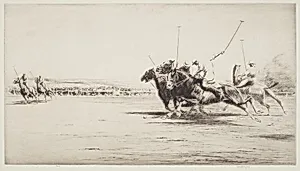
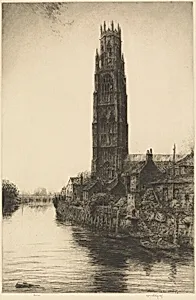
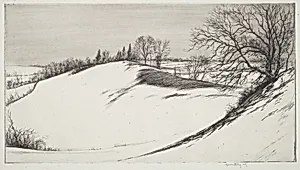
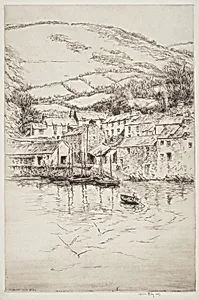
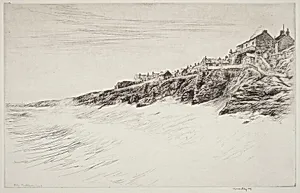
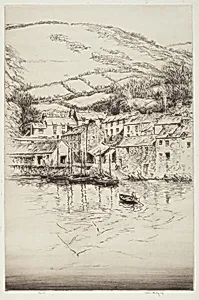
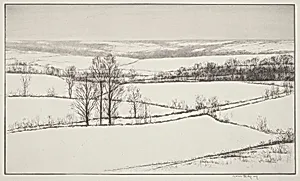
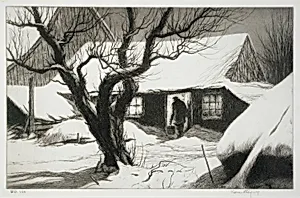
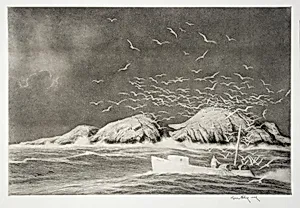
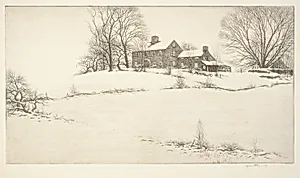
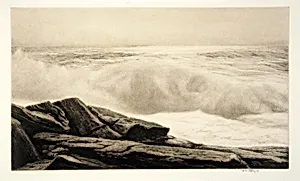
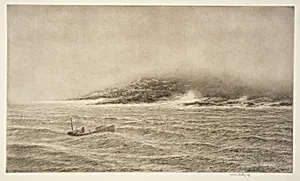
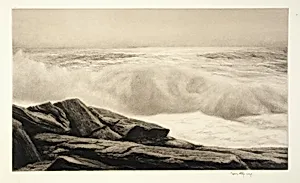
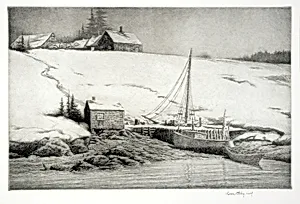
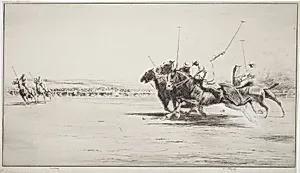
Beyond his war subjects, Eby was a masterful printmaker whose landscape etchings of New England, the Connecticut countryside, and maritime scenes demonstrate exceptional command of the etching needle. His prints are noted for their rich tonal range, atmospheric effects, and sensitive rendering of light and weather. He was awarded numerous prizes for his printmaking and was a member of the National Academy of Design.
During World War II, Eby served as a war artist-correspondent in the Pacific, accompanying Marines at Tarawa, Bougainville, and other engagements. His combat drawings and paintings from the Pacific Theater are harrowing firsthand records. His work is held by the Library of Congress, the Smithsonian American Art Museum, the New Britain Museum of American Art, and the Imperial War Museum in London.