Ctrl K

1787–1867
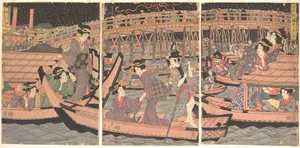
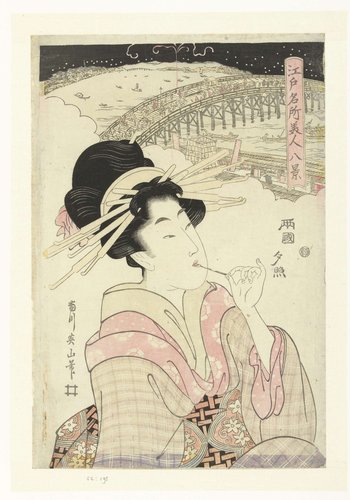
Kikukawa Eizan (1787–1867), born Toshinobu Ōmiya in Edo (modern-day Tokyo), emerged as one of the late Edo period's foremost ukiyo-e artists, specializing in the delicate art of *bijin-ga*—depictions of beautiful women imbued with poetic grace. The son of Kikugawa Eiji, a painter in the Kanō school tradition known for fans and minor works, Eizan began his training under his father. He later studied with Suzuki Nanrei of the Shijō school and the ukiyo-e printmaker Totoya Hokkei, a pupil of Katsushika Hokusai, honing skills that blended classical painting techniques with the vibrant woodblock medium.
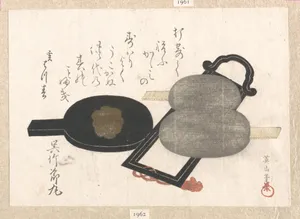
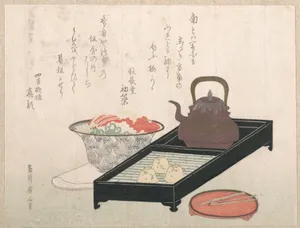
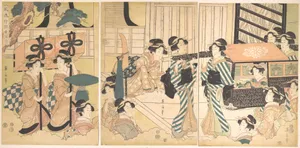
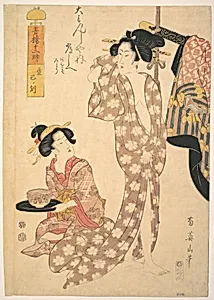
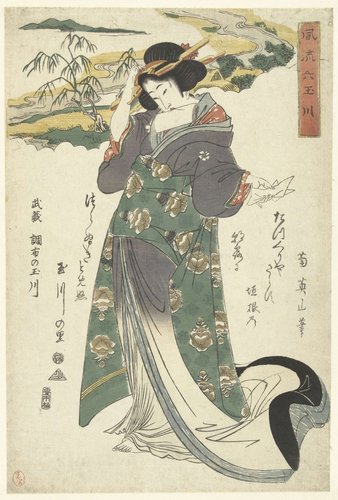
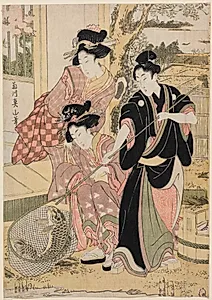
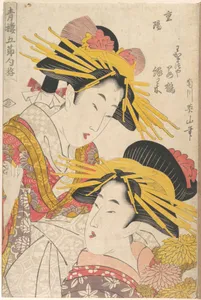
Eizan worked firmly within the ukiyo-e school, founding his own Kikugawa style as the most proficient successor to Kitagawa Utamaro's lyrical bijin-ga after the master's death in 1806. Unlike the earthier sensuality of contemporaries like Utagawa Kunisada or Keisai Eisen, his prints featured harmonious colors, flowing lines, and ethereal figures that evoked refined Edo elegance—women in flowing kimonos, performing tea ceremonies, or playing games like *kitsune-ken*. Notable series include *Furyū Bijin Awase* (Elegant Comparisons of Beauties), *Furyū Nana Komachi* (Elegant Seven Komachi, ca. 1810s), and *Furyū Mu Tamagawa* (Six Jewel Rivers); standout single sheets are *Woman with Shamisen* (1808), *Geisha Playing Kitsune-ken* (1820), and *The Courtesan Meizan of the Chōjiya* (ca. 1809–1813). He also ventured into surimono (private prints), shunga (erotic works), landscapes, and actor portraits, often left-handed—a rarity that infused his compositions with unique fluidity.
At his peak from ca. 1805–1830, Eizan was the principal designer of women's prints, producing prolifically before largely abandoning woodblocks for painting and book illustration in the 1830s, continuing until his death. His legacy endures as the final guardian of classical ukiyo-e bijin-ga, preserving Utamaro's magic of "lightness and grace" amid shifting tastes toward harsher realism in the Bakumatsu era. Eizan's works, elegant portals to floating-world pleasures, captivate with their timeless poise, influencing global appreciation of Japanese print art. (312 words)