Ctrl K
1796
**Koma Kōryū** (d. 1796), born Kimura Shichiemon, was a distinguished Japanese lacquer artist of the Edo period, renowned for his mastery of maki-e inrō. Little is known of his early life, which remains sparsely documented, but he rose to prominence through his close ties to the illustrious Koma family, a dynasty of lacquerers serving the Tokugawa shogunate since the 17th century. Adopted into the family by his brother-in-law, the fifth-generation Koma Kyūhaku, Kōryū studied under this master, earning the rare privilege of adopting the Koma surname as a testament to his exceptional skill in sprinkled lacquer techniques. His art name, Kyūryūsai ("Old Dragon Studio"), evoked the enduring strength of his craft.
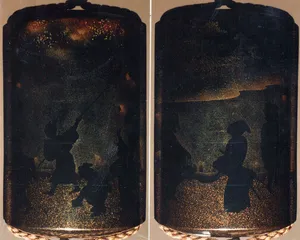
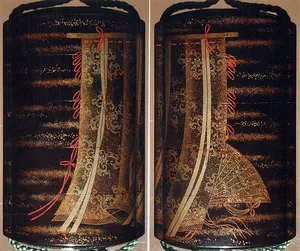
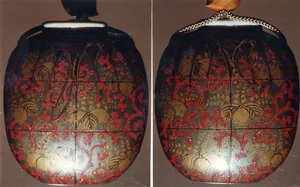
Working firmly within the Koma school tradition, Kōryū specialized in crafting inrō—compact, tiered medicine cases suspended from kimono sashes via netsuke and ojime. His pieces featured intricate designs executed in gold and silver hiramaki-e (flat sprinkled lacquer), takamaki-e (raised sprinkled lacquer), togidashi-e (burnished lacquer), and kirikane (cut foil inlays) over nashiji grounds, blending realism with poetic motifs from nature and folklore. Subjects ranged from hawks perched on branches to fireflies over streams, karashishi lions, peonies, and seasonal scenes, all rendered with luminous depth and refined elegance characteristic of Edo lacquerware.
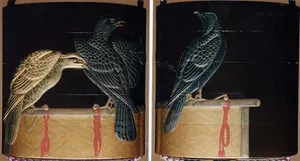
Among his verified works are the *Inrō with Hawks on Perches* (Metropolitan Museum of Art, 19th century), showcasing dynamic birds in gold and silver against black lacquer; *Inrō with Design of People Catching Fireflies* (Met); *Medicine Case with Goldfish and Algae* signed Koryu saku (Tokyo Fuji Art Museum); and *Inrō and Netsuke with the Seven Sages of the Bamboo Grove* (Nelson-Atkins Museum, ca. 1775–1850). These exemplify the four known pieces in major collections, though auction records reveal many more, including inrō with orchids, horses under cherry blossoms, and demons from oni yarai rituals (Victoria and Albert Museum).
Kōryū's legacy endures through the Koma lineage's influence on Japanese lacquer art, elevating inrō from utilitarian objects to coveted status symbols. His workshop's signed works continued into the 19th century, reflecting the family's multi-generational prestige and technical innovation, which captivated collectors worldwide and preserved Edo-era aesthetics in museum treasures today.