Ctrl K
1704–1720
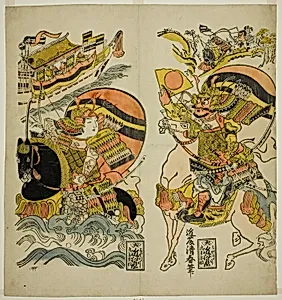
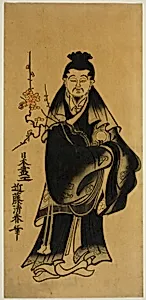
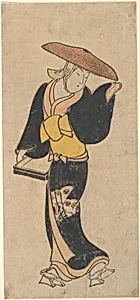
**Kondo Kiyoharu** (近藤清春, active ca. 1704–1720) was a pioneering Japanese ukiyo-e artist during the transition from the Genroku to Kyōhō eras, renowned for his vibrant illustrations in affordable woodblock-printed books and single-sheet prints. Flourishing in Edo, he captured the bustling world of actors, courtesans, merchants, and everyday humor with a distinctive, playful style influenced by the Torii school. His works often featured hand-colored hosoban prints and sumizuri-e (monochrome), alongside pioneering techniques like dan-e (vermilion prints) and possibly the earliest mud paintings (doro-e). Kiyoharu specialized in popular genres such as akahon (red books), kusazōshi (grass books), jōruri scripts, kyōka anthologies, and Yoshiwara guides, blending whimsy with sharp social observation in depictions of kabuki scenes, folktales, and comic animal parodies.
Said to be a disciple of Torii Kiyonobu (鳥居清信), the founder of the Torii school, Kiyoharu worked in its bold, theatrical tradition while developing his own independent voice alongside contemporaries like Okumura Masanobu and Nishimura Shigechō. He established the short-lived Kondo school, which included followers like Kondō Kiyonobu and Kondō Katsunobu, emphasizing genre scenes, beauties (bijin-ga), and yakusha-e (actor prints). His childlike innocence in rendering human folly—evident in self-painted and self-composed works—set him apart, often infusing moral tales or farces with lively, unpretentious charm.
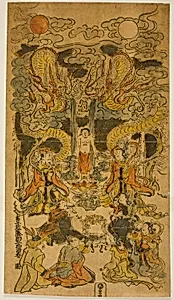
Among his surviving masterpieces are the hand-colored woodblock print *The Actor Sanjō Kantarō as an Itinerant Buddhist Nun* (ca. 1715, Metropolitan Museum of Art), showcasing his skill in dramatic poses and subtle coloration; *Karuguchi Koroe Fukuro* (ca. 1726, Art Institute of Chicago); *The Birth of the Buddha Sakyamuni* (c. 1720, Art Institute of Chicago); and sheets from *Twenty-Four Paragons of Filial Piety* (Harvard Art Museums). Book illustrations like *Saru Kani Kassen* (Monkey-Crab Battle, 1727), *Nezumi Hanami* (Mice Viewing Cherry Blossoms), *Dōke Hyakunin Isshu* (Comic Beasts' Hundred Poems), and *Bunbuku Chagama* (The Magic Tea Kettle) highlight his prolific output in jōruri and folktale adaptations, many self-authored.
Kiyoharu's legacy endures as a bridge between primitive ukiyo-e and the genre's golden age, democratizing art through cheap, mass-produced books that entertained Edo's commoners. His humorous, accessible imagery influenced later illustrators, preserving snapshots of urban life, theater, and folklore. Though sparsely represented in major collections today—with only a handful of prints like the four in this museum—his contributions to early woodblock narrative art remain vital to understanding ukiyo-e's populist roots.