
Ctrl K
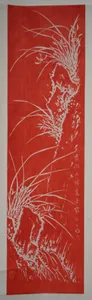
**Kuang Xü (also referenced in connection with Li Shaodang) was a Chinese artist and printmaker active in the late Qing and early Republican periods.** Born in 1874 in Anhui Province, he is best known for his contributions to the Shanghai School, a movement that blended traditional Chinese ink techniques with more lyrical and accessible approaches to subject matter during a time of cultural transition.
His surviving works primarily consist of polychrome woodblock prints on paper, often produced as hanging scrolls. These frequently depict natural motifs such as bamboo, chrysanthemums, orchids, plum blossoms, and flowers with berries. Many are explicitly “after” earlier paintings, including one after Meng Zhen (Qing dynasty) and another after a work by Empress Dowager Cixi. A notable example is the Met Museum’s *Bamboo* (printed 1922), a hanging scroll in ink and color measuring roughly 43½ by 11⅞ inches in the image area.
Kuang Xü worked within the Shanghai School tradition, which emphasized atmospheric effects, emotional resonance, and popular floral and bird-and-flower subjects while drawing on established Chinese symbolic conventions—bamboo for resilience, chrysanthemums for longevity. His prints demonstrate precise carving and printing techniques that allowed for subtle color and texture. Although his career was brief, ending with his death in 1909 at age 35, posthumous editions of his blocks continued to circulate, preserving his interpretations of earlier masters.
Today Kuang Xü is recognized as a minor but representative figure of the Shanghai School’s lyrical strand. His works in major collections, such as the Metropolitan Museum of Art, illustrate the persistence of woodblock printing as a bridge between classical Chinese painting and modern reproduction practices. With only a single known artwork in the referenced collection, his output remains relatively rare, underscoring his place among the lesser-documented yet distinctive voices of early twentieth-century Chinese art.
No artworks found for this artist