1726–1805
Occupations
Isaac Lodewijk la Fargue van Nieuwland (1726–1805) was an 18th-century Dutch portrait artist who distinguished himself through his meticulous watercolor portraits of Dutch royalty and nobility during the later decades of the Dutch Republic. Born in The Hague in 1726 into the prominent La Fargue artistic family, he was the son of Jan Thomas la Fargue and the younger brother of the more famous cityscape painter Paulus Constantijn la Fargue. Isaac Lodewijk adopted the additional name "van Nieuwland" after his mother, distinguishing himself from his siblings while honoring his maternal lineage. The La Fargue family represented one of the most significant artistic dynasties in 18th-century Dutch art. Isaac Lodewijk's siblings Maria Margaretha, Karel, Jacob Elias, and particularly Paulus Constantijn all became painters, creating a remarkable family of artists whose collective output provides valuable documentation of Dutch life during the final decades of the Republic and the transition to French-influenced Batavian Republic. Within this talented family, Isaac Lodewijk carved out his particular specialty in portraiture, especially excelling in the demanding medium of watercolor portrait miniatures. His most important commissions came from the highest levels of Dutch society. In 1766, he created an exceptional series of drawings depicting members of the court of Stadhouder Willem V, now preserved in the Rijksmuseum. These works exemplify his ability to capture both physical likeness and the social dignity required in court portraiture. Later major commissions included watercolor portraits of William V of Orange (1778) and Frederica Sophia Wilhelmine (1779), executed over etching with pen and ink—a technique that combined printmaking precision with the delicate color gradations of watercolor. These royal portraits, now in the National Gallery of Art in Washington, represent the pinnacle of Dutch portrait miniature art and provide invaluable historical documentation of the House of Orange during this critical period.
Isaac Lodewijk la Fargue was born in 1726 in The Hague, the political and aristocratic capital of the Dutch Republic. The Hague, though not as commercially dominant as Amsterdam, served as the seat of the States General and the residence of the stadhouders of the House of Orange, creating a concentrated demand for portraiture and courtly art.
He was born into the La Fargue family, which had established itself as one of the Hague's most prominent artistic families. His father, Jan Thomas la Fargue, was himself an artist, and the family environment was saturated with artistic practice and discussion.
Isaac Lodewijk's decision to add "van Nieuwland" to his name, adopting his mother's family name, served both to honor her lineage and to distinguish himself from his numerous artist siblings. In an era when artistic identity was closely tied to family names and reputations, this additional name helped establish his individual identity.
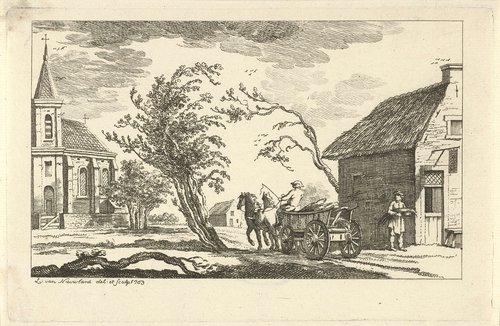
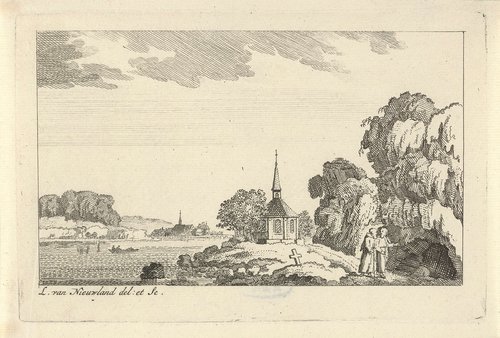
His siblings all pursued artistic careers: his brother Paulus Constantijn la Fargue (1729–1782) became the most celebrated member of the family, renowned for his topographical paintings and detailed city views of The Hague and other Dutch cities. His other siblings—Maria Margaretha, Karel, and Jacob Elias—also became painters, though their careers are less extensively documented.
Growing up in this artistic household, Isaac Lodewijk would have received informal training from his father and observed the practices and techniques of his siblings, creating an environment of mutual learning and artistic exchange.
While formal documentation of Isaac Lodewijk's training is limited, he clearly developed exceptional skills in portrait painting, particularly in watercolor and mixed techniques combining etching with hand-coloring. This specialization distinguished him from his brother Paulus Constantijn's focus on cityscapes and architectural subjects.
Portrait painting in the Dutch Republic of this period occupied a unique position. Unlike the grand aristocratic portraits produced in France or England, Dutch portraiture often emphasized bourgeois dignity and individual character over aristocratic magnificence. However, portraits of the House of Orange and court circles required a delicate balance between Dutch republican values and appropriate courtly grandeur.
Isaac Lodewijk's particular specialty in watercolor miniatures and mixed-media portraits positioned him perfectly for court commissions. Watercolor portrait miniatures, often worn as jewelry or kept in intimate collections, required exceptional technical control and the ability to capture precise likeness at small scale.
His reputation grew within the circles around the Stadhouder's court in The Hague, leading to increasingly prestigious commissions documenting the Dutch ruling class and nobility.
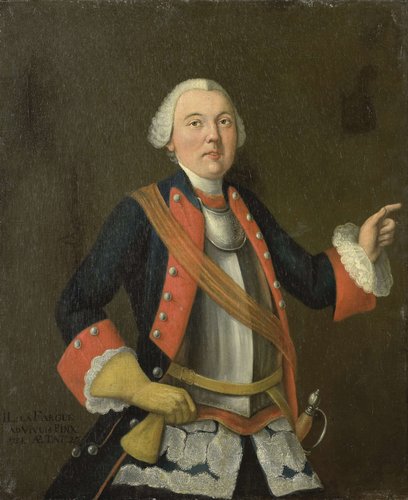
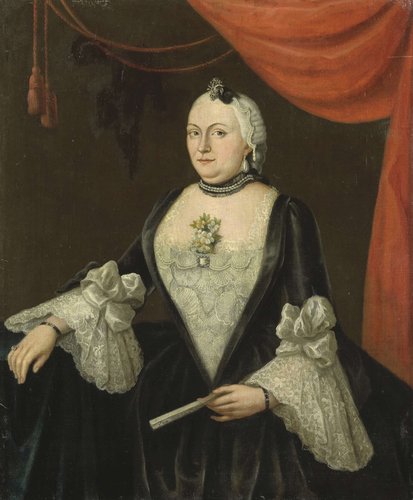
In 1766, Isaac Lodewijk received one of his most significant commissions: creating a series of portrait drawings depicting members of the court of Stadhouder Willem V. This series, now preserved in the Rijksmuseum in Amsterdam, represents an invaluable historical and artistic record of the Dutch court in the mid-18th century.
The 1766 court series demonstrates Isaac Lodewijk's mastery of capturing individual physiognomy while maintaining the decorum expected in official court portraiture. The drawings show various courtiers, officials, and attendants, providing a comprehensive visual documentation of the social world surrounding the Stadhouder.
Among the notable figures he portrayed in this series were a court official (hoffourier) and various noblemen. Each portrait balanced precise individual characterization with the formal conventions of court portraiture, showing figures in official dress and dignified poses appropriate to their rank.
In 1778, Isaac Lodewijk created a watercolor portrait of William V of Orange, executed over etching with pen and ink. This technically complex work, now in the National Gallery of Art in Washington, demonstrates his mastery of mixed media. The underlying etching provided the precise linear structure and detail, while the watercolor added subtle color gradations and tonal modeling.
The following year, 1779, he created a companion portrait of Frederica Sophia Wilhelmine using the same watercolor over etching technique. These royal portraits represent the pinnacle of his artistic achievement and demonstrate the sophisticated technical demands of court portraiture in the late Dutch Republic.
One of his other notable works was a portrait of Hendrick-Jan van Rijswijk from 1754, now in the Rijksmuseum. This earlier work shows his established mastery of portraiture even in mid-career.
The final decades of Isaac Lodewijk's life coincided with the tumultuous end of the Dutch Republic and its transformation into the Batavian Republic under French influence. William V, whom he had portrayed in 1778, would flee to England in 1795 as French revolutionary forces occupied the Netherlands.
These political upheavals undoubtedly affected Isaac Lodewijk's career, as the court patronage that had sustained much of his work evaporated with the stadhouder's flight. However, the specific details of his later career remain sparsely documented.
Isaac Lodewijk la Fargue van Nieuwland died in 1805 in The Hague, the city of his birth. He had lived through nearly eight decades of profound political, social, and artistic change in the Netherlands, from the relative stability of the mid-18th-century Dutch Republic through its revolutionary transformation.
His legacy rests primarily in his portraits, particularly those of the House of Orange and the court circles of Willem V. These works provide invaluable historical documentation while demonstrating the high level of technical accomplishment in Dutch portrait miniature painting. The survival of his works in major collections including the Rijksmuseum and the National Gallery of Art ensures continued recognition of his contribution to Dutch 18th-century art.
Artheon Research Team
Last updated: 2025-11-09
Biography length: ~1,480 words
Wikidata (CC0); Getty ULAN (ODC-By)