
Ctrl K
1839–1890
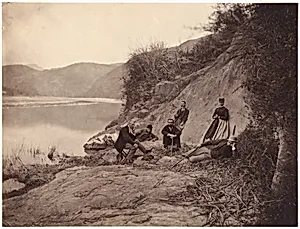
Lai Fong, also known as Lai Afong (賴阿芳), emerged as the pre-eminent Chinese photographer of the nineteenth century, born around 1839 in Gaoming, Guangdong province, and dying in Hong Kong on April 19, 1890. Fleeing the devastation of the Taiping Rebellion in the 1850s, he arrived in British-controlled Hong Kong as a refugee amid a turbulent era of imperial decline and foreign incursions. By 1859, he had mastered the wet-plate collodion process, though the specifics of his training remain sparsely documented. Between 1865 and 1867, he worked in the studio of Portuguese photographer José Joaquim Alves de Silveira, honing his commercial skills before establishing Afong Studio around 1870 on Queen's Road. This venture quickly became the most successful photographic enterprise in late Qing Hong Kong, advertising expansive catalogs of Chinese views in English-language newspapers and serving a cosmopolitan clientele of locals and foreigners alike.
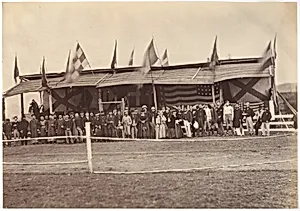
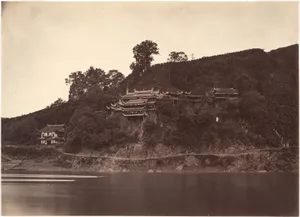
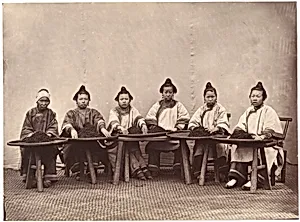
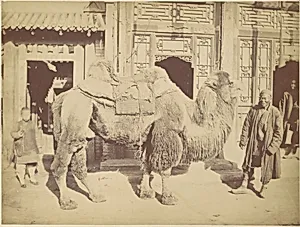
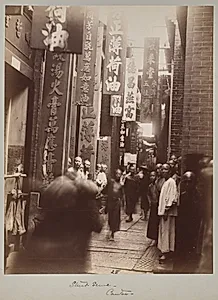
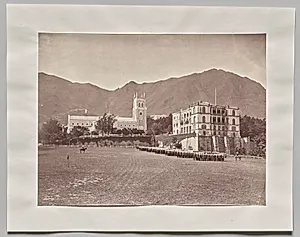
Lai Fong's artistic style blended Western photographic conventions—such as ethnographic portraiture and documentary landscapes—with influences from traditional Chinese guóhuà painting, evident in his masterful compositions and preference for expansive panoramas unmatched by contemporaries. He excelled in portraits like "A Mandarin’s Wife" and "Portrait of an Official" (both 1870s, albumen silver prints), as well as group scenes such as "Chinese Performers" (1870s), capturing social customs including foot-binding and opium smoking. Architectural marvels featured prominently, from Beijing's Summer Palace and Fragrant Hills Pagoda to Guangzhou's Temple of the Six Banyan Trees. His Fuzhou series from 1869–1870 documented expatriate life, including the Foochow Races grandstand and groups amid Scotch fir trees, while panoramas of Victoria Harbour and Gulangyu Island showcased his technical prowess and entrepreneurial vision.
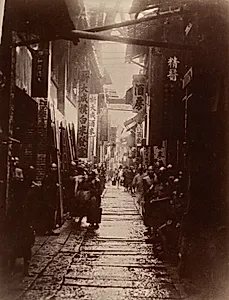
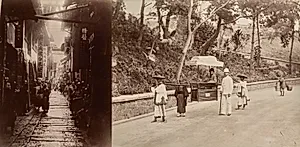
Traveling extensively through Guangdong, Fujian, Hebei, Shanghai, and beyond, Lai Fong photographed junks, bustling streets, and elite figures like Hong Kong Governor Sir Arthur Kennedy, Russian Grand Duke Alexei Alexandrovich, and Qing official Li Hongzhang. After his death, his son assumed control of Afong Studio, sustaining operations into the 1940s and training Western photographers like Emil Riisfeldt and D.K. Griffith—reversing the mentor-apprentice dynamic of his era.
Lai Fong's legacy endures as a rare Chinese insider's lens on late Qing transformations, with works in collections like the Metropolitan Museum of Art and J. Paul Getty Museum. His first dedicated museum exhibition, "Lai Fong (ca. 1839–1890): Photographer of China" at Cornell University's Herbert F. Johnson Museum of Art in 2020, highlighted nearly 50 prints, including a rediscovered 95-photograph Beijing album, affirming his towering influence on early Chinese photography.
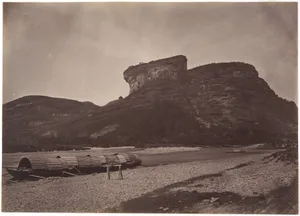
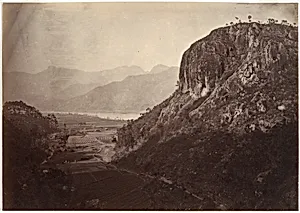
![[Mount Wuyi Landscape]](https://images.artheonmuseum.org/met/ph/thumb/mount-wuyi-landscape-289293.webp)
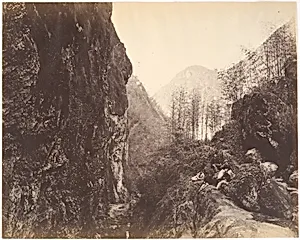
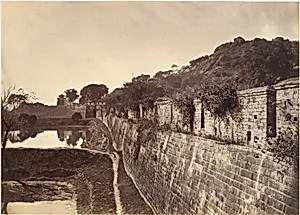
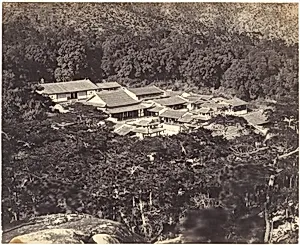
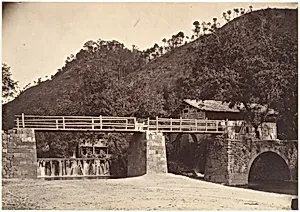
![[Path to Fangguangyan Monastery, Fujian]](https://images.artheonmuseum.org/met/ph/thumb/path-to-fangguangyan-monastery-fujian-289302.webp)
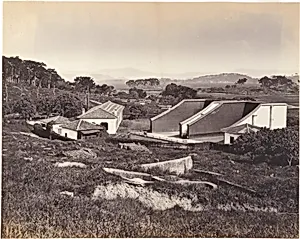
![[Franklin Blake Album]](https://images.artheonmuseum.org/met/ph/thumb/franklin-blake-album-286102.webp)