Ctrl K
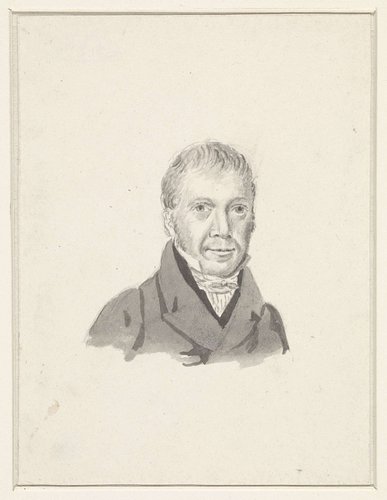
1776–1850
Occupations
Gerrit Lamberts (1776–1850) was a Dutch watercolorist, draughtsman, engraver, and curator whose topographical drawings documented Amsterdam's architectural heritage during a period of significant urban transformation. Born in Amsterdam on October 19, 1776, Lamberts began his career as a merchant selling paper before his artistic talents led him to pursue watercolor painting, drawing, and engraving. His meticulous cityscapes, architectural views, and watercolor depictions of art gallery interiors created an invaluable visual record of early nineteenth-century Amsterdam, earning him recognition as 'one of the best-known unknown draughtsmen of Amsterdam.' Beyond his artistic production, Lamberts played a significant institutional role when he was appointed curator of the Rijksmuseum in 1825, when the national collection was housed in the Trippenhuis building in Amsterdam. This dual identity as both artist and museum professional characterized his career, combining creative practice with scholarly stewardship of Dutch cultural heritage. His topographical accuracy and sensitivity to architectural detail made his drawings valuable both as artworks and as historical documents, preserving views of Amsterdam buildings and streetscapes that would undergo substantial changes during the nineteenth century's urban development.
Gerrit Lamberts was born on October 19, 1776, in Amsterdam, entering adulthood during the turbulent period of the Batavian Republic and subsequent French domination of the Netherlands. His initial career followed a commercial path as a merchant dealing in paper, a trade connecting him to Amsterdam's printing and artistic communities.
Lamberts's artistic inclinations gradually emerged, and he began pursuing watercolor painting, drawing, and engraving alongside his commercial activities. His subjects focused on topographical documentation of Amsterdam—cityscapes, architectural views of significant buildings, and detailed renderings of urban spaces.
He also became a bookseller, expanding his involvement in Amsterdam's cultural economy while developing his artistic skills. His connection to both commercial and artistic spheres positioned him uniquely to observe and document the city's architectural character.
Lamberts became a member of the Amsterdam Academy, formalizing his artistic training and connecting him to the city's institutional artistic community. This affiliation enhanced his technical skills while providing professional recognition for his topographical work.
In 1825, Lamberts received appointment as curator of the Rijksmuseum, housed at that time in the Trippenhuis, a seventeenth-century canal house adapted to serve as the national museum. This position made him responsible for the Dutch Republic's most important art collection, requiring both scholarly knowledge and administrative capability.
Lamberts's curatorial role was housed in the same building as the Amsterdam Academy of which he was a member, creating an integrated professional environment combining museum stewardship, artistic instruction, and creative production.
During these decades, Lamberts continued his artistic work, particularly creating watercolors of art gallery interiors that documented both the museum's displays and the period's approaches to exhibition design. These works provide valuable insight into early nineteenth-century museum practices and installation methods.
His topographical drawings of Amsterdam continued throughout this period, documenting the city's streets, canals, buildings, and urban character with consistent attention to architectural accuracy and atmospheric quality. This body of work constitutes an important visual archive of Amsterdam during a transitional period.
Lamberts died on April 16, 1850, in Amsterdam, leaving a substantial legacy both as artist-documentarian and as museum professional who helped shape the institution that would become the Netherlands' principal national art museum.
Artheon Research Team
Last updated: 2025-11-09
Biography length: ~478 words
Wikidata (CC0); Getty ULAN (ODC-By)