
Ctrl K
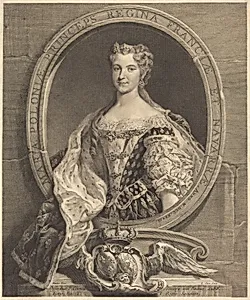
Laurent Cars (1699–1771) was a prominent French engraver born in Lyon on May 28, 1699, to Jean-François Cars, an engraver who relocated the family to Paris when Laurent was still young. There he quickly distinguished himself in the competitive Parisian art scene. Cars was admitted to the Académie Royale de Peinture et de Sculpture in 1733 as an engraver, submitting portraits of sculptors Michel Anguier and Sébastien Bourdon as his reception pieces. While specific teachers remain undocumented, his early immersion in Paris's engraving workshops, likely influenced by his father's profession, honed his skills in reproductive printmaking, a cornerstone of 18th-century French art production.
Cars excelled as one of the finest reproductive engravers of his era, translating the opulent Rococo paintings of leading artists into exquisite prints that disseminated their visions to a wider audience. He produced portraits and allegorical scenes after masters like François Lemoyne (e.g., *Hercules and Omphale*, *Time Discovering Truth*, and *The Rape of Europa*), François Boucher (designs for Molière's comedies), Jean-Antoine Watteau (*The Fortune-Teller*), and Jean-Baptiste Oudry (for La Fontaine's *Fables*). Notably, he engraved after Carle Van Loo, including the stately 1728 portrait *Marie Leszczynska of Poland, Queen of France*, capturing the queen's regal poise in intricate line work, as well as *Stanislaus, King of Poland*, *The Adoration of the Shepherds*, and *The Flight into Egypt*. His technique—precise etching combined with rich burin work—brought painterly depth to copper plates, embodying the Académie Royale's tradition of elevating engraving to fine art.
As Cars's reputation grew, he mentored engraver Jacques Firmin Beauvarlet and later shifted focus to print publishing around 1750, capitalizing on his vast output. He died in Paris on April 14, 1771, leaving a legacy as a pivotal figure in French Rococo printmaking. His reproductions not only preserved ephemeral paintings but also shaped public taste, bridging elite patronage and popular consumption in the Enlightenment era. Cars's masterful plates remain prized in collections worldwide for their technical virtuosity and historical insight.