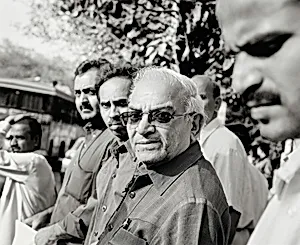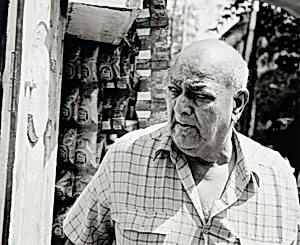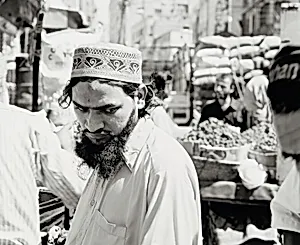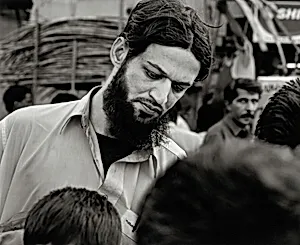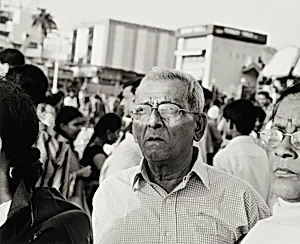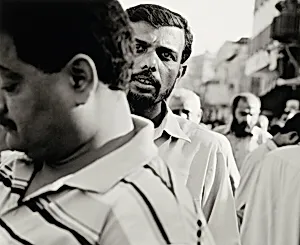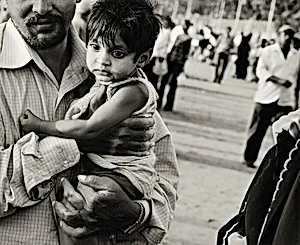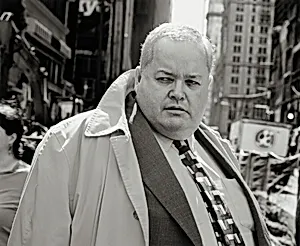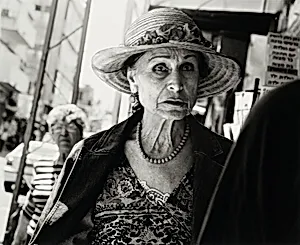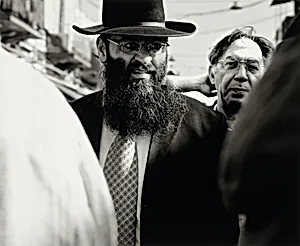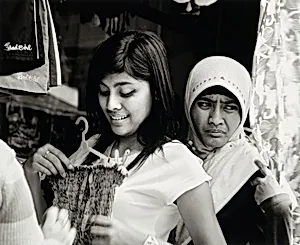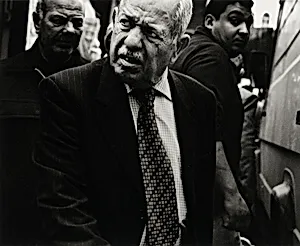
Leo Rubinfien, born in Chicago in 1953, spent much of his formative years in Japan, where his family lived starting in the early 1960s. This early immersion in Asian culture profoundly shaped his perspective on travel, urban life, and human intimacy amid exotic settings. He attended Reed College from 1970 to 1972, drawing inspiration from poet Gary Snyder and calligrapher Lloyd Reynolds, before pursuing intensive photographic training at the California Institute of the Arts, earning his BFA in 1974. Rubinfien completed his MFA at Yale University in 1977, honing his craft during a pivotal era for American photography.
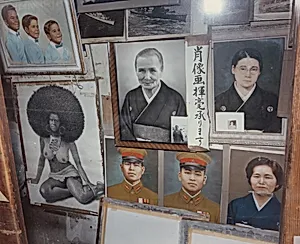
Rubinfien rose to prominence in the 1970s as part of the innovative circle of artist-photographers experimenting with new color processes and materials, transitioning from black-and-white work to color in 1978 using a handheld 6x7 Siciliano camera. His breakthrough series, *A Map of the East* (published 1992), captured the idiosyncrasies of daily life in Japan, China, Southeast Asia, and beyond during the 1980s, with iconic images like *Cherry Blossom Viewing at Miyajima* (1984), *A Makeshift Kitchen, Shanghai* (1983), and *Government Men Making New Years Calls, Kasumigaseki, Tokyo* (1988). These works blend street photography's spontaneity with a traveler's eye for cultural suspension, exhibited solo at institutions like the Metropolitan Museum of Art (1993) and Seattle Art Museum (1994).
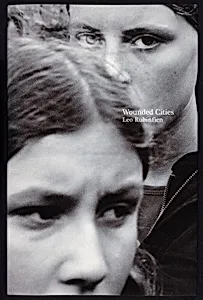
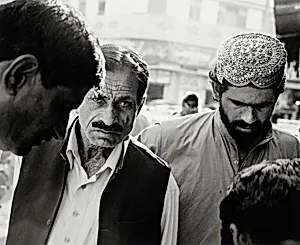
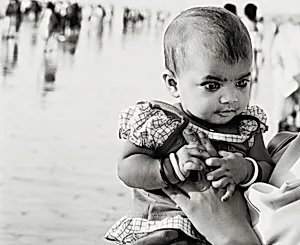
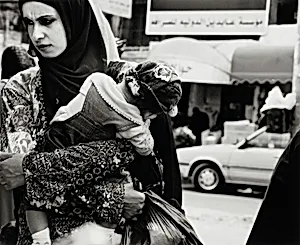
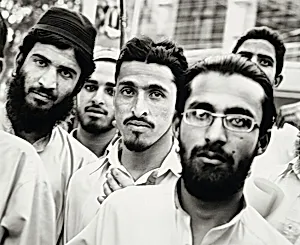
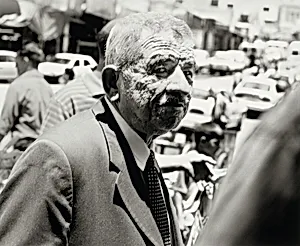
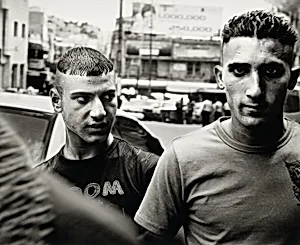
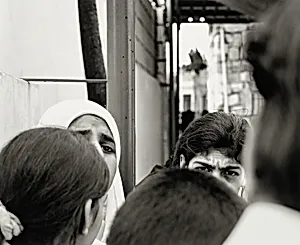
In response to the September 11, 2001 attacks—experienced firsthand near his New York home—Rubinfien produced *Wounded Cities* (2008), a poignant series and essay documenting "mental wounds" in global urban centers, including *Moscow, At the Kiev Station* (2003) and *Tokyo, at Shinjuku Station* (2003). A prolific curator and essayist, he co-curated Shomei Tomatsu's retrospective at SFMOMA (2001–2004) and organized Garry Winogrand's major survey (2013), which toured to the National Gallery of Art and the Met. His honors include a 1982 Guggenheim Fellowship and the 2009 Lianzhou Gold Prize.
Today, as an assistant professor at Fordham University, Rubinfien's photographs grace collections worldwide, including the Met (nine prints), MoMA, Whitney, and SFMOMA, affirming his legacy as a masterful chronicler of globalization's human pulse. His dual role as image-maker and critic—evident in essays on 20th-century masters—continues to influence contemporary street photography, bridging personal wanderlust with profound cultural insight.