
Ctrl K
1350–1650
**Li Qiao** was a Chinese calligrapher active during the Ming dynasty (1368–1644). Little is known about his early life or personal background, as historical records provide scant details beyond his artistic output. He is documented primarily through a single surviving work held in a major museum collection, reflecting the often fragmentary nature of documentation for many Ming-era artists outside the imperial court or major scholarly circles.
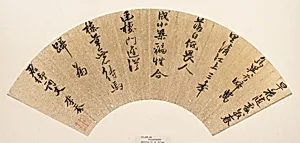
His known artwork is a delicate piece of running-script calligraphy titled simply *Calligraphy*. Created in ink on paper as a folding fan mounted as an album leaf, it features a five-character poem. The dimensions are modest—approximately 6 by 20¼ inches—typical of the intimate, portable format favored by Ming literati for personal expression and gifting. This work exemplifies the refined brushwork and poetic integration characteristic of Ming calligraphy, where text and form harmonize to convey both literary and aesthetic values.
Without records of formal training or mentors, Li Qiao’s style aligns with the broader traditions of Ming dynasty calligraphy, which emphasized individual expression within established scripts while drawing on earlier masters. His contribution remains modest yet preserved, offering a glimpse into the everyday artistic practices of the period rather than grand imperial or revolutionary innovations.
Today, Li Qiao’s legacy rests almost entirely on this Met Museum piece, acquired in 1913. It serves as a valuable example of Ming fan calligraphy for scholars and collectors, underscoring how even lesser-documented artists enriched the rich tapestry of Chinese artistic heritage through subtle, personal creations. Further research into private collections or local archives may one day reveal more about his life and circle.