
Ctrl K
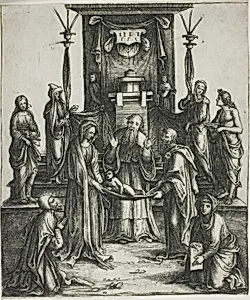
1460–1535
**Lorenzo Costa (also known as Lorenzo di Ottavio Costa)** was an Italian Renaissance painter born in Ferrara in 1460 and who died in Mantua on 5 March 1535. He belonged to a family of painters and became one of the leading figures of the Ferrarese school. He moved to Bologna by his early twenties, where he worked extensively for the Bentivoglio family.
His early training likely occurred in Ferrara, with possible instruction or strong influence from Cosimo Tura; his work also shows affinities with the Bolognese school. In 1483 he completed the celebrated *Bentivoglio Altarpiece* along with frescoes for the Bentivoglio chapel in San Giacomo Maggiore, Bologna. He formed a close friendship with Francesco Francia, whose style was notably shaped by Costa’s example.
In 1509 Costa relocated to Mantua, succeeding Andrea Mantegna as court painter to Marquis Francesco Gonzaga and Isabella d’Este. For Isabella’s famous studiolo in the Ducal Palace he created two major mythological works—the *Allegory of Isabella d’Este’s Coronation* (now in the Louvre) and *The Reign of Comus*—both based on designs by Mantegna. These commissions placed him at the heart of one of the most sophisticated Renaissance courts.
Costa’s legacy rests on his elegant synthesis of Ferrarese and Bolognese traditions within the broader Italian Renaissance. His sons Ippolito and Girolamo, as well as his grandson Lorenzo Costa the Younger, continued the family’s artistic tradition. Works such as the *Bentivoglio Altarpiece*, the Louvre allegories, and numerous portraits and devotional panels attest to his enduring influence on courtly and religious painting in northern Italy.